
-
Your next favorite book
is waiting.
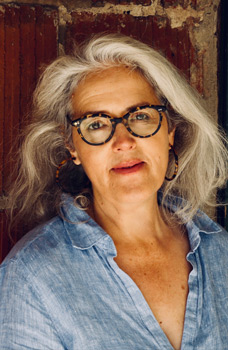
Sarah Blake talks about the inspiration for The Postmistress (2010), set in Europe and Cape Cod in 1940; and The Guest House (2019) which, among many other topics, explores explores race, religion and social class.
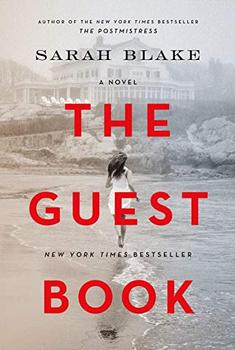
Sarah Blake talks about The Guest Book and the importance of learning to have difficult conversations
Sarah Blake is the author of two previous novels, Grange House and the international bestseller The Postmistress; a chapbook of poems, Full Turn; and Runaway Girls, an artist book in collaboration with Robin Kahn. Her new novel, The Guest Book, will be published by Flatiron Books on May 7, 2019. Blake lives in Washington, D.C. with her husband, the poet Joshua Weiner, and their two sons.
Let's start with the setting. I was curious about whether Crockett's Island was an actual place. When I searched Google, I discovered a Crockett's Cove in Maine. Is the island based on somewhere you know or have visited?
Yes! It is definitely inspired by an island I grew up going to, one that my grandparents bought in 1936. The way in which Kitty and Ogden come upon Crockett's is similar to my family's story, and the real Crockett's Cove is a place I know very, very well. That said, I feel the need to mention that what happens to the Miltons in The Guest Book is a completely fictional departure from my family's story. However, I certainly feel like our island was the genesis for me as a fiction writer.
How is it similar?
Well, like the Milton family's retreat, ours was a place where all kinds of "family quiet"--or the silences, if you will--were active. In many ways, The Guest Book was born from my own questions. What does it mean to have an island? It grounds my own place in the social realm by setting me as very much someone who is white, old-moneyed, who has privileges others do not.
The Guest Book explores race, religion and social class in a way that feels new, like the reader is being invited to get closer to issues that are often uncomfortable.
When I started this novel in 2010 I really wanted to explore and interrogate my own place in the structure of this country, both in terms of race and class. I felt ready to examine who I was within the larger conversation. As you remember, in 2010 Barack Obama was president and, with his election, the conversation about race in the U.S. seemed to have kicked up to the surface in a way that was so exciting and liberating for me. So the question becomes: How do we talk about the past? How do you put race forward? How are we talking?
Why is it important that we learn how to have those difficult conversations? After all, it is easier to sweep things under the proverbial rug, to pretend our reality isn't what it is.
Because there are such repercussions of not having those conversations and they echo for generations through our silence. That impacts who we are. There is also the need to know and understand one's own personal history within the context of the world's history and to make sense of the present, too. Now more than ever.
Your protagonist Evie, a history professor, challenges her students to think deeply on that idea.
Right. Who would you have been, back then? What would you have said? If you can answer that, then who would you be right now--when that same structure is still so clearly in place? I think about history a lot and how history is inside us. It is very much a part of all my work. We speak the silences that we've been passing on. I wanted to take it head on and make that the subject of this novel in a very real, relatable way. And to be cognizant of that history happening each day, each moment. And to be aware of who we are as it is happening because it influences everything we do, our actions, our beliefs, the need to know and understand one's history in order to understand the present. I feel like it is a constant struggle not to look away.
Clearly, there's a lot to unpack in this novel. Who was your favorite character to write?
Oh, what a great question! I have no idea! This was such a diffuse novel to write, with moments of intense concentration on each character, so I would say each one was my favorite as I was writing them. I loved Reg.
Reg seems to be a modern-day James Baldwin, who you reference several times in The Guest Book. Can you talk about the significance of Baldwin in relation to the themes you are trying to convey to readers?
The idea that history is trapped in us, as Baldwin wrote, has fueled and inspired me through everything I've ever written. I knew that this novel was going to take that idea literally. What does that mean to have history trapped in us? What does that mean for the conversation about race in this country? To understand that, I read and re-read all of Baldwin and immersed myself in his work. He was so ahead of his time, especially in his fiction. Through Baldwin, I got a greater sense of Reg's character. I wanted to have Baldwin's voice present by him being someone Reg knows.
Another concept that intrigued me was the idea of "the anchoress," which is Evie's academic area of interest and relates to a woman in the 1300s who was literally bricked up in an abbey. I see this as a symbol for women's silences throughout history but also as someone who anchors a family, or carries on that history.
You know, that is so wild--I never thought of the anchoress as a female anchor of a family! But you've just connected that so perfectly. I see my characters Kitty and Evie in that role. Joan, too. It was meant to convey how women exist inside of institutions and the family is certainly one. An anchor is something that can sink you. With the Milton women, what has the potential to sink them is their own truth. In their own way, Kitty, Joan and Evie construct walls to hide aspects of their history and who they really are.
How long did it take you to write The Guest Book?
I don't seem to be able to write a novel that happens chronologically. They all seem to move horizontally. What I really want to do is move back and forth through time--stories that walk the same path, people coming in and out of the same room, history as echoing and foretelling. That's very hard to do and takes a long time.
That theme of history being both echoing and foretelling is very clear in your novel and something that resonated deeply with me, especially with the character of Elsa. I saw her as almost a harbinger from the past, a character who has a message for us today in terms of "the other." At one point she says, "It's a mistake to think the news happens to someone else, the news happens to you."
I love that idea of her being a kind of harbinger. She is both speaking forward and very much in her present and our present. I was interested in collapsing the notion of history being past. We are continually walking over history, over and over again, because we keep carrying it forward. There were people, like Elsa, who in 1936 could see so clearly what was happening in Germany and the world. That is the challenge for us now. To look and to confront rather than just retell. We need to ask ourselves, how clearly are we looking?
This interview by Melissa Firman first ran in Shelf Awareness as "Opening the Book to New Conversations", and is reproduced with permission
A Conversation with Sarah Blake about The Postmistress
What attracted you to this time period, right before the attack on Pearl Harbor?
I played around with when to set the novel—at one point I had Will drafted and in the Army and lost horribly in the Bataan Death March—but the more research I did on the war I grew more and more interested in this three year period from 1938-1941 when all of Europe was at war, Japan and China were marching to the brink, and we were (officially) neutral. I was interested in the time before it was clear, before it was "the good war," before the full horror of the Holocaust—the things we know now—was evident. What would that feel like? What would it feel like before our role in history, and in WW2 was a given. Against that I wanted to dramatize Frankie's growing desperation--echoed in so many reports of the time--her desire for her country to pay attention. It seemed to me to resonate with so much of what was going on here during the years I was writing the book, roughly 2001-2008, when the country seemed not to be paying attention to the fact that we were in fact in a war. Indeed, we were being told by our leadership to look away.
What kind of research did you do for the novel?
I read many books about the war and the time period, and I went through stacks of Life Magazines from 1940-1945. I spent quite a while at The Museum of Radio.
As well as reading Work Project Administration interviews with people who were living on Cape Cod at the time, I interviewed a woman in her nineties who lived in Provincetown (on which the town of Franklin is loosely based) during the war. I interviewed a war journalist, a midwife and also the postmaster of North Haven Maine who told me in no uncertain terms that there was no such thing as a postmistress. (This was after I'd told him the title of my novel) "It's postmaster," he rapped out, " I don't care whether it's a man, a woman or a baboon."
You have a PhD in Victorian Literature. Does that background influence your writing?
Nineteenth century literature is fantastically two-fisted, and I am clearly influenced by the years I spent studying it closely. On the one hand there are the enormous sweeping novels of Dickens, Zola, Balzac where whole worlds—cities and nations-- are painstakingly chronicled and set into play; and then, on the other there is the Victorian ghost story which is often a domestic drama where characters are haunted (literally and figuratively) by figments of their own passions and desires—like those found in the Brontes, Wilkie Collins, and Thomas Hardy. I am drawn to the complicated plots and twists and turns of characters' desires that were a benchmark of Victorian fiction. And in fact, mIy first novel, Grange House, arose out of my desire to try and write a Victorian novel, down to the serpentine sentences, the speech patterns, and the ghost plot.
In The Postmistress, Frankie struggles with how to tell the stories of the people she meets. Is that something you've experienced as a writer?
A woman sitting next to me on a plane told me the story of her uncle in Austria under the Nazis, which was more or less the story I gave to Thomas on the train. It is an amazing story of coincidence and escape and it sent shivers down my spine as she told it. The struggle came with how to use it—how to set it so it could shine jewel-like out of the larger frame of the novel; how to make it mean, in other words. On the other hand, when I was interviewing a woman in Provincetown who had lived through the war years there, she told me the story of a German breadwrapper that had washed up on the Back Shore, proof that the German Uboats were out there and not far. For years I tried to use that story in my novel—trying every which way to have a breadwrapper discovered, at one point even staging the running aground of a Uboat on the beach, witnessed by Harry—but in the end, it just didn't fit, so I had to leave it—perfect story—behind.
Edward R. Murrow, Frankie's boss, is an important historical figure. Is there a difference between writing about a real person, versus writing about a character you've created? In some ways writing about Edward R. Murrow was easier than the other characters because his character, his mode of speaking, his observations are so much a part of the public record. Listening to his broadcasts give us immediate insight into the passion and heart and intellect of a man gifted at translating what he sees and hears into vivid word pictures. I read the transcripts of his broadcasts and was able to imagine how he might speak in conversation, how he might move about in a scene, because of the way in which he wrote. In many ways, he wrote himself.
The Postmistress begins with Frankie at a dinner party years later. Do you have some idea of what happened to Emma and Iris after the events of the novel?
I imagine that the two remain in Franklin, and that Iris becomes a kind of godmother to Emma and her child. I'd like to think that Emma begins to have the experience of having someone watching over her, watching out, the very thing she said she'd never had, and then got so briefly, through Will.
Unless otherwise stated, this interview was conducted at the time the book was first published, and is reproduced with permission of the publisher. This interview may not be reproduced or reprinted without permission in writing from the copyright holder.
Alina Adams was born in Odessa, Ukraine, and immigrated with her parents to the U.S. in 1977 at age seven, where she learned English by watching American soap operas at their home in San Francisco.
Alina is a fiction ...
(more)
If you enjoyed:
The Guest Book
Try:
The Nesting Dolls
by Alina Adams

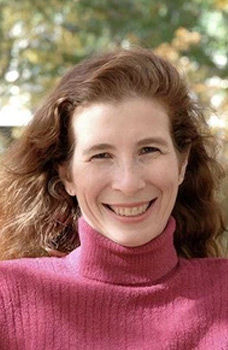
In addition to co-authoring The Guernsey Literary & Potato Peel Pie Society with her aunt Mary Ann Shaffer, Annie Barrows is the author of the children's series Ivy and Bean, as well as The Magic Half.
Annie lives in ...
(more)
If you enjoyed:
The Postmistress
Try:
The Guernsey Literary and Potato Peel Pie Society
by Annie Barrows
We recommend 18 similar authors


Outside of a dog, a book is man's best friend. Inside of a dog it's too dark to read.
Click Here to find out who said this, as well as discovering other famous literary quotes!

Can you name the title?
Test your book knowledge with our daily trivia challenge!
Your guide toexceptional books
BookBrowse seeks out and recommends the best in contemporary fiction and nonfiction—books that not only engage and entertain but also deepen our understanding of ourselves and the world around us.

