Anna Lawrence Pietroni, author of Ruby's Spoon, talks about writing, prison, and embracing her roots.
Anna Lawrence Pietroni in her own words about writing, prison, and embracing her roots:
I’ve felt compelled to write since I could hold a pencil, but always stalled after a paragraph or two. Drawn to the symbols and structure of fairy tale, I stubbornly rejected the advice given to all aspiring writers: ‘write what you know’. I didn’t want to write what I knew. I didn’t even like the things I knew. I lived on the edge of the heavily industrial Black Country in the English Midlands, where my family has lived for generations. I’d had a defensive pride in my town, Halesowen - we had a Norman church, two Tudor black-and-whites, Industrial Heritage - but when I won a place at an exclusive high school in the city, this pride I’d taken in my roots soon evaporated and I would never, I was certain, write about my town. By the time I went to Oxford, I was all too glad to leave it far behind.
I studied English Literature at University College, Oxford, and was delighted and intimidated in equal measure by the literary endeavors of my predecessors. I had rooms beside the Percy Bysshe Shelley Memorial: a languid, drowned figure carved in marble. Compared with the works of genius on the reading list, anything I wrote was clumsy and overwrought. I submitted poetry to a competition judged by Seamus Heaney. I wasn’t placed, but I was given an ‘honorable mention’ and that ‘mention’ sustained and tormented me. After college, I tried to write again, but still struggled to get past the first few lines. I took temping jobs in London, hoping that they would leave me time and energy to write, but I found myself sketching little circles for each hour in the day and shading in the minutes as they passed. Eventually I abandoned the whole notion of becoming a writer and, in a grand non-sequitur, became a trainee prison warden at Holloway instead.
I was not a good prison guard and left my training program well before it ended. I wanted to sit and listen to the prisoners, to the exclusion of all the other crucial tasks that will, if done well, make time spent ‘inside’ more productive and purposeful. But if I hadn’t been a prison guard I might not have finally begun to write. I took time away from my training to be with my new baby and, desperate for some time to myself, I wrote while he slept. The novel grew out of a writing exercise that I kept working on; persistent doodling. A cast of characters emerged and needed somewhere more concrete to live than the folk-tale landscapes I was used to sketching out. I decided, with reluctance, to go back home. I revisited the topography of Halesowen (steep hills; clay) and stole elements of the Black Country towns where my family lived: I read local histories and asked my grandad about chain-striking and chip shops; I rerouted canals and drew new maps; I took photos up in the Clent Hills. The town that emerged - Cradle Cross, 1933 - can’t be mapped onto Halesowen, but it’s a close relation.
I didn’t consciously set out to write about imprisonment, but Ruby’s Spoon is a novel about incarceration and the quest for freedom, both emotional and physical. Ruby, the young protagonist, is constrained at the most literal level by the geography of Cradle Cross – it’s surrounded by canals, and while Ruby longs to get to sea, she’s forbidden to go near water. This containment is, as Ruby comes to learn, primarily psychological, but she may learn this lesson at her cost: this is a closed community that discourages escape, and although its inhabitants are free to leave, they live heavily circumscribed lives. (Only Truda Cole Blick comes and goes, but even she finds herself tied to Cradle Cross.) They are hostile to outsiders, and suspicious of authority, as Miss Blick and Isa Fly discover. Rumor and supposition leads to violent acts of retribution. There are hierarchies; unwritten rules – you don’t go into Blickses, you don’t cross Dinah Hatchett Harper… I didn’t think I’d write about my time working in prison. But it appears that, unintentionally, I have.
Unless otherwise stated, this interview was conducted at the time the book was first published, and is reproduced with permission of the publisher. This interview may not be reproduced or reprinted without permission in writing from the copyright holder.

Tiffany Baker’s Recipe For A Writing Life
A handful of islands: Belvedere , Aquidneck, Balboa, Manhattan, Corsica, Maui, the UK
Three small children: Two girls and a boy, plump in the cheeks and knees. Strong-willed ...
If you enjoyed:
Ruby's Spoon
Try:
The Little Giant of Aberdeen County
by Tiffany Baker

Susanna Mary Clarke (born 1 November 1959) is an English author best known for her debut novel Jonathan Strange & Mr Norrell (2004), a Hugo Award-winning alternative history. Clarke began Jonathan Strange in 1993 and worked ... (more)
If you enjoyed:
Ruby's Spoon
Try:
Jonathan Strange & Mr Norrell
by Susanna Clarke
We recommend 6 similar authors

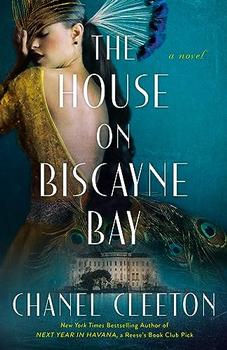
The House on Biscayne Bay
by Chanel Cleeton
As death stalks a gothic mansion in Miami, the lives of two women intertwine as the past and present collide.
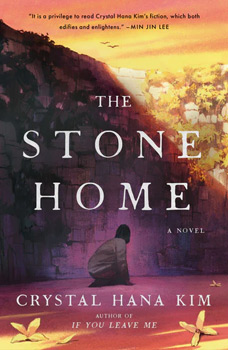
The Stone Home
by Crystal Hana Kim
A moving family drama and coming-of-age story revealing a dark corner of South Korean history.
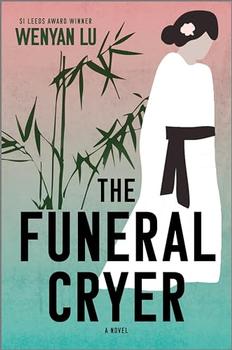
The Funeral Cryer by Wenyan Lu
Debut novelist Wenyan Lu brings us this witty yet profound story about one woman's midlife reawakening in contemporary rural China.
Your guide toexceptional books
BookBrowse seeks out and recommends the best in contemporary fiction and nonfiction—books that not only engage and entertain but also deepen our understanding of ourselves and the world around us.