Elly Griffiths, author of the Ruth Galloway mysteries set in Norfolk in the East of England, discusses her lead character and the legends of Norfolk country.
On Ruth Galloway:
I don't know where the character of Ruth came from. She really just sprang into my head fully formed and I felt that I knew her – her formidable intelligence, her wry humour, her secret liking for sequins. Perhaps, though, there are elements in Ruth of my two older sisters – both strong, independent women - one a headteacher, the other an artist. There is also my aunt, who lives in Norfolk and still, at over seventy, teaches Maths, drinks gin and steers her boat along the Norfolk broads (rivers). Ruth is probably a combination of all the strong women in my life – including my mother who first told me the stories of the Norse Gods.
On Norse Legends and Mythology:
The Crossing Places is about layers. Layers of time, history and memory. It is set in Norfolk, an area of Eastern England that has been inhabited for over 6000 years by, variously, Stone Age, Bronze Age, Iron Age and Roman settlers. It was also, until 10,000 years ago, physically linked to Scandinavia. Thus, the Norse or Viking influence is strong is Norfolk. Perhaps because of its history, it is also a place steeped in superstition and folklore. Norfolk is famous for its ghosts.
Ruth Galloway, the heroine of The Crossing Places, lives on the edge of desolate marsh
land known as the Saltmarsh. The name is fictional but the area is very closely modelled on the North Norfolk coast, places like Holme-next-the Sea where the real Seahenge was discovered.
Iron Age man considered marshland sacred. They saw it as a bridge to the afterlife – neither land nor sea, life nor death. It is thought that this is why they often buried bodies (who may or may not have been murdered) on the edge of marshland. They buried treasure too. At Snettisham in North Norfolk a fabulous treasure hoard was discovered.
The Iron Age (Celtic/Druidic) religion drew strongly on the Norse or Viking tradition. At Seahenge a tree was discovered planted, upside down, at the very centre of the henge. Was this Yggdrasil, the world tree? No-one really knows. As Ruth says, 'the questions are more important than the answers.'
Norse mythology
Norse mythology is really just a collection of stories, incredibly rich and powerful.
There is no one doctrinal belief, rather a collection of legends. These legends would have been shared orally but some are preserved in the Iceland prose Eddas. Norse beliefs originated in Scandinavia and would have come to England with the Vikings. Some aspects have passed into folklore and others have survived to the present day (see Days of the Week). There are also striking links between Norse mythology and Christianity (e.g. Odin dying on the tree to save mankind).
Norse beliefs
There were nine worlds in Norse mythology, from Asgard (home of the Gods), to Nifhelm (or Hel), the underworld. These were linked by Yggdrasil, the world tree. Asgard can be reached by Bifrost, the rainbow bridge.
Norse Gods are many and splendid:
Odin: the chief God who died on the tree to save mankind. He is one-eyed, having sacrificed an eye in the quest for wisdom (see references to Nelson, King Lear etc).
Thor the Thunderer, God of war.
Frigga, Odin's wife, who sews the sacred distaff of life.
Loki the Elemental whose monstrous offspring include an eight-legged horse and a giant wolf.
Norse belief and the Celts
There are many similarities between Norse and Celtic belief. Many modern pagans, like Cathbad, simply believe in a mixture of the two. The main difference is that the Celts had official priests, or Druids. It is thought that, in Norse belief, the shamanistic tradition was maintained by women called Volvas.
Human sacrifice
Human sacrifice was thought to be part of the Celtic/Iron Age tradition, hence bodies found in bogs, marshes and other significant sites. However, some experts think that sacrifice by strangling is linked to Odin. Tollund Man, for example, had been strangled before being thrown into a peat bog. The Eddas also describe human sacrifice. Swedish Kings were said to be sacrificed to ensure a fruitful harvest.
Links with the modern world
One of the most striking modern links with Old Norse is in the days of the week:
Monday: Manadagr or Moon's Day
Tuesday: Tysdagror Tyr's day
Wednesday: Ooinsdagr or Odin's day
Thursday: Thorsdagr or Thor's day
Friday: Frjadagr or Freya's day
Saturday: Saturn's day
Sunday: Sun's day
Norse mythology in Literature (and video games!)
Famously Wagner drew heavily on Norse mythology for The Ring of the Nibelung. Tolkien was also strongly influenced by Norse mythology. The names of all the dwarves in The Hobbit come from an Icelandic prose Edda, for example. In The Lord of The Rings Tolkien, like Wagner, uses the Norse ring legend. Creatures like elves, dwarves and talking trees can also be found in the nine worlds of Norse mythology.
More recently Neil Gaiman created modern Norse Gods in his novel American Gods. Norse mythology is also popular in graphic novels (Neil Gaiman's Sandman series, for example) and heavy metal music. Video games like Tomb Raider also make use of the Norse legends. In Tomb Raider: Underworld, for example, Lara is searching for Thor's hammer.
Norfolk: a haunted landscape
Norfolk is a desolate and beautiful place. It is often said that its landscape is the sky because the flat, marshy terrain offers a spectacular view of the wide, ever-changing sky. Norfolk is extremely rich in archaeology, from Stone Age remains (4000-2500 years BC) to the Second World War graves recently uncovered through coastal erosion. Perhaps because it has been inhabited for long, Norfolk is said to be full of ghosts. The Norfolk writer M.R. James was famous for his spooky tales set on the East Anglican coast. There are also ghosts all along the canals and rivers (the Norfolk Broads) including the haunted bridge at Acle and the watermill at Horsey Mere, where spectral hands can be seen turning the wheel. The Broads and their ghosts come into the sequel to The Crossing Places.
Unless otherwise stated, this interview was conducted at the time the book was first published, and is reproduced with permission of the publisher. This interview may not be reproduced or reprinted without permission in writing from the copyright holder.
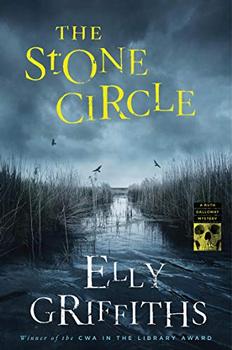
Alan Bradley was born in Toronto, Ont. and grew up in the pleasant lakeside town of Cobourg, Ont. After a long career in television broadcasting, he took early retirement from the University of Saskatchewan to write ... (more)
If you enjoyed:
The Crossing Places
Try:
The Sweetness at the Bottom of the Pie
by Alan Bradley
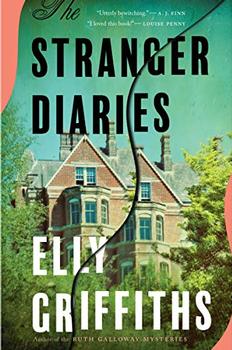
Patrick deWitt is the author of the critically acclaimed Ablutions: Notes for a Novel, as well as The Sisters Brothers, which was short-listed for the Booker Prize, French Exit and The Librarianist. Born in British Columbia, ... (more)
If you enjoyed:
The Stranger Diaries
Try:
Undermajordomo Minor
by Patrick deWitt
We recommend 17 similar authors
The House on Biscayne Bay
by Chanel Cleeton
As death stalks a gothic mansion in Miami, the lives of two women intertwine as the past and present collide.
The Flower Sisters
by Michelle Collins Anderson
From the new Fannie Flagg of the Ozarks, a richly-woven story of family, forgiveness, and reinvention.

The Funeral Cryer by Wenyan Lu
Debut novelist Wenyan Lu brings us this witty yet profound story about one woman's midlife reawakening in contemporary rural China.
Your guide toexceptional books
BookBrowse seeks out and recommends the best in contemporary fiction and nonfiction—books that not only engage and entertain but also deepen our understanding of ourselves and the world around us.