
-
Your next favorite book
is waiting.

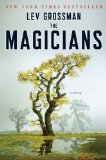
Lev Grossman discusses The Magicians, an original coming-of-age novel for adults, about a young man practicing magic in the real world.
Your previous novel, Codex, is a thriller about a fourteenth-century manuscript and a sinister high-tech computer game. What is it that interests you about the intersection of contemporary life and fantasy?
I think I’ve always been interested in that intersection, even before I had any kind of proper vocabulary for talking about it. Which implies that I have one now, probably wrongly. But let me try to explain what interests me about fantasies and, really, stories in general. When we read books and watch television or movies, we’re seeing representations of people’s lives. And I always wondered, even as a little kid, why does my life, which superficially resembles a life in a story, feel so different from a life in a story? Lives in stories are exciting and vivid and meaningful. Real lives are chaotic and disorganized and frequently boring, and that feeling of meaningfulness comes and goes, out of your control. It’s hard to hang on to. Why doesn’t life feel more like a story? Like a fantasy? I don’t know. But now, at a time in history when we spend so much of our waking life being entertained by stories, I wonder that even more.
Is The Magicians a critique of or an homage to our collective need for fantasy worlds?
Definitely not a critique. That sounds a bit scoldy. Especially coming from somebody with as active a fantasy life as mine. If it’s between critique and homage, I’ll go with homage. But I think the appropriate book-reviewing cliché would be that it’s “a meditation on” our collective need for fantasy worlds. I am in love with fantasy and fantasies of all kinds, I always have been, but it’s a bittersweet romance, because when you try to really consummate it—when you try to take the fantasy out of the realm of the imaginary, and really live it—very bad things can happen. As they do to poor Quentin.
How do you think being the son of two English professors affected your relationship with literature?
Oh, in every possible way. My parents were a bit like those tennis parents who start drilling their kids on the court when they’re about two, with the idea of creating some kind of inhumanly precocious tennis prodigy. Mine were very aggressive about exposing me to the finer sorts of books early on, with the idea of turning me — and my brother and sister — into teenage super-literati. Then my father made the mistake of reading me The Hobbit, and at a stroke all their careful work was undone. From then on I made a point of immersing myself in anything and everything that annoyed and disappointed them: fantasy, science fiction, comic books, video games. But the funny thing was, I learned from them a lot about how to read a book carefully and respectfully and critically. And I think I brought that critical scholarly approach to my reading. I just read all the wrong things.
You have a degree in comparative literature from Harvard but dropped out before getting your Ph.D. from Yale. What made you decide not to become an academic yourself?
I can’t even remember what made me decide I wanted to be one in the first place. Except that I was unemployed and wanted to read books and talk about them as much as possible. Which I did get to do, and I loved it. But I knew from watching my parents that the life of an academic was not a glamorous one. It is frequently an underpaid and inglorious one. Except for the superstars, and it quickly became apparent that I wasn’t going to be one of those.
What was your inspiration for The Magicians? Were you, like Quentin, the kind of “nerd” who’s read and re-read The Chronicles of Narnia and The Once and Future King multiple times?
Is there any other kind of nerd? There were a lot of inspirations for The Magicians. Of course, I did all those things, and still do them. I suppose on one level I was trying to bring together the literary sensibilities of the Modernist writers I studied in graduate school, and the glorious escapism of the fantasy novels that I love, and mash them up together into one perfect book, where they would be forced to sit down and talk to each other. On another level I was going through a difficult time personally (divorce) and having a lot of fantasies about other, better worlds that I might possibly escape to. On still another level, it was 2004, and we were in the long two-year trough between Harry Potter and the Order of the Phoenix and Harry Potter and the Half-Blood Prince, and I badly wanted something new to read. So badly that I decided to write something myself.
How would you compare the C. S. Lewis and T. H. White books to those by J. K. Rowling and Philip Pullman?
Very broadly speaking—very very broadly—I think the shift from Lewis and White (and for that matter Tolkien) to writers like Rowling and Pullman has to do with the gradual separation of fantasy from religion, specifically from Christianity. In Lewis and White, most of your supernatural power comes from God. There may be magic in the picture—Digory’s uncle Andrew is a magician, and of course there’s the White Witch—but the mightiest power is a mystical, spiritual Christian force. In Pullman and Rowling magic is the only power we see. There is no divine force. In Pullman’s universe magic comes from dust. Rowling’s understanding of magic is more difficult to theorize, but it is evidently tied in closely with human emotions like love and hate, rather than any deity. God may or may not exist in Harry’s world, but if he does he has withdrawn, and doesn’t interfere directly. Magic is a secular power. One of the ambitions of The Magicians is to crash these two world-views, the secular and the divine fantasy, into each other with maximum force.
Do you think today’s young readers are very different from the first generation of readers to discover Narnia?
Probably? But I’d rather not speculate about how. My daughter is five, still too young for Narnia, but I plan to watch her closely as she starts to read fantasy. I’ve tried to explain about Harry Potter to her, but she keeps insisting she wants to be in Slytherin.
The Chronicles of Narnia are superbly written but thinly veiled Christian parables. Did you intend to convey any similar lessons with The Magicians? Is Alice Aslan?
Well, I think it’s a bit of a red herring to call the Narnia books Christian parables. They exemplify some Christian virtues, certainly. But they’re pretty thickly veiled. And to me the veil is the most interesting part. As for The Magicians, it’s not a parable of any kind. You could probably (I’ve never tried) divide novels into two camps, those that try to build up theories and lessons, and those that explore the way that life is often too messy and difficult and cruel to fit any theories or lessons. The Magicians is in the second camp. Now that I’ve said all that: there is a character in The Magicians who teaches Quentin a very hard lesson about self-sacrifice. But you’ll notice that unlike Aslan, she hasn’t quite mastered the trick of coming back to life afterwards.
“Some of the student body went into public service... . A lot of people just traveled, or created magical artworks, or staged elaborate sorcerous war games... . Some students even chose to matriculate at a regular, non-magical university” (p. 184). What would you do if you had a degree from Brakebills?
I could see myself getting involved in environmental causes. I like the idea of using magic to save, for example, tree frogs. But I love the idea of a massive global sorcerous war game, too. I hope I would have time for both. Even if I were a wizard, I’d still be a huge nerd.
You never reveal what Penny and Quentin’s disciplines are. Why is that? What do you imagine they are?
Not quite true. Penny’s being truthful when he says his discipline is interdimensional travel. It’s downplayed in the novel, but it was really quite a feat on his part to get to the Neitherlands without a button. As for Quentin—I’ll be honest, I like a novel to have a dangling thread or two in it. I always allow myself at least one. Quentin’s discipline is my one for The Magicians.
What are you working on now?
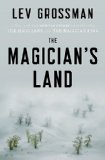
The sequel to The Magicians. I’m not done with Fillory yet, it’s a big world. Or with Quentin. He was just getting interesting.
Unless otherwise stated, this interview was conducted at the time the book was first published, and is reproduced with permission of the publisher. This interview may not be reproduced or reprinted without permission in writing from the copyright holder.


Costanza Casati was born in Texas and grew up in a village in Northern Italy, where she studied Ancient Greek, and Ancient Greek literature, under one of the country's most rigorous academic programmes. She is a graduate of ... (more)
If you enjoyed:
The Bright Sword
Try:
Clytemnestra
by Costanza Casati
Susanna Clarke's debut novel Jonathan Strange & Mr Norrell was first published in more than 34 countries and was longlisted for the Man Booker Prize and shortlisted for the Whitbread First Novel Award and the Guardian First ... (more)
If you enjoyed:
The Magicians
Try:
Jonathan Strange & Mr Norrell
by Susanna Clarke
We recommend 20 similar authors



We have to abandon the idea that schooling is something restricted to youth...
Click Here to find out who said this, as well as discovering other famous literary quotes!

Can you name the title?
Test your book knowledge with our daily trivia challenge!
Your guide toexceptional books
BookBrowse seeks out and recommends the best in contemporary fiction and nonfiction—books that not only engage and entertain but also deepen our understanding of ourselves and the world around us.
