Wendy Moore explains how she came to write Wedlock, the true story of the disastrous marriage and remarkable divorce of Mary Eleanor Bowes, Countess of Strathmore, who at age 11 became the richest heiress in 18th Century England, only to stumble headlong into an abusive marriage and scandal following her first husband's early death.
How did you come to write Wedlock?
Wedlock is my second book and also my second relating the life of an
eighteenth-century personality. After writing my first book, The Knife Man,
about the eighteenth-century surgeon John Hunter, I was scouting around for
another idea. I was still drawn to the colorful world of medical history and
spent many weeks pottering around dusty medical archives when suddenly Mary
Eleanor Bowes burst into my life.
I had had a brief encounter with Mary Eleanor Bowes, the Countess of Strathmore,
in writing my first book. She was a friend of John Hunter and donated to him the
skin of a giraffe that had been brought back from an expedition she had
sponsored to southern Africa. I knew no more about her until the curator of the
Hunterian Museum in London, where John Hunter's human and animal body parts are
exhibited, mentioned that the countess had a fascinating story of her own. Not
expecting much, I ordered a few books—accounts of the divorce case and the
kidnapping trials published at the time—when I next visited the British Library.
I could scarcely believe what I read. The shocking story of an accomplished
heiress who was tricked into marrying an Irish scoundrel by a fake duel, her
wretched married life, her audacious escape and landmark legal battles, and—most
staggering of all—her abduction by her estranged husband from a busy London
street, seemed like the stuff of fiction. I was hooked. Immediately I dropped
the other ideas I had been exploring and began a detective trail exploring Mary
Eleanor Bowes's life and times.
For the next two years I devoted myself to researching and writing Mary
Eleanor's story, visiting her childhood home of Gibside in northeast England,
where her house is still in ruins, and the romantic Glamis Castle (pronounced 'glarms')
belonging to her first husband in Scotland, where the late Queen Mother was
brought up, as well as trawling through countless boxes of letters, diaries,
bills, and even schoolbooks in various archives. It has been an enthralling
journey.
What made you want to write a book about the Countess of Strathmore?
Above all, it was the action-packed story that initially inspired me to
write about Mary Eleanor. I am a journalist by training and I know a good yarn
when I hear one. But as I got deeper into my research I became fascinated by the
themes that the story illuminated—how our ideas about marriage have changed, why
divorce has risen from the eighteenth century onwards, arguments about child
custody and women's rights—all issues that are just as topical today. I find the
eighteenth century compelling for this contradiction: so many of the customs,
fashions, and characters seem bizarre and eccentric to us today and yet so many
of the concerns—celebrity, relationships, media obsession—are exactly the same.
What original sources did you use in the research?
I was extremely lucky to find a rich treasure trove of material in archives,
particularly at Glamis Castle. I made seven trips to Scotland, where I plowed
through dozens of boxes of neatly tied bundles of letters, accounts, and legal
documents that had to be transported for me from Glamis Castle (where they are
kept in a cold and inhospitable turret) to Dundee University. Reading Mary's
letters and the replies to her from her lawyers, her family, her tenants, and
her friends helped me piece together the jigsaw puzzle of her marriage and
divorce. In earlier biographies—all by male authors—she had been depicted as
vain, selfish, and gullible and it was reading her descriptions of her ordeal in
her own words that brought to life the intelligent, compassionate, and
much-wronged woman to whom I felt a strong connection. Some of the
items—particularly the little bills for shoes, clothes, and medical treatment
for the five Strathmore children—were very poignant. Often it is a small
specific detail—like the bill which mentioned lettuce for the young tenth earl's
tortoise—that can bring out the human element in a story.
Were there any problems in writing the book?
One of the difficulties was trying to understand what attracted people—women
and men—to Andrew Robinson Stoney when obviously he was such a villain. How
could they be so easily fooled? It helped to read the desperate letters of Anne
Massingberd, whom he seduced between his two marriages, that plainly revealed
that women were totally besotted with him. Evidently, he possessed some strong
magnetism that women found hard to resist. It was also challenging to unravel
the complexities of the eighteenth-century legal world and understand the botany
of southern Africa, but I was lucky to find experts in both fields who helped
me.
Were you surprised to discover the limits on women's freedom and rights?
My last book centred very much on the men's world of eighteenth-century
medicine and science. Researching Wedlock brought home to me that the
eighteenth century in general was indeed a man's world. I hadn't realized the
extent to which girls and women were effectively ruled by their fathers and then
their husbands. Not only were women's lives generally governed by men, they
really had no legal status at all, so their property, their income, and even
their children all belonged to men. The stories of babies and young children
being taken from their mothers and handed over to their fathers when couples
divorced—often never seeing their mothers again—were harrowing to read,
especially as a mother myself. What was perhaps more surprising, though, was how
many women spoke out against their lack of rights and how many became
celebrated, respected, and powerful figures despite the legal and societal
restraints. I have huge admiration for women like Mary Wollstonecraft, Lady Mary
Wortley Montagu, and Mary Eleanor Bowes, who refused to accept the status quo
and stood up for their principles.
What was life like for an intelligent, highly educated wealthy woman in
mid-eighteenth-century Britain?
Highly frustrating, I imagine. The few women like Mary Eleanor, who were
sufficiently privileged to enjoy a full and rounded education, could hold their
own in salon conversations about science and the arts. But they were barred from
any serious involvement in either the scientific or arts worlds, unable to join
organizations like the all-male Royal Society, and disparaged if they tried to
compete on equal terms in writing poetry or books. Several women, like Hannah
More, Elizabeth Carter, and Mary Wortley Montagu, did earn respected reputations
for their learning but they were also viewed as oddities and unfeminine. As the
Bishop of London said: "Nothing, I think, is more disagreeable than learning in
a female." Having said that, Mary Eleanor would probably have been relatively
happy had she been allowed the freedom at least to pursue her passion for botany
and her love of writing; both were stifled by her successive husbands.
© Crown Publishing Group, 2009
Unless otherwise stated, this interview was conducted at the time the book was first published, and is reproduced with permission of the publisher. This interview may not be reproduced or reprinted without permission in writing from the copyright holder.

Ken Alder is an associate professor of history at Northwestern University and holds a Ph.D. from Harvard. His first book, Engineering the Revolution, won the 1998 Dexter Prize for the best book on the history of technology. ... (more)
If you enjoyed:
How to Create the Perfect Wife
Try:
The Measure of All Things
by Ken Alder
Gaynor Arnold was born and brought up in Cardiff, Wales. An only child, she grew up in a rented house with her parents (both shop assistants), grandparents and aunt. When she was 10 she asked her parents for a typewriter and... (more)
If you enjoyed:
Wedlock
Try:
Girl in a Blue Dress
by Gaynor Arnold
We recommend 13 similar authors
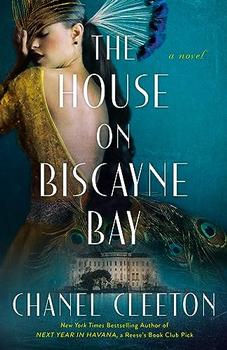
The House on Biscayne Bay
by Chanel Cleeton
As death stalks a gothic mansion in Miami, the lives of two women intertwine as the past and present collide.
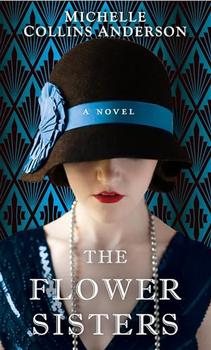
The Flower Sisters
by Michelle Collins Anderson
From the new Fannie Flagg of the Ozarks, a richly-woven story of family, forgiveness, and reinvention.
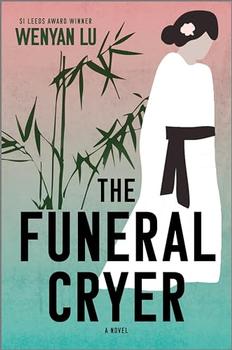
The Funeral Cryer by Wenyan Lu
Debut novelist Wenyan Lu brings us this witty yet profound story about one woman's midlife reawakening in contemporary rural China.
Your guide toexceptional books
BookBrowse seeks out and recommends the best in contemporary fiction and nonfiction—books that not only engage and entertain but also deepen our understanding of ourselves and the world around us.