
-
Your next favorite book
is waiting.
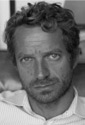
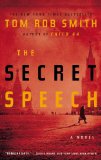
Tom Rob Smith answers questions about his books, in particular the historic background to the The Secret Speech.
What is the real Secret Speech, and why did you choose that as the backdrop for this story?
"The Secret Speech" was perhaps one of the most remarkable speeches ever delivered in modern history. Its effect on a nation and indeed around the world was dramatic. It was delivered by Premier Khrushchev in 1956, three years after Stalin's death, to the 20th Congress of the Communist Party of the Soviet Union. In the speech, Khrushchev attacks some of the brutal and savage measures Stalin used to control his population. It was the first time a public and influential attack had been made upon Stalin, an attack from the very epicenter of the Soviet government. Many of the officials listening to the speech simply couldn't believe the words they were hearing. To many, Stalin had been positioned as a god, above reproach. More interesting to me were the feelings of the people who had been complicit in Stalin's crimes. Khrushchev's speech seemed to herald a new era of openness in a society where many people had committed terrible crimes they wished to hide.
It was this point that led me to use it as backdrop for a story. Self-evidently, a second book is about what follows after the first book, and this period of history is about what follows after a brutal dictator. Leo, the main character, thinks he has atoned for his crimes as a secret police officer. However, can you ever repair the harm that has been done? Can an apology really do any good when the crimes are murder on a massive scale? The only choice open to Leo is to try to make amends, no matter how impossible that task might seem. Leo's dilemma echoes some of the emotions and conflicts embedded in the real Secret Speech. Khrushchev had risen up under Stalin, he had committed atrocities, his authority was interlinked with Stalin's. How does he distance himself from that? He was faced with the choice of either continuing as Stalin had done, murdering millions, or trying to change the system.
Leo Demidov—the character at the heart of both Child 44 and The Secret Speech—goes through a remarkable transformation in the course of these stories. He begins as a patriot, defending his country. But as time goes on and he realizes his homeland isn't what he thought it was, the conflict becomes much more personal: It's a fight to keep his family together, to remain a moral man inside an immoral system. How did you decide to create this character? Did you always know you wanted to continue Leo's story past one book?
I've always been interested in highly idealistic characters that end up being driven by their idealism to do terrible things. I've wondered how such a positive driving energy can become corrupted. Leo is a dreamer who finds that in pursuit of his dream, the creation of an ideal State, he has arrested many innocent people and destroyed lives, and his dream is far outweighed by the reality of his crimes.
I had no idea I would write a second book because I had no idea if the first book would be published or not. I didn't dare dream past the end of Child 44. But as soon as it was sold, I realized there were more stories I wanted to tell with this character. There will be three books in total, so The Secret Speech is the middle of the trilogy.
What kind of research did you do in order to re-create the setting and period? Did you visit any of the locations you write about?
Lots of reading. There is an abbreviated reading list at the back of each novel, mentioning a few of the key books. I've visited Moscow, Russia, and Budapest, Hungary, both key locations for The Secret Speech. Visiting a place obviously gives you a great amount of visual information, but the books and reading are where the emotions are generated: the diaries, the memoirs, the histories. My books, I hope, are much more about the feelings of the time rather than the material details, although those are often interlinked.
Did you always know you wanted to be a writer?
I always loved stories, narrative – I don't suppose I realized that meant becoming a writer until I was a teenager. From about the age of thirteen onward there wasn't any other profession that I seriously considered.
You have quite a varied background writing screenplays and TV scripts, including going to Phnom Penh to be the story consultant for Cambodia's first soap opera. How did that come about? Were there things you learned working in film and television that you found helpful when writing your novels?
I had been working in British television, writing episodes of soap operas, working in story departments. A colleague showed me the advert in a trade newspaper and I applied. I was slightly surprised to be called to interview and even more surprised to get the job – I was quite young, about twenty-four, and the producer took a chance on me. I've been lucky throughout my career: People have taken a chance on me even when I haven't had much experience. I hope in most cases I haven't let them down. Anyway, the BBC was setting up a soap in Cambodia, their first ever soap opera, with the intention of using it to communicate important health messages. I was the head of the story team, working with a small group of Khmer students.
Television and film are very structured – so are novels, but maybe working in other mediums made me think about the structure of a story. Also, it is simply impossible to write for film or television and not think about the audience, so I became much more conscious of the reader – were they sufficiently entertained, was I being indulgent, was the narrative surprising enough. These lessons can be learned without having worked in television or film. However, they certainly helped me.
Tom, what question would you like to have here to finish the Q & A? You pick!
My favorite question I've ever been asked was this: "If you were a kitchen appliance, what appliance would you be?" I've now learned that some questions are best left unanswered. I didn't realize that at the time so I answered this question by claiming I'd be a tap, since it was used a lot. I don't even know what my answer means, it's totally ridiculous. However, you can check out more odd questions I've been asked on my website, www.tomrobsmith.com, where you can also get in touch, or find out more about the charities supported by the purchase of my books.
Unless otherwise stated, this interview was conducted at the time the book was first published, and is reproduced with permission of the publisher. This interview may not be reproduced or reprinted without permission in writing from the copyright holder.
Boris Akunin is the pen name of Grigory Chkhartishvili, who was born in the Republic of Georgia in 1956. A philologist, critic, essayist, and translator of Japanese, Akunin published his first detective stories in 1998 and ... (more)
If you enjoyed:
The Secret Speech
Try:
The Winter Queen
by Boris Akunin
David Benioff (born David Friedman but changed his name to take his mother's maiden name) was born and raised in New York City and attended Dartmouth College and the University of California at Irvine. His father, Stephen ... (more)
If you enjoyed:
The Secret Speech
Try:
City of Thieves
by David Benioff
We recommend 8 similar authors



Poetry is like fish: if it's fresh, it's good; if it's stale, it's bad; and if you're not certain, try it on the ...
Click Here to find out who said this, as well as discovering other famous literary quotes!

Can you name the title?
Test your book knowledge with our daily trivia challenge!
Your guide toexceptional books
BookBrowse seeks out and recommends the best in contemporary fiction and nonfiction—books that not only engage and entertain but also deepen our understanding of ourselves and the world around us.
