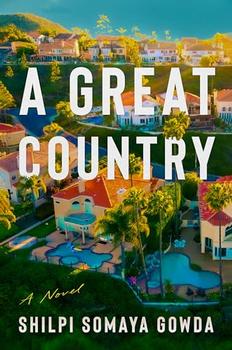
Olen Steinhauer explains the origins of his spy novel, The Tourist.
What is Tourism? We know the pitch—Langley will tell you
that Tourism is the backbone of their readiness paradigm, the immediate
response pyramid, or whatever they've rebranded it this year. That you,
as a Tourist, are the pinnacle of contemporary autonomous intelligence
work. You're a diamond. Really.
—The Black Book of
Tourism, Anonymous
The idea of a Tourist as a kind of intelligence agent sprang out
of my own lifestyle. Not that I've ever been a spy, committed murder, or
smuggled state secrets across borders—no, not that. What I've done, since 2001,
is live in that tenuous non-place in which many expatriates exist. It's neither
the home you've left behind, nor an adopted culture—instead, it's somewhere in
between: a bubble of your own construction, in which English is the national
language, and the details are arranged so that you can live just as you'd like.
It's a world without roots, carrying within it all the pros and
cons this suggests, and until the recent birth of my daughter, I felt very much
tied to the rootlessness of the expat. I knew that at any moment, if necessary,
I could disappear.
Tourism is one logical extension of this feeling. It comes from
the part of me that still wishes I had a bottomless credit card and could move,
day-to-day, week-to-week, for the rest of my days. Travel light, without
luggage, because when the clothes are dirty I'll just buy new ones. That's the
romantic side of me, the Hemingway-loving side. Nabokov, I read with glee, spent
his final decade in a Swiss hotel. It's my gullible side that thinks this
impermanence leads inevitably to happiness.
Autonomy is the most attractive aspect of Tourism. When
you were taken from your cubicle and handed off to one of those
bloodless agents who drove you, hooded, to a place of conversation, this
was the cornerstone of the pitch. See the world! Live well! Leave
paperwork behind! It's called Tourism because it's an endless vacation!
Yes. Right.
Those who take the path of eternal vacation learn pretty
quickly that it's a ruse. When Tourism started, in the early fifties, it
was different. Back then, the Company was the only advocate of Tourism,
the only producers of Tourists. But since the unfettered expansion and
experimentation of the early seventies, Tourism has become its own
international industry. There are Tourists from all over the world. Most
of them want to kill you.
In truth, the rewards of absolute rootlessness are fleeting, and
over time the strain begins to show. We all need someplace to rest, someplace to
call home. Most of us, over time, begin to unconsciously construct a new home by
accumulating people we love and depend on—which is one reason my fictional
Tourist must keep on the move.
After
finishing a sequence of five Cold War novels, I wanted to get out of the past
and take on something contemporary. In a way, it was an outgrowth of settling
down into a new home with my wife and daughter—I no longer lived in a bubble,
where I could pretend the world was still gripped by the easier-to-grasp
ideological battles of the 20th century.
So: a spy novel set in the global world of now. Ideas
bounce around the planet with remarkable speed—Eminem fans abound in Estonia,
Nigerian scammers take money from the gullible in South Carolina, and the US
military transfers prisoners to its own network of non-Geneva-Convention
basements spread around the planet. Cartoons in a Dutch newspaper spark riots in
Iran, Belgrade protesters wave signs asking Barak Obama (during the primaries)
to let them keep Kosovo, and when I look at the tags on my daughter's clothes, I
find the world: USA, China, Pakistan, France, Serbia, Hungary, Mexico. Even she:
half-American, half-Serb, born in Hungary.
In a world like this, what's the point of a spy having a home at
all? Technology has made so much moot. A spy's controllers don't need to sit him
down in an office to explain his jobs; cash is delivered through ATMs; miniature
cameras are in the cheapest cell phones now. Guns, perhaps? Airport security is
so tight that a pistol wouldn't make it through anyway.
For a contemporary field agent, stripped down to his essentials,
a home and office are pointless. All he needs is a passport and credit card, his
wits and the mental stability to not go off the deep end.
It's all about working the odds. You do this by
following simple rules, some of which are in the Company manual, some of
which I've added here—these are the learned rules the bureaucrats don't
want to tell you about. Because the first one is this:
NO MATTER HOW BETTER YOU ARE THAN THE OPPOSITION,
THEY WILL KILL YOU EVENTUALLY.
Langley doesn't want you to know this. They're afraid
you'll break, lose your bearings, sink into nihilism, or, worse, run
away. But it's true. The opposition will track you down and do you in.
Or, when you've become too much of a burden, Langley will take care of
it for them. Because the second unwritten rule, or cliché, of Tourism is
TRUST NO ONE.
A picture evolved of a spy whose life has been streamlined and
made purely functional, like a perpetual tourist. And that, too, seemed apropos:
With today's global tourism industry, no longer the activity of only the
well-off, why bother with awkward legends? Is a journalist any more likely to be
found in Romania than a tourist? Certainly not.
I'd like to think that the final picture presented in The
Tourist looks, if not real, then at least realistic—a crucial distinction in
fiction. I didn't want Tourism to be just some metaphor for contemporary global
politics or culture; that's only a fraction of the story. More interesting is
what effect such a lifestyle has on someone who's been at it for years—years,
homeless and rootless, his raison d'etre merely the next job. It's a life that
strikes me—the me who has begun life as a father—as finally crushing, which is
why the book opens:
Four hours after his failed suicide attempt,
he descended toward Aerodrom Ljubljana.
Like their small-t namesakes, Tourists are well advised to leave
trust behind, but unlike tourists or even expats like myself, their travels are
nearly always solo, and there's no possibility of finding love in exotic
locales. Nor can the Tourist check out of the hotel and head home to the wife
and baby daughter, the knowable variables of an everyday life. Who, really,
could survive such a life?
Perhaps that's why I've given my Tourists a little light of
hope, a book that, according to Tourist lore, is the secret guide to survival.
Some think The Black Book of Tourism is a myth, while others believe that
a legendary Tourist hid twenty-one copies of it throughout the world. Whatever
the truth, the Good News of Tourism's bible does not mince words:
You will die. Know that from the start. A car accident,
the crossfire of a drug shoot-out, a collapsed building, a sunk ship, a
short-circuited electrical line, a plummeting airplane. I don't have to
list them all—as Tourists you know the methods are everywhere and in
everything. They can be directed at you at any time.
Just keep it in mind from the start, and never forget
it: They will kill you, Tourist. You will be dust.
There was a
time when this description of a Tourist, the rootlessness and the danger, would
have excited me. Little did I know that the greatest challenges would arrive
from a different quarter. Perhaps that's why I gave my protagonist both worlds:
He begins as a Tourist, then leaves it to take on marriage and fatherhood. He
thinks his worries are over, but he's just as naïve as I once was, dreaming of
passports and credit cards and the light step of the unencumbered.
Every fool gets to be young once.
Unless otherwise stated, this interview was conducted at the time the book was first published, and is reproduced with permission of the publisher. This interview may not be reproduced or reprinted without permission in writing from the copyright holder.


Charles Cumming is a British writer of spy fiction. He was educated at Eton College (1985-1989) and the University of Edinburgh (1990-1994), where he graduated with First Class Honours in English Literature. The Observer has ... (more)
If you enjoyed:
The Tourist
Try:
The Trinity Six
by Charles Cumming

Victor del Árbol holds a degree in history from the University of Barcelona. He has worked for Catalonia's police force from 1992 to 2012. In 2006, he won the Tiflos de Novela Award for The Weight of the Dead. The ... (more)
If you enjoyed:
The Tourist
Try:
The Sadness of the Samurai
by Victor del Arbol
We recommend 5 similar authors



The House on Biscayne Bay
by Chanel Cleeton
As death stalks a gothic mansion in Miami, the lives of two women intertwine as the past and present collide.

The Flower Sisters
by Michelle Collins Anderson
From the new Fannie Flagg of the Ozarks, a richly-woven story of family, forgiveness, and reinvention.

The Funeral Cryer by Wenyan Lu
Debut novelist Wenyan Lu brings us this witty yet profound story about one woman's midlife reawakening in contemporary rural China.
Your guide toexceptional books
BookBrowse seeks out and recommends the best in contemporary fiction and nonfiction—books that not only engage and entertain but also deepen our understanding of ourselves and the world around us.