
-
Your next favorite book
is waiting.

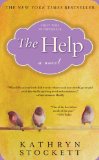
Kathryn Stockett explains the genesis of her first novel, The Help, about three very different women whose lives intersect in 1960s Mississippi.
What was the genesis of the novel?
Growing up in Mississippi, almost every family I knew had a black woman
working in their house—cooking, cleaning, and taking care of the white
children. That was life in Mississippi. I was young and assumed that’s how
most of America lived.
When I moved to New York, though, I realized my “normal” wasn’t quite
the same as the rest of America’s. I knew a lot of Southerners in the city,
and every now and then we’d talk about what we missed from the South.
Inevitably, somebody would start talking about the maid they grew up with,
some little thing that made us all remember—Alice’s good hamburgers or
riding in the back seat to take Willy May home. Everybody had a story
to tell.
Twenty years later, with a million things to do in New York City, there
we were still talking about the women who’d raised us in our mama’s
kitchens. It was probably on one of those late nights, homesick, when I
realized I wanted to write about those relationships from my childhood.
Tell us about your own family maid and your family’s
relationship with her.
My grandmother’s maid was named Demetrie. She started working for my
grandparents in 1955, when my father and uncle were still boys and she
was twenty-eight. When they were grown, she looked after us, the grandchildren.
I loved Demetrie dearly, and I felt so loved too. We got the best part of
her. She wasn’t our mother, so it wasn’t her job to discipline us or make us
sit up straight. She just played with us and fed us, and she liked to make
us laugh. When I was little, she told me that I had a tail, and I was always
turning around, looking for it. I wasn’t exactly “quick” as a child.
I think another reason my siblings and I had such a close connection
with Demetrie is that she never had children of her own. She’d grown up
poor and lived with an abusive husband. When a person has that much
sadness and kindness wrapped up inside, sometimes it just pours out as
gentleness. She was a gentle soul. There haven’t been enough people like
her in this world.
Since you weren’t alive in 1962, what research, if any, did you do
to make sure the time period and social attitudes of the era were
accurate?
It sounds crazy, but I would go to the Eudora Welty Library in Jackson and
look at old phone books. The back section of the phone book captures so
much about the mundane life in a certain time, which somehow becomes
interesting fifty years later. The fancy department stores, the abundance of
printing shops, and the fact that there were no female doctors or dentists—
all helped me visualize the time. In the residential listings, most families just
listed the husband’s name, with no mention of the wife.
I also read The Clarion-Ledger newspapers for facts and dates. Once I’d done
my homework, I’d go talk to my Grandaddy Stockett, who, at ninety-eight,
still has a remarkable memory. That’s where the real stories came from, like
Cat-bite, who’s in the book, and the farmers who sold vegetables and cream
from their carts everyday, walking through the Jackson neighborhoods.
I found that people don’t seem to remember “social attitudes.” They
remember what you could do, what you couldn’t do, and especially those
people who went ahead and did both.
You interviewed both African-Americans and whites from this time
period. Was there anything surprising in what they told you?
It’s a tricky question to ask. It is hard to approach someone and say,
“Excuse me, but what was it like to work for a white family in the South
during 1960s?” I guess I felt a lot like Skeeter did in The Help.
But I did hear plenty of interesting stories. One black woman from Birmingham
told me she and her friends used to hide down in a ditch, waiting
for the bus to take them to work. They were that afraid to stand on a
street corner because white men would harass them. Still, all of the black
women I spoke to were very proud of the jobs they’d had. They wanted to
tell me where their white children live today and what they do for a living. I
heard it over and over: “They still come to see me” and “They call me every
Christmas.”
The surprises actually came with the white women I interviewed. I realize
there’s a tendency to idealize the past, but some of the women I spoke
to, especially the middle-aged generation, just fell apart before they even
started talking. They remembered so many details: She taught me to tell time;
She taught me to iron a man’s shirt before I got married; She taught me how to
wait for the green light. They’d remember and sigh.
After a while, I started to better understand what they were feeling. I felt
it, too. It wasn’t just that they missed these women so deeply. I think they
wished that they could tell them, one last time, “Thank you for everything.”
There was a sense that they hadn’t thanked them enough.
Were you nervous that some people might take affront that you, a
white woman in 2008—and a Southern white woman at that—
were writing in the voice of two African-American maids?
At first, I wasn’t nervous writing in the voice of Aibileen and Minny because
I didn’t think anybody would ever read the story except me. I wrote it because I wanted to go back to that place with Demetrie. I wanted to hear her
voice again.
But when other people started reading it, I was very worried about what
I’d written and the line I’d crossed. And the truth is, I’m still nervous. I’ll
never know what it really felt like to be in the shoes of those black women
who worked in the white homes of the South during the 1960s and I hope
that no one thinks I presume to know that. But I had to try. I wanted the
story to be told. I hope I got some of it right.
Of the three women—Aibileen, Minny and Skeeter—who is your
favorite character? Were they all equally easy or difficult to write?
Were any of them based on real people?
Aibileen is my favorite because she shares the gentleness of Demetrie. But
Minny was the easiest to write because she’s based on my friend Octavia. I
didn’t know Octavia very well at the time I was writing, but I’d watched
her mannerisms and listened to her stories at parties. She’s an actress in Los
Angeles, and you can just imagine the look on her face when some skinny
white girl came up and said to her, “I’ve written a book and you’re one of
the main characters.” She kind of chuckled and said, “Well, good for you.”
Skeeter was the hardest to write because she was constantly stepping
across that line I was taught not to cross. Growing up, there was a hard and
firm rule that you did not discuss issues of color. You changed the subject if
someone brought it up, and you changed the channel when it was on television.
That said, I think I enjoyed writing Skeeter’s memories of Constantine
more than any other part of the book.
Unless otherwise stated, this interview was conducted at the time the book was first published, and is reproduced with permission of the publisher. This interview may not be reproduced or reprinted without permission in writing from the copyright holder.

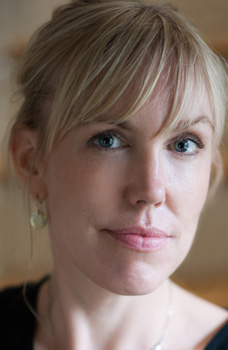
Born and raised in Southern California, Brit Bennett graduated from Stanford University and later earned her MFA in fiction at the University of Michigan, where she won a Hopwood Award in Graduate Short Fiction as well as the... (more)
If you enjoyed:
The Help
Try:
The Vanishing Half
by Brit Bennett
Tara Conklin was born on St. Croix in the US Virgin Islands and raised in Stockbridge, Massachusetts. She is a graduate of Yale University, the Fletcher School of Law and Diplomacy and New York University School of Law. Most... (more)
If you enjoyed:
The Help
Try:
The House Girl
by Tara Conklin
We recommend 16 similar authors





The longest journey of any person is the journey inward
Click Here to find out who said this, as well as discovering other famous literary quotes!

Can you name the title?
Test your book knowledge with our daily trivia challenge!
Your guide toexceptional books
BookBrowse seeks out and recommends the best in contemporary fiction and nonfiction—books that not only engage and entertain but also deepen our understanding of ourselves and the world around us.
