Daniyal Mueenuddin, author of In Other Rooms, Other Wonders, talks about his life growing up in Pakistan, and how his understanding of both American and Pakistani cultures led him to become a writer.
For many years I have run a farm in Pakistan's southern Punjab. Most of the
stories in this book have their origins in my experiences there, and many were
written there. Half-Pakistani and half-American, I have spent equal amounts of
time in each country, and so, knowing both cultures well and belonging to both,
I equally belong to neither, look at both with an outsider's eye. These stories
are written from that place in between, written to help both me and my reader
bridge the gap.
My father was a graduate of Oxford, a member first of the Indian and then after
Partition of the Pakistani civil service – and, most fundamentally, a land owner
of the old Punjabi feudal class. My American mother, a reporter with the
Washington Post, met my father in Washington, where he was negotiating a treaty.
She was twenty seven years younger than him. They married and soon after – in
1960 – moved back to Pakistan.
We lived in Lahore, where I attended the American School until I was thirteen,
my classmates the children of westernized Pakistanis or of the few foreigners
pursuing their oblique lives in this marginal place. My family spent most
vacations on the farm that I now manage, where I ran free day and night with the
children of the village, was in and out of their houses, ate with them, explored
with them, swam with them. In Lahore I was closer to the old servant who brought
me up than to anyone else – thirty years after his death I still wear the
bracelet he gave me when I went off to school in America. Because I was a child,
the servants and the villagers were not guarded against me, unaware that I was
watching; and therefore I learned the rhythms and details of their lives in a
way that I never could as a grownup. I heard the women in the village calling to
each other over their common walls, walked out with the boys when they took
their buffaloes to be watered at the canal. These people, their gestures and
intonations as I observed them in my childhood, appear throughout the stories in
In Other Rooms, Other Wonders.
At thirteen I was packed off to boarding school in Massachusetts. Five years of
full-dress dinners, Latin grammar, lacrosse, and daily chapel, lacquered me to a
glossy Boston-Episcopalian sheen, so that by the time I arrived at Dartmouth
College I more or less passed as an American. There I wrote poetry, protested
against apartheid, sweated it out in the library stacks – and popped out after
four years with – a degree in English literature, a debased currency. My aging
father had been sending increasingly pressing letters, telling me I must return
to Pakistan and take care of the family property, and so, after reflection, I
complied.
My father, just turned eighty, had suffered a long series of heart-attacks. As
his illness progressed, for years he had been losing control of his lands to the
managers, who sent less and less money to Lahore each quarter, as they became
increasingly confident that he could no longer visit the farm. In his calm and
perfectly rational manner, my father explained to me soon after I returned that,
if I wanted the land, I would have to go fight for it – that otherwise it would
be lost.
On arrival at the farm I went through the books with the accountants, walked the
lands, met with revenue officials, trying to get some sense of what we owned,
what we produced, what we spent. The place was a total disaster. There were no
maps, no deeds, no titles. The accountants had wound the books into an
impenetrable ball. The managers were all from the same extended family, and were
unified against me. I returned to Lahore five weeks later, shell-shocked, hungry
for company, but hardened, sunburned, and at least now aware of the scale of the
problem. I decided to stay and fight it out.
For the next seven years I lived more or less uninterruptedly at the farm. It
was a tense and yet intensely happy time, long days walking across the lands, or
sitting in hot rooms poring over ledgers – and then, against that, the early
mornings, when I wrote poetry, looking out from the window of my study to the
garden my mother had planted. In the evening I wrote letters and read endlessly,
ordering crates of books from Blackwells in Oxford, who had supplied my mother's
books in the nineteen sixties.
My father died soon after my return from college, and I lost his backing, the
influence he still had wielded – but I stayed afloat. Gradually I learned about
the crops, about selling and buying, about fertilizer, diesel engines, the
qualities of soil, the depths and shallows of the local politics, the depravity
of the police. I learned to be a hard negotiator, to manage the farm rigorously,
to form alliances, to deflect threats. These were very different lessons than
the ones I learned as a child, much harder lessons, and equally valuable to the
stories that I would be writing.
By the sixth year, I felt I had to get away and spend time in the West again. I
applied to law school, got in to Yale, and spent three lively years there, my
concerns far removed from Pakistan. After graduation I took a job at one of the
large New York law firms.
Sitting in my office on the forty second floor of a black skyscraper in
Manhattan, looking out over the East river, I gradually developed confidence in
the stories I had lived through during those years on the farm. I realized that
I was in a unique position to write these stories for a Western audience –
stories about the farm and the old feudal ways, the dissolving feudal order and
the new way coming, the sleek businessmen from the cities. I resigned from the
law firm, returned to Pakistan, and began writing the stories that make up this
book.
Unless otherwise stated, this interview was conducted at the time the book was first published, and is reproduced with permission of the publisher. This interview may not be reproduced or reprinted without permission in writing from the copyright holder.

Aamina Ahmad, a graduate of the Iowa Writer's Workshop, has received a Stegner Fellowship from Stanford University, a Pushcart Prize, and a Rona Jaffe Writer's Award. Her short fiction has appeared in One Story, The Southern ... (more)
If you enjoyed:
In Other Rooms, Other Wonders
Try:
The Return of Faraz Ali
by Aamina Ahmad

Ayad Akhtar is a novelist and playwright. His work has been published and performed in over two dozen languages. He is the winner of numerous awards, including the Pulitzer Prize for Drama and an Award in Literature from the ... (more)
If you enjoyed:
In Other Rooms, Other Wonders
Try:
American Dervish
by Ayad Akhtar
We recommend 9 similar authors



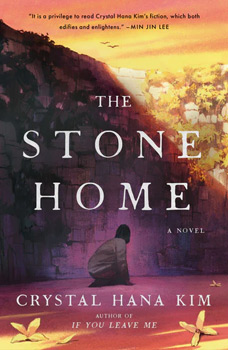
The Stone Home
by Crystal Hana Kim
A moving family drama and coming-of-age story revealing a dark corner of South Korean history.

The Flower Sisters
by Michelle Collins Anderson
From the new Fannie Flagg of the Ozarks, a richly-woven story of family, forgiveness, and reinvention.

The Funeral Cryer by Wenyan Lu
Debut novelist Wenyan Lu brings us this witty yet profound story about one woman's midlife reawakening in contemporary rural China.
Your guide toexceptional books
BookBrowse seeks out and recommends the best in contemporary fiction and nonfiction—books that not only engage and entertain but also deepen our understanding of ourselves and the world around us.