
-
Your next favorite book
is waiting.

How to pronounce David Benioff: BEN-ee-off
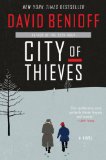
A conversation with David Benioff about The City of Thieves, set during the World War II Siege of Leningrad.
City of Thieves begs the question: Did all this really happen to
your grandfather?
No. My grandfather was born on a farm in Delaware. He became a furrier and
died in Allentown, Pennsylvania. My grandmother (unlike the non-cooking
grandmother in the book) made the best chopped chicken liver in the state.
Neither one, as far as I know, ever visited Russia.
David notes, "Truth might be stranger than fiction, but it needs a
better editor." (p. 4) How much "editing" did you do?
See answer to number one. A whole lot.
How much additional research did you do to write this novel?
I had a wonderful teacher once, the novelist Ann Patchett. I asked her about
the research she did for The Magician's Assistant, and she told me to
choose the single best book on the given subject and study it obsessively.
Writers are always tempted to track down dozens of books to help give our
make-believe stories that tang of authenticity, but often the problem with too
much research is a writing style that seems too researched, dry and musty, and
eager for a history teacher's gold star of approval.
Unfortunately, my will was not strong enough for me to follow Ann's advice. I
did end up reading dozens of books on the Siege of Leningrad. In her honor,
though, I picked one that became my Bible: The Nine Hundred Days by
Harrison Salisbury. He was the first Western journalist to have access to
Leningrad once the siege was lifted. He spoke firsthand with hundreds of
Russians who survived the siege, and he collected as many diaries, journals, and
letters as he could. The second most important book for me was Kaputt by
Curzio Malaparte. A former Fascist, Malaparte was essentially an embedded
journalist before the concept existed. He rode along with the German and Finnish
forces during the early months of Barbarossa and his accounts provided me a
necessary glimpse of the invaders' mindset, tactics, and appearance.
You're a successful Hollywood screenwriter. The Kite Runner is
something you recently adapted for film. Why did you make David a writer of
"mutant superhero" movies?
David, the narrator of the prologue, is not David the guy writing these
words. The David of the novel (who might or might not be David Beniov; it is not
clear whether Lev Beniov is David's paternal or maternal grandfather) is similar
to me in many respects, but he's not me. That said, I did write the screenplay
for Wolverine, featuring a mutant superhero.
In the novel, David "realized I had led an intensely dull life... . I
didn't want to write about my life, not even for five hundred words." (p. 3)
Would you have preferred—as the Chinese curse says—to live in "interesting
times"?
Unfortunately, these are interesting times. The narrator goes on to
say that he enjoys his life; and I do, too.
At first glance, City of Thieves and The 25th Hour seem
to tell very different stories—one is historical and set during a time of great
societal upheaval, while the other is contemporary and deals with one man facing
his own crimes. Yet both are ultimately about young men and friendship. What
draws you to write a particular story?
That's a hard question to answer. In both cases the stories were stuck in my
mind for years before I wrote them. The 25th Hour was based on a short
story I wrote in college. Seven years after I wrote the story, the characters
were still chattering in my brain, which seemed to me a good sign that I wasn't
finished with them.
For City of Thieves I had the characters and story in 2000 but could
never quite figure out how to write the novel. I kept shifting back and forth
between first person and third person. I rewrote the opening page at least a
dozen times. Finally, in September 2006, I got cracking for real.
If you were in Lev's place, do you think you would have chosen to stay
in Leningrad or would you have left with your mother and sister? Why?
I don't know. If something happened to my mother and sister on their way to
safety, the guilt would probably destroy me. At the same, if you're a teenage
boy, living in the center of the greatest armed conflict in the history of the
world, you don't want to flee. You want to do your part and protect your city.
A lot of what Lev sees and experiences could be described as tragic,
yet his story is told with a lot of humor. What made you decide to give the
novel its light-hearted tone?
I'm not sure if light-hearted is the right word for a story that includes
cannibalism, forced prostitution, involuntary amputation, and starvation. What
inspired the humor was reading the diaries of the Leningrad survivors. Their
daily accounts of their struggles are often grim, but almost always hopeful and
full of life. People continued attending (and performing in) concerts, plays,
and poetry readings despite all the suffering around them.
What are the differences between writing for film and writing a novel?
What do you like and dislike about each?
Screenplays are much shorter: Twelve weeks and you're done. A novel can take
years. Writing a novel is an endurance sport, a marathon, while a screenplay (or
a short story) is more of a middle-distance race—800 meters, say. To extend this
possibly inane analogy, a poem would be a sprint in a stadium with no
spectators.
What are you working on now?
A series for HBO. We'll see if it ever gets made.
Unless otherwise stated, this interview was conducted at the time the book was first published, and is reproduced with permission of the publisher. This interview may not be reproduced or reprinted without permission in writing from the copyright holder.

Ramona Ausubel is a graduate of the MFA program at the University of California, Irvine. She is the author of the novel No One Is Here Except All of Us and the short story collection A Guide to Being Born. Her work has been ... (more)
If you enjoyed:
City of Thieves
Try:
No One is Here Except All of Us
by Ramona Ausubel

Debra Dean attended Whitman College where she double-majored in English and Drama. She worked in New York and regional theatre for nearly a decade. She received her MFA degree from the University of Oregon and has written 3 ... (more)
If you enjoyed:
City of Thieves
Try:
The Madonnas of Leningrad
by Debra Dean
We recommend 10 similar authors







Finishing second in the Olympics gets you silver. Finishing second in politics gets you oblivion.
Click Here to find out who said this, as well as discovering other famous literary quotes!

Can you name the title?
Test your book knowledge with our daily trivia challenge!
Your guide toexceptional books
BookBrowse seeks out and recommends the best in contemporary fiction and nonfiction—books that not only engage and entertain but also deepen our understanding of ourselves and the world around us.
