Tana French talks about The Likeness, the sequel to her successful debut novel, In The Woods, and explores the characters in the book, their motivations, and how her experiences made them come alive.
Q: How has your background in theater helped you create your characters?
A: When you get right down to it, writing – or at least writing in the first
person, which is what I do – is basically the same skill as acting. For years,
my job as an actor was to create a character – hopefully a full,
three-dimensional character – and spend hours a day operating completely from
her perspective, bringing an audience into her world. Writing is just an
extension of that process. These days, my job is to create a narrator and see
everything through her eyes, filter it through her perceptions and describe it
in her voice, so I can draw readers into her world. I play my narrator on paper,
rather than on stage, but the mental process is the same. Writing scenes with a
lot of characters gets complicated – I have to 'play' all of them at once,
juggle all their perspectives and motivations in my head – but it's still that
same skill. I keep meaning to e-mail my old acting teacher and thank him!
Q: Are any of the characters in The Likeness based on anyone you know?
A: No, I don't base characters on real people. As soon as you do that, you're
limited by what you know about the real person, what he or she would actually do
or say. The character's no longer free to develop in tandem with the needs of
the plot, the themes or the other characters, so he or she comes across as out
of place and, weirdly, more artificial than a made-up character would. I do
steal little tiny snippets – an odd turn of phrase here, a quirky gesture there
– but only from people I don't know, people I pass on the street or sit next to
on the bus. For me, anyway, creating characters from scratch makes for a more
cohesive book.
Q: How much of Cassie is based on you?
A: Cassie is someone I'd love to know, but she's definitely not me. I think
you can tell a lot about people from their choice of careers, for example, and
Cassie's a murder detective: she's chosen a career that involves being very
practical, very down-to-earth, very focused, and she's good at it. Me, on the
other hand, I chose a career that basically involves huge amounts of
daydreaming. (There are days when I want to go find the teachers who hassled me
for daydreaming in school and tell them, 'Look! Daydreaming turned out to be my
main life skill!') She deals in high-stakes reality; I make stuff up for a
living. She has to come face to face, without flinching, with the worst evils
our society has to offer; me, there are days when I can barely stand watching
the news.
Q: How did you get the idea to have Cassie and Lexie be identical in
appearance?
A: To give a sensible answer to that, I'd have to back-engineer the whole
process. Probably, in retrospect, it has something to do with the fact that
The Likeness is linked to In the Woods and spins around some of the
same themes – identity, the things that threaten or define identity, the moments
when we have to choose to accept or reject something that transforms our
perception of reality… Probably it also has to do with the fact that those
issues were built into Cassie's character in In the Woods – with the
references to her previous undercover career and her lack of family, for example
– so when I started to think abut giving her a book of her own, it was
inevitable that identity and disguise would play a major role. In practice,
though, I'm nowhere near organized enough to think all that stuff out. At the
time, basically, I was batting a wild variety of mental images around in my head
to see if one would stick, and I just really liked the image of a detective
showing up at a murder scene and seeing that the victim's face was identical to
her own.
Q: How did your knowledge of archeology and experiences at digs help you as a
mystery writer?
A: When I was a kid, I wanted to be an archaeologist and discover Troy,
until I found out someone else had already done that. I've worked on a couple of
digs, though, and loved every second of it. I actually found the
sixteenth-century coin that shows up in In the Woods.
This is going to sound weird, but the archaeologist's job is an awful lot like
the detective's. Both of them are presented with a final result – a dead body, a
set of walls – and they have to work painstakingly backwards, connecting up
every piece of evidence and keeping a sharp eye out for any links or
contradictions, to figure out how that result got there. The main difference is
that archaeologists can afford to be open to the possibility that they don't
have all the evidence at their disposal, so their theories might change in the
future, while the detective needs to build a theory that he can prove beyond a
reasonable doubt; he only gets one shot.
Q: How did you become so expert on police procedures?
A: I was lucky enough to have the help of an amazing detective on the Irish
police force. He's spent hours talking to me, he's answered an incredible
variety of weird questions, and he's responsible for basically everything in the
books that's police-related and accurate.
I do take massive liberties, where the story requires it. To take the most
obvious example, there's no murder squad in Ireland any more – but a small,
tight, elite squad creates an intense atmosphere that a big cooperative force
doesn't have, so I added one in. To take another example, actual detectives
spend a huge percentage of their time doing paperwork – but, since that's just
as boring in fiction as it is in real life, I skip happily over it and let my
detectives spend all their time doing interesting stuff. Apart from those
necessary liberties, though, I try to be as accurate as possible.
Q: Which authors do you admire and how did they influence you?
A: When I think about it, the book that had the biggest impact was probably
Kenneth Grahame's The Wind in the Willows. My father read it to me when I
was six, and I can still remember being dazzled by the sheer beauty of the
language – the description of a river as 'that sleek, sinuous, full-bodied
animal'. I think if you're introduced to a book like that at an impressionable
age, you can't help falling in love with words.
When it comes to crime writing, the authors I'm in awe of are the ones who push
the boundaries of the genre. One of the things I love about crime writing is
that the parameters are so clearly defined: someone gets killed, someone else
finds out who did it.
My favorite detective writers are the ones who use those parameters not as a
foregone conclusion but as a starting point, the ones who experiment with them.
In Donna Tartt's The Secret History, for example, you find out on the
first page who killed whom, and yet it's one of the most breathtakingly
suspenseful murder mysteries I've ever read. Josephine Tey's The Franchise
Affair is a deeply scary portrait of the damage a psychopath can inflict,
but you know who the villain is from very early on, and the most serious crime
in the book is wasting police time. Dennis Lehane's Mystic River is part
mystery, part social history, part family saga, and all the more powerful for
blurring those boundaries.
I think all of those writers have influenced me – maybe not in direct ways, but
in their willingness to bend the formulae and walk those fine lines at the edge
of the conventions. These books are set on the jagged edge where conventions
meet reality – a reality in which people are flawed and complicated, and the
search for answers doesn't always have a happy ending. They're not as comforting
as the tidier, more unequivocal books in which good triumphs and evil is
punished, but they're the ones that stay in my mind.
Q: What advice would you give to a first novelist?
A: Read good things. I think writing a book is almost like running a
marathon: you need the best nourishment you can get. The more you expose
yourself to first-rate writing, the more you develop your instincts, and the
more you'll push yourself towards that high standard. When I'm writing, I read
the best stuff I can find. It doesn't matter what genre it is – thriller,
literary fiction, chick lit, anything – as long as it's first-rate.
And don't be scared of doing it wrong. One of the joys of writing is that we're
allowed to get it wrong as many times as we need to, and no harm done. You can
rewrite that section a dozen times, and then scrap the whole thing and start
again, if that's what you need to do to get it right. This is especially true
for first-time writers: there are no deadlines and no pressure, so you can
afford to take all the time and all the drafts you need.
Q: What can we look forward to in your next novel?
A: I want to keep writing about the same general clump of main characters
for a while. In The Likeness, there's a character called Frank Mackey,
who's Cassie's boss when she works undercover. He's very good at his job, very
ruthless and very morally ambiguous, the kind of guy who sees everything as
potential ammunition, and he's the narrator of Book 3. He hasn't spoken to his
family in more than twenty years, since the day his first love dumped him and
(supposedly) emigrated to England – but then her suitcase shows up behind the
fireplace of a derelict house on his old street…
I haven't ruled out coming back to Cassie, though, or to Rob Ryan from In the
Woods. I'm not done with either of them yet!
Unless otherwise stated, this interview was conducted at the time the book was first published, and is reproduced with permission of the publisher. This interview may not be reproduced or reprinted without permission in writing from the copyright holder.

Kate Atkinson won the Whitbread (now Costa) Book of the Year prize with her first novel, Behind the Scenes at the Museum. Her four bestselling novels featuring former detective Jackson Brodie became the BBC television series ... (more)
If you enjoyed:
The Likeness
Try:
Started Early, Took My Dog
by Kate Atkinson

Jean-Luc Bannalec is a pseudonym. The author divides his time between Germany and coastal Brittany, France. Death in Brittany, the first case for Commissaire Dupin, was published in German in March 2012 and sold 600,000 ... (more)
If you enjoyed:
The Secret Place
Try:
Death in Brittany
by Jean-Luc Bannalec
We recommend 24 similar authors

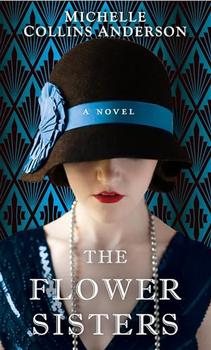
The Flower Sisters
by Michelle Collins Anderson
From the new Fannie Flagg of the Ozarks, a richly-woven story of family, forgiveness, and reinvention.
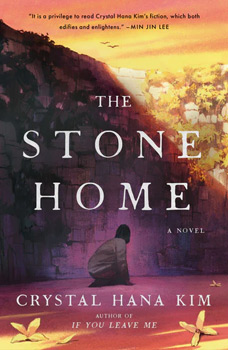
The Stone Home
by Crystal Hana Kim
A moving family drama and coming-of-age story revealing a dark corner of South Korean history.
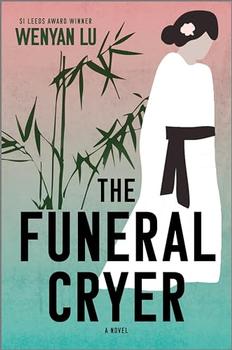
The Funeral Cryer by Wenyan Lu
Debut novelist Wenyan Lu brings us this witty yet profound story about one woman's midlife reawakening in contemporary rural China.
Your guide toexceptional books
BookBrowse seeks out and recommends the best in contemporary fiction and nonfiction—books that not only engage and entertain but also deepen our understanding of ourselves and the world around us.