A BookBrowse exclusive interview with poet Alice Fulton about her first collection of short stories, The Nightingales of Troy.
Karen:
Charlotte Garahan's statement, "As a waitress, you learn to be attentive
to the needs of others" echoes Mamie Flynn Garrahan's "A woman in labor should
have plenty for others fixed to eat...". These two women forge ahead even in the
midst of pain, an act that may remind the modern reader of a familiar scenario:
that of women attending to others, sometimes at the expense of themselves.
Whether this selflessness is generous, self-defeating, or quite heroic, that
mindset seems to shape part of the world these characters live in. It also seems
to tie into the nursing that appears in other stories - was there a particular
inspiration behind this caregiving theme?
Alice:
That attitude was a cultural given for the characters in the book. That
particular theme of self-sacrifice came from the people who inspired the
characters, women who put others before themselves. "In the 20th century, I
believe there are no saints left," Mamie says in the first sentence, and many of
the characters throughout the book struggle with the problem of goodness. The
problem of evil is a well-known philosophical quandary, but we seldom think of
goodness as a problem. Yet as you say, there's a thin line between altruism and
martyrdom. Burnout is a problem for many people -- nurses, teachers, parents,
and children who become caregivers. Is it noble or dangerous to give so much to
others?
Charlotte, a thoroughly unselfish, lovely being, probably gives too much. Her
sister Edna, on the other hand, made a vow to be happy, and she intends to keep
that promise, come what may. Annie, the nurse, is very resilient, unsinkable, it
seems. Also, she's paid to take care of others, and being a paid caregiver is
something new. Before Annie, the women in this family did that work for free.
Annie's daughter Ruth, a teacher, confronts the limits of altruism when dealing
with a student in "If It's Not Too Much To Ask," and again in the last story
when she's taking care of her mother.
Karen:
How did you decide which of the characters would appear in more than one
story? Were you drawn to them?
Alice:
Early on, I decided there'd be a story set in each decade of the 20th
century. Before writing, I'd ask whose decade is this? Which character has the
most interesting story to tell? Whose life changed during that ten year period?
So I was drawn to the story possibilities of particular characters. When
thinking about the 1960s, for instance, I thought it'd be great fun to write a
story about fourteen-year old Ruth, her mother Annie, Herman Melville, and The
Beatles!
Karen:
Given the emphasis on women in this book, mother-daughter relationships,
sisterhood, it's likely to appeal to women. What about women's
experiences attracted you as a subject?
Alice: I based most of the characters on people I knew, and it was these people who
attracted me initially. I don't think I considered large abstractions, such as
women's experiences, though I realized the main characters would be women, and
that was fine. I wanted to write about women because as "the second sex" I think
their lives are deserving of more scrutiny. Then, too, the family I was raised
in was almost entirely composed of women. I didn't know many men except my
father. Nearly all of the characters are based on people I really cared about.
As I think about it, I wonder whether male writers whose books emphasize men are
ever asked the parallel question: what about men's experiences attracted them as
a subject? I think the question doesn't come up because men's experience are
regarded as inherently important, of general interest, a natural thing to write
about. Also, it seems women will read books about men, but men resist books
about women. Maybe as women's experiences continue to be written, they'll
eventually be seen as human and universal.
Karen: Many writers are equally comfortable writing both fiction and poetry, while
others find that one mode seems to come more naturally or challenges the mind in
different ways. What was your experience making the transition?
Alice:
It was hard, but there were moments of euphoria that kept me going, even a
kind of endorphin high, at times. I think the toughest aspect of narrative
writing for poets is the creation of tension or conflict. The tension of poetry
comes from the slipperiness of language itself, its conflicting meanings. But in
fiction the conflict is between characters. As Janet Burraway said in her
marvelous book, Writing Fiction, "A story is a war." This was hard to
internalize since a poem is not a war!
I advise students to write the kind of book they love to read, and I've always
loved fiction as well as poetry. That's why I wanted to write it. Once I got the
hang of it, the experience of telling a story was powerful. Occasionally
thrilling. A little scary, too, since I had no teachers, and there was so much I
didn't know about technique, at first. To learn, I read lots of short fiction. I
analyzed the the stories I loved most, trying to understand their elements, what
made them good, why I liked them so much.
Karen: Your work seems carefully researched - there are so many interesting little
facts or factoids that lend a certain authority or authenticity to the stories,
like the radium custodian in "The Nightingales of Troy", the differences between
first, second, and third class relics in "The Real Eleanor Rigby", or L'Heure
Bleue being "the first Guerlain to use aldehydes" in "L'Air Du Temps". How do
you encounter these tidbits? When you find one, does it serve as a seed for a
possible story, is it filed somewhere for reference? Does the information come
afterwards?
Alice:
Yes, those details usually come after I've decided the larger aspects of the
story - who will be in it and at least a little about "the story problem." Once
I have a clue, I might begin researching the character - her interests,
profession, culture, religion, as well as the texture and language of the time
period.
The radium custodian is mentioned in the title story, which is set in in the
1930s. Old issues of the Journal of American Nursing were a great primary source
for that story. The magazine gave such a vivid sense of what it was like to be a
nurse during the Depression, before antibiotics. It was frightening. The Journal
also was full of ads for long gone medicines, and of course, case histories.
In "The Real Eleanor Rigby," fourteen-year-old Ruth is a Beatles fan and a fan
of Herman Melville. Her tendency to fetishize and collect led me to investigate
the classification of relics in the Catholic Church. Ruth appears again in "L'Air
Du Temps," much older and at a rather dark period of her life. In that story,
she seizes upon perfume as a form of therapy. She's also a scholar, and so she
looks into the history and composition of her favorite fragrances. While
building this aspect of Ruth's character, I read books - and blogs - about
perfume. It was fascinating. That's the pleasure and danger of research. It can
be so consuming that the story doesn't get written.
But it's the story and characters that lead to the research, not the other way
round. While working on a story, I fill notebooks with the idioms and details
that might be useful, and the story itself sends me off to investigate things
like relics or perfume.
Karen: Tolstoy famously wrote about happy families being alike, and unhappy families
being unhappy in their own ways - in this book, there is an element of
loneliness and darkness in many of the stories, from hospitalizations to
unfulfilling marriage to desires that don't come to fruition to growing older.
Without revealing plot specifics, would you speak a bit about Mamie's statement,
"Happiness is nothing but God's presence in the silence of the nerves"? Would
you consider that one of the important messages of the book?
Alice: Well, I think that's Mamie's notion of happiness. Other characters might
have different ideas. Maybe she's suggesting that happiness is a simpler state
than we realize. Maybe God is the absence of pain. The book has many messages, I
think. Mostly, I hope it lets readers think more deeply about time, memory,
love, and - to end where we began - altruism.
Alice Fulton was interviewed by Karen Rigby for BookBrowse.com. All rights reserved. No part of this interview maybe reproduced without written permission from BookBrowse.com.
Unless otherwise stated, this interview was conducted at the time the book was first published, and is reproduced with permission of the publisher. This interview may not be reproduced or reprinted without permission in writing from the copyright holder.

Megan Mayhew Bergman is the author of three books, Birds of a Lesser Paradise, Almost Famous Women, and How Strange a Season. She is currently writing a book on the International Sweethearts of Rhythm.
Megan is a ...
(more)
If you enjoyed:
The Nightingales of Troy
Try:
Birds of a Lesser Paradise
by Megan Mayhew Bergman

Aminatta Forna was born in Glasgow and raised in Sierra Leone and the United Kingdom. She is the author of The Memory of Love, Ancestor Stones, The Devil that Danced on the Water, and The Memory of Love, which has been ... (more)
If you enjoyed:
The Nightingales of Troy
Try:
Ancestor Stones
by Aminatta Forna
We recommend 5 similar authors

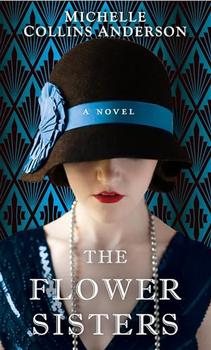
The Flower Sisters
by Michelle Collins Anderson
From the new Fannie Flagg of the Ozarks, a richly-woven story of family, forgiveness, and reinvention.
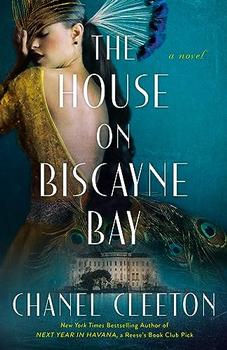
The House on Biscayne Bay
by Chanel Cleeton
As death stalks a gothic mansion in Miami, the lives of two women intertwine as the past and present collide.
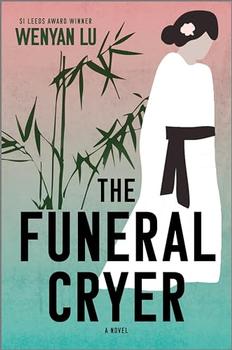
The Funeral Cryer by Wenyan Lu
Debut novelist Wenyan Lu brings us this witty yet profound story about one woman's midlife reawakening in contemporary rural China.
Your guide toexceptional books
BookBrowse seeks out and recommends the best in contemporary fiction and nonfiction—books that not only engage and entertain but also deepen our understanding of ourselves and the world around us.