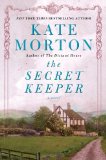
Kate Morton talks about why and how she writes.
Writers often say they've been writing since they were children. Is that the case for you?
I've always been a reader, but I didn't start writing until I was in my twenties. I read voraciously as a child and loved English class in school, but it didn't occur to me for a moment that an ordinary person could become a published writer. When I finished school, after a brief and ill-fated attempt to study law, I took up acting until a chance comment by a friend encouraged me to try writing a book. From the first instant, I knew I'd found the thing I was meant to do. Writing and acting are similar–they both involve telling stories and transporting other people to a different place–but as a writer I'm able to inhabit the whole of my fictional world, rather than just one role, and I can do it whenever and wherever I choose. For an introspective person who enjoys observing more than performing, it was a much better fit.
What else are you passionate about?
Writing brings me enormous pleasure and affords me wonderful opportunities to travel and learn and express my ideas, so I don't have a great need for many other hobbies. When I'm not writing I love doing simple things: being with my close friends and family, enjoying good food, sunshine, rain, gardens, music, and laughter. I'm also interested in all forms of artistic expression—painting, sketching (I collect illustrations from children's picture books), dancing, filmmaking, photography, and, of course, music. My husband is a pianist, and my children both sing all the time, so I'm blessed to have a lot of music in my house.
What about books that have been influential on your writing?
As a child I fell in love with Enid Blyton and Trixie Belden books, so I spent a lot of time climbing the Faraway tree or solving mysteries with the Famous Five. Then at university I wrote my Masters thesis on tragedy in English Victorian novels, and when I look back now I consider that their complex structures must have influenced my own multi-layered stories. I've also always loved gothic novels like Jane Eyre and Wuthering Heights, and my own work shares a certain sensibility with them (a focus on secrets, confessions, entrapment, old buildings that become a character in the novel). Today, I'm an eclectic reader, and have as much nonfiction (mostly about history and people) on my shelves as I do fiction.
Can you elaborate on how your novels draw from the Victorian gothic novels?
My books have similarities to Victorian novels: they are multi-layered with numerous characters and time periods and settings, and I put a lot of time into creating a very detailed fictional world. I always include a contemporary storyline, though, because I'm far more interested in the relationship between the present and the past—the idea that the past and its secrets are always with us—than I am by the historical aspect on its own.
When you are writing in your study, do you imagine what your very large audience will think about a character or an incident?
I'm enormously grateful that my books are read and enjoyed by other people, but I've come to believe that it's a mistake to write for anyone but myself: readers can tell whether or not an author's heart and soul is in the pages of their stories.
Storytelling is, by its nature, an inclusive enterprise though, and in genres like mine, in which the story revolves around tricks and mysteries and puzzles, it sometimes feels as if I'm playing a game with my reader. When I have a good idea, I catch myself smiling and thinking: "Yes! My reader is going to love that twist."
No matter how many readers I have, though, it's always a relationship of two that I imagine: me with a single reader. One of the most astonishing and wonderful things about books is the way a writer gets to tell their story to one person at a time over and over again.
Do you ever think of writing novels that sit outside your genre?
That's an interesting question; indeed, my first success as a writer came only after I'd thrown away everything I knew about genres and what other authors were doing, every expectation of publication, and just wrote what pleased me.
When I started work on The Shifting Fog, I'd just had my first son and had already had two manuscripts turned down by publishers. I decided that I wasn't going to be a published author and wrote simply for pleasure. I didn't think for a moment there'd be anyone else out there in the world who was interested in the same eclectic mix of ideas as I was, and I'm still not exactly sure what genre it is that I write.
I don't think writers choose their genre, I think the genre chooses the writer. Long, multilayered novels, set partly in the present and partly in the past, with secrets and mysteries at their core, seem the natural way for me to tell a story, and I'm not sure I'd know how to do it any other way.
Your novels always have women as their protagonists–is that a conscious decision on your part?
I tend to write about women because that's a very natural way for me to tell stories. I grew up with two sisters and I'm very close to my mother, so the female character is one I understand well. I'm interested too, in the way women have operated historically as social creatures, their public behavior often masking their private worlds. For a writer, the opportunity to explore what lies beneath is irresistible! Further, in the historical strands of my novels, I enjoy being able to depict lives that are led largely in the domestic sphere because this arena has been less well-explored by historians who tend to favour the (traditionally male-dominated) theatres of war and politics and public life.
Kate Morton discusses her first book,
The House at Riverton 2008
How did you come up with the idea for The House at Riverton? We're assuming there isn't an autobiographical element to the story...or is there?!
Well, there was that time...No, you'll have to wait for the memoir to know the truth!
The first part of the story that came to me was an image: a young man on the edge of a dark lake on the night of a grand 1920s English country house party. In the background a jazz band is playing, people are laughing, fireworks are exploding in the sky. The young man closes his eyes, a gun sounds, and then the image fades to black. The only witnesses are two sisters whose loyalties and envies drive the narrative. I knew this scene was the climax of the story; I also knew there was more to the young man's death than met the eye.
Rather than set my entire novel in the past, I wanted to tether it to the present. I heard Grace's voice in my mind very early on, and I knew she was going to be my narrator: someone who had seen what really happened on the lake and knew what history had forgotten. I love reading confessional narratives and have always wanted to write one. I'm drawn to the idea that a person might keep a secret her entire life only to have the memories triggered quite unexpectedly. In fact, when my grandmother died and we were packing away her house, we came across an exercise book full of shorthand (Nana was a shorthand champion during the 1930s). Obsessed with mysteries and secrets as I am, I was certain the coded notebook must be a confession -- something she hadn't been able to tell any of us when she was alive. What could it be? I wondered. What could be so terrible? My mind raced ahead, concocting all manner of exciting, dreadful, shocking possibilities....So even though Nana's shorthand translated as various pages from the television guide (she'd wanted an activity to keep her mind nimble) it had, at least, given me some ideas for my book!
It took me weeks to figure out what really happened to Robbie, my young man on the dark lake edge. When I realized, I was shocked, and yet I knew it was the truth. That's when I was finally ready to let Grace start telling her story.
The novel is part of a fine tradition of English country house romance and mystery novels. Were there specific authors or books that inspired the story?
Absolutely. Daphne du Maurier's novels and those by the Bronte sisters are great favourites of mine. I also love Atonement by Ian McEwan, The Remains of the Day by Kazuo Ishiguro, Brideshead Revisited by Evelyn Waugh, The Pursuit of Love by Nancy Mitford, and A Fatal Inversion by Barbara Vine, to name but a few. Not all of those are mysteries, but they all take place in wonderful English country houses. I love stories in which the house is more than a setting, becoming a character in its own right.
In writing my own English country house mystery, I was keen to play with the conventions of the genre a little. That's why I made Marcus a mystery writer and gave Grace a penchant for mystery novels, in particular those by Agatha Christie: the quintessential English country house mystery novelist. It was a lot of fun to have Agatha Christie come to dinner in my story.
I was inspired also by English country house nonfiction: in particular, I went through a great fascination with the Mitford sisters. Everything I read about the Mitford family seemed brighter than fiction. I was especially interested in the depiction of a great aristocratic family on the verge of decline. Their genteel poverty was a revelation to me and something I was very keen to incorporate into my story, and my depiction of the house at Riverton.
What kind of research did you undertake in the process of writing the novel?
It's amazing the disparate topics a writer needs to research in the course of writing one book: the early British film industry (what sort of studio might Philippe be working in?); river barges (what did they look like? How much room was there on board? How did people access the Thames?); society debuts (how might an aristocratic family without much money debut their daughters?); horticulture (what might be flowering in Essex in summer?); theatrical history (which play might Alfred invite Grace to attend in 1922?). Some research areas can be anticipated from the beginning of the project; other subjects crop up unexpectedly.
I believe there are two types of research that writers undertake: conscious and unconscious. The former is self-explanatory: you know the information you are looking for, and set out to find it. My favorite type of research is the latter. That's when I immerse myself in books, letters and memoirs related to the period and presume that some of it will become important to me later. The best thing about that sort of research is you're never wasting time because it all helps get a feel for the milieu, and you never know when a piece of information is going to solve a plot problem you haven't even encountered yet.
When I was researching The House at Riverton I read all sorts of books: social, cultural and personal histories. My favorite types are autobiographies, memoirs and biographies. The best of those breathe life into a forgotten time. Two such memoirs are Frances Donaldson's Child of the Twenties and Beverley Nichols's The Sweet and Twenties. Nichols's memoir brings to life the world of the 1920s society darlings and literati; it is written retrospectively, giving additional insight into how someone who had lived through the time might perceive it from decades later, after the horrors of the Second World War.
Personal letters are also excellent historical sources. One of my favorite anthologies contains the complete communication between Nancy Mitford and Evelyn Waugh -- two sparkling wits -- providing entertaining and vibrant evidence of the way certain people thought and spoke and behaved in the period. I also found resources like Punch magazine an excellent way of observing the social mores of the decade without having them filtered through the lens of twenty-first-century scholarship.
As an author, what's your take on the reading group phenomenon, and why do you think your book holds such appeal to them?
I think reading groups give people the opportunity to do what book lovers enjoy more than anything else: first, to read books; second, to discuss, argue and enthuse about books. Reading is a solitary activity, but reading groups turn it into a shared experience. When I finished reading Ian McEwan's Atonement, no one I knew had read it. I was so desperate to speak to someone else who was privy to its wonderful, unexpected conclusion, that I ran straight up the road to my local bookstore so I could rave to the owner. That's the spirit that informs reading groups: reading is one of life's great pleasures; talking about books keeps their worlds alive for longer.
I think reading groups like to read books that make them think, but not at the expense of a strong story. Life is too short to read books whose cleverness makes them impenetrable. A good book should keep you awake at night, flicking through the pages as you promise yourself just one more chapter; they shouldn't put you to sleep as you tackle a paragraph for the fifth time.
Have you imagined who would play the main characters in The House at Riverton if it were made into a film?
Of course! Though it's actually very difficult to cast your own book: the characters become so real in your mind when you're writing that it's hard to see them being played by anyone other than themselves. Hannah and Robbie, in particular, I have real difficulty casting. For old Grace, I'd be delighted to see any of the great English dames in the role. And I can't help but look for roles for Kate Winslet and Cate Blanchett in everything I write, because I think they're such wonderful actresses.
Can you tell us anything about what you're working on next?
I certainly can. I've just finished my second. Once again, I've painted with a palette of history, mystery and memory. It's about a girl called Cassandra whose grandmother Nell dies, leaving a deep dark secret in her wake: she was not the biological child of her parents, but a foundling, discovered on a coastal port when she was four years old. In Nell's will is concealed a second surprise: a mysterious cottage in Cornwall of which she had never spoken. Cassandra heads off to England, armed with the suitcase that was found with little Nell on the wharf and a few clues -- including an old book of fairy tales written by a Victorian woman -- in order to discover who her grandmother really was.
Unless otherwise stated, this interview was conducted at the time the book was first published, and is reproduced with permission of the publisher. This interview may not be reproduced or reprinted without permission in writing from the copyright holder.

Jo Baker was born in Lancashire and educated in Oxford and Belfast. The Undertow is her first publication in the United States. She is the author of three previous novels published in the United Kingdom: Offcomer, The Mermaid... (more)
If you enjoyed:
The House at Riverton
Try:
Longbourn
by Jo Baker

Julian Barnes was born in Leicester, England on January 19, 1946. He was educated at the City of London School from 1957 to 1964 and at Magdalen College, Oxford, from which he graduated in modern languages (with honors) in ... (more)
If you enjoyed:
The House at Riverton
Try:
Arthur & George
by Julian Barnes
We recommend 9 similar authors
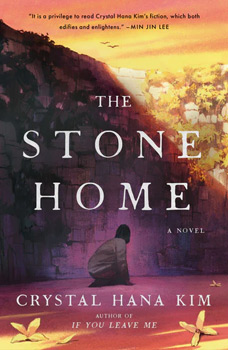
The Stone Home
by Crystal Hana Kim
A moving family drama and coming-of-age story revealing a dark corner of South Korean history.
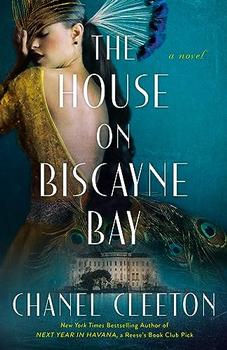
The House on Biscayne Bay
by Chanel Cleeton
As death stalks a gothic mansion in Miami, the lives of two women intertwine as the past and present collide.
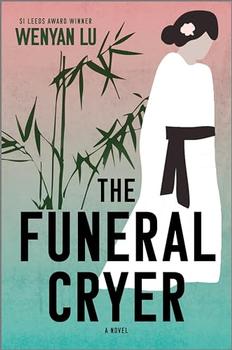
The Funeral Cryer by Wenyan Lu
Debut novelist Wenyan Lu brings us this witty yet profound story about one woman's midlife reawakening in contemporary rural China.
Your guide toexceptional books
BookBrowse seeks out and recommends the best in contemporary fiction and nonfiction—books that not only engage and entertain but also deepen our understanding of ourselves and the world around us.