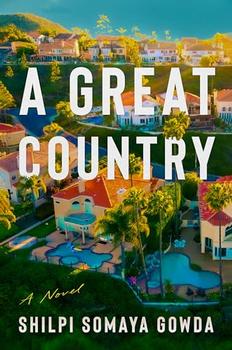
Robyn Scott describes her extraordinary childhood growing up in Botswana with no formal education until high school, which she explores in Twenty Chickens for a Saddle, and the charity that she and her family have started to help the women who care for AIDS orphans in Botswana.
Tell us a little about your memoir.
Twenty Chickens for a Saddle is most simply, to my mind, the story of a family, falling in love with and haphazardly pursing its dreams in Botswana, the most captivating and unusual of African countries. The book is also a story about living on the very fringes of convention, and about growing up as someone never quite sure if these fringes were exactly where I wanted to be. Beyond this microcosm, it is an account of a country battling the scourge of AIDS, meeting it varyingly with infuriating inertia and awe-inspiring acts of courage and fortitude.
What inspired you to write it?
I was not so much inspired, as dared to write the book. Near the end of my degree, I decided to try some journalism, and a friend introduced me to Patti Waldmeir, an FT journalist, who kindly offered to put in a good word for me at the newspaper if I wrote a short article that demonstrated I could write decently. “Write about being homeschooled in Botswana,” she insisted, despite my protests that no one surely was going to be interested in that. I was given an internship, and thought no more of the article until Michael Holman, ex-Africa editor at the newspaper, read it and declared that here was a book waiting to be written. I laughed at the idea, and ignored the suggestion, arguing again that no one would be interested, and no one should or could write a memoir at 25. But Michael persisted, goaded, and challenged me into it, and four months later I resolved that I should, at the very least first, put my toe through the doorway of the opportunity, if only to close it after a few chapters, at least knowing I’d tried. Two years later I still often feel like I’ve stumbled into the whole thing, and have to pinch myself to test the strange reality.
Your mother homeschooled you and your siblings for many years which became a source of tension between your mother and her parents, and some members of the community. Do you think you missed out on anything being raised in this unconventional way and in not going to school from the start?
Looking back, I can truthfully say, not one jot. Of course I could dream up any number of material would-have-been-nice-to-haves at the time—a saddle that I didn’t have to buy myself, for example—but they have long since ceased to count. I had dear friends, and by letting us play and roam and learn freely in a place as friendly, and wild, and charming as Botswana, I think that my parents gave my brother, sister and me the opportunity to squeeze just about every drop out of that time in our lives. Lulu, my little sister, does still deeply regret not having a neatly packed, brightly coloured lunch box!
You are 27 and so are writing about memories that are not so distant—especially those in your later childhood and young adulthood. Do you think there were any advantages or disadvantages to writing the story of your childhood so close to the actual events?
Both, I think. In reflecting on a childhood without the wisdom and experience conferred by a few more years’ distance from it, one perhaps loses some depth and perspective one could lend to the memories. But fresh memories have their own advantages—particularly, I suppose, in the relative ease and vividness with which they can be retrieved, felt, even: At one point, when I was about a third of the way through the book, my mother came to stay with me. She remarked on how impatient I had become. I was so inhabiting my childhood character, she decided, that I’d reverted to that difficult little girl ... One thing I am very grateful for is that I didn’t have any family members whose characters, when exposed, might have caused them embarrassment or anger. But even so, the book is quite weird for them, and for me—the “I” and “they” I write about, are not so far from the “I” and “they” of today.
Were you inspired by other childhood memoirs?
I have read and greatly admire a number of African memoirs. However, if I was inspired by them it was the wonderful writing and rich evocations of place. Beyond that, I could say I was counter-inspired: I wanted to tell a story about Africa not seen through the lens of a deeply troubled and traumatized country – as the continent’s memoirs disproportionately and sadly and inevitably are. And where the sheer challenge of trying to write a book propelled me to begin writing, what inspired me to keep going was a growing realization that in Botswana I had a way to tell a different story of Africa, through the prism of a happy childhood and a successful country, which told most of all the delights, beauty and eccentricities of the place. Also—and this was one of the ways I dealt with the gnawing discomfort of writing a memoir at 25I wanted to make the book much more of a story about an eccentric family and other colourful characters in a remarkable country, than a memoir about me. And in this respect, I was certainly inspired by Gerald Durrell’s wonderful books, with their focus on his family’s eccentricities, the inclusion of numerous equally eccentric local characters, and, of course, the endless wonderful creatures that fill their pages – his voice being almost secondary. I also wanted to make it a story proper, with a clear beginning and ending, and so it is set only in Botswana and framed by the character not of me, nor any of my immediate family, but of my grandfather, who was so much a part of the place, and the reason, albeit indirectly, that brought us there.
You have an interesting educational background. Tell us about your degrees and what kind of work you do in addition to writing.
With my unusual early education, I guess it was unlikely I’d follow a traditional path later on. For my first degree in New Zealand I took bioinformatics, studying biology, maths, statistics, and computer science. I loved the diversity of these subjects, and the newness of the discipline. But I never really intended to be a scientist, and studied it, much in the spirit of my mother’s approach to learning, because it fascinated me and it was challenging. Afterwards, always more interested in working at the business, societal or environmental interfaces of science, I did a degree in the UK, which was kind of a condensed MBA for people with a science background. I focused my research on medicine pricing and this took me back to Southern Africa, and AIDS, the subject that had so defined my family’s last years in Botswana. Presently, the work I’m doing in this area is for the Access to Medicine Foundation, which is shortly to launch an excellent index that will measure the world’s largest pharmaceutical companies on their progress in the various facets of access to medicines. I also do some work on carbon finance and clean energy technologies in Africa.
When your family moved from Selebi Phikwe to Molope farm bordering South Africa, you experienced a real cultural shift. Please explain.
Botswana is a tolerant country, and in my early childhood I was pretty much unexposed and oblivious to any of the racial tensions that beset so much of Southern Africa. The Tuli Block, home to some very conservative and often racist Afrikaner farmers who’d moved there from South Africa, was thus a shock. But it was a shock that only deepened my affection for Botswana: for while it may have become home to a few such as these, the good natured, self-assured heart of the country remains apparently immune to infection by the troubled historical baggage of the neighborhood.
It is after this move that you beaome more aware of AIDS. Your father, a doctor, faced not only the medical challenges and human tragedy of AIDS, but a government slow to act and patients who were often influenced more by superstition, fear, and shame, than by modern medicine. How did this have a lasting impression on you?
It definitely gave me some insight into the complexity of dealing with the problem—though I only observed it secondhand, so I’m certainly no expert. As for the government, while it was slow to get started, by the time we left Botswana it had taken tremendous steps towards dealing with the problem, and this gives me hope that such challenges can demonstrably be risen to. One thing that has really struck me since leaving Botswana, is how so many well-educated people who are not superstitious behave with such reckless disregard for STDs, which puts things in perspective a little.
You and your mother are establishing an AIDS charity?
Yes, but I’m only a small part of it. The charity is an idea my mother had several years ago, and now she, all three of her children, and several talented, dedicated friends of ours who live in Botswana are establishing a not-for-profit organization to support the women who care for AIDS orphans. In assisting these women, “Mothers for All” aims to ease their load while also ensuring more sustained support for their charges. The organization will run craft-skills training workshops for the women in centers around Botswana, and sell the products they produce. We are currently running trial workshops to test out different prototype craft products, which my sister is helping to design and which, wherever possible, will be made out of recycled materials. These will be sold locally, and hopefully also abroad.
You currently live in London. What do you miss most about Africa?
I find it impossible to pin-point one specific aspect; I suppose like most places one loves, I love—and accordingly miss—the undifferentiated package. But as I return several times a year, I’ve never actually felt too far away. Ironically, the times I “miss” Africa most are when I am there, and suddenly, vividly reminded of all those trite but true attractions of the continent—the space, the energy, the wildness.
What are you working on next?
I am hoping to shortly start work on a second book, which will tell the story of a most remarkable group of maximum security prisoners in South Africa, who have “adopted” AIDS orphans: sewing them clothes, growing them food, helping with their homework, throwing them birthday parties; doing more to help other people in need than most of us walking free will ever manage. The book, set against the broader story of the crime that grips South Africa, would follow the tales of these men, “The Group of Hope”—their lives, their crimes, and the extraordinary leaps they have made to be where they are now.
Unless otherwise stated, this interview was conducted at the time the book was first published, and is reproduced with permission of the publisher. This interview may not be reproduced or reprinted without permission in writing from the copyright holder.
Kenneth Bonert's work has appeared in McSweeney's 25, Grain, and The Fiddlehead. A former journalist, his work has appeared in the Globe and Mail and other publications. His story "Packers and Movers" was shortlisted for the ... (more)
If you enjoyed:
Twenty Chickens for a Saddle
Try:
The Lion Seeker
by Kenneth Bonert
Nicholas Drayson was born in England and has lived in Australia since 1982, where he studied zoology and a PhD in 19th century Australian natural history writing. He has worked as a journalist in the UK, Kenya and Australia, ... (more)
If you enjoyed:
Twenty Chickens for a Saddle
Try:
A Guide to the Birds of East Africa
by Nicholas Drayson
We recommend 9 similar authors

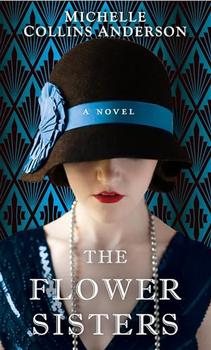
The Flower Sisters
by Michelle Collins Anderson
From the new Fannie Flagg of the Ozarks, a richly-woven story of family, forgiveness, and reinvention.
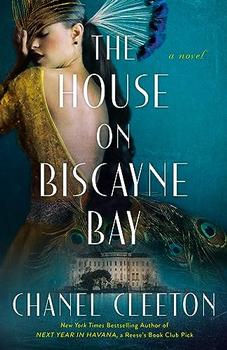
The House on Biscayne Bay
by Chanel Cleeton
As death stalks a gothic mansion in Miami, the lives of two women intertwine as the past and present collide.
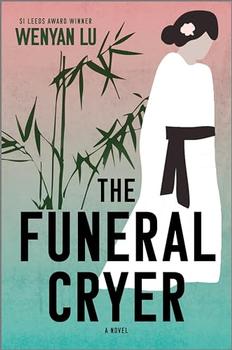
The Funeral Cryer by Wenyan Lu
Debut novelist Wenyan Lu brings us this witty yet profound story about one woman's midlife reawakening in contemporary rural China.
Your guide toexceptional books
BookBrowse seeks out and recommends the best in contemporary fiction and nonfiction—books that not only engage and entertain but also deepen our understanding of ourselves and the world around us.