
-
Your next favorite book
is waiting.

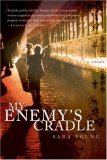
Sara Young discusses My Enemy's Cradle, her first novel for adults set in a Lebensborn, a Nazi-run maternity home for unwed mothers carrying children deemed to be "racially pure".
Warning: This interview contains potential plot spoilers!
An Interview with Sara Young, author of My Enemy's Cradle
Cyrla lives with her Dutch relatives in Nazi-occupied Holland. She has been
successfully hiding the fact that she is half-Jewish—until neighbors threaten to
expose her identity. Through an cruel twist of fate, Cyrla enters a Lebensborn
as her pregnant cousin, Anneke. Cyrla wants to keep her child, though, so she
resolves to leave the maternity home before the baby is born. But an unexpected
visit from the German soldier who fathered Anneke's baby complicates her plan to
escape. My Enemy's Cradle is a story of love and loss, sacrifice and survival.
How much did you know about the Lebensborn program before you began
working on My Enemy's Cradle? What about this relatively unknown episode of
history appealed to you as a writer?
I knew nothing about it before I took a walk with a friend, a
WWII buff, who mentioned it. Right away I was shocked that something this large,
that affected so many people, was largely unknown—that was the first appeal. But
soon, as a writer, I began to wonder why no one had set a novel in such a ripe
situation: a Lebensborn home was a natural crucible for dealing with decisions
about motherhood, responsibility, and abandonment, while outside, the drama and
horror of WWII presented a compelling sense of danger. I found myself wishing I
could read a novel set in a Lebensborn home. After a while, I just gave up and
wrote it myself!
My Enemy's Cradle gives readers a glimpse inside the walls of a Nazi-run
maternity home. Can you elaborate on how the young women who resided in these
places were treated, particularly non-German young women like Cyrla?
From all accounts, they were treated well, at least physically. They were
carrying future German citizens. They had the best food and medical care
available. And these girls often had no other real choice than to enter a home.
Girls who had slept with the enemy were often cast out from their towns and even
their families—and they were usually grateful to be there, if not grateful to be
in the situation that got them there.
Giving up a child, of course, was wrenchingly painful, but that was probably
going to happen to these girls anyway. The Lebensborn program was responsible
for the girls losing their children to Germany more than the homes themselves
were—the homes provided safety and good care. That's why I chose a character who
didn't belong in a place like that—someone who needed to get out, rather than
someone who wanted to stay in.
Readers can't help but like Karl—he is a man of convictions who honestly
cares about his family and does his best to protect them from the horrors of
war. Did he start out as a good guy or did his character evolve as you wrote the
story?
Oh, sigh . . . Karl. He was always a good guy, and I can just imagine my
therapist nodding knowingly as he reads the novel. I'm afraid Karl is everything
wonderful taken from every man I've ever known, and he has all the wonderful
characteristics I wished they had as well! For reasons of plot, Karl needed to
be reliable and honorable and courageous, and for Cyrla's character arc, he
needed to understand what love meant more than she did. My biggest problem
writing him was keeping him human.
Cyrla claims to be in love with Isaak, a Jewish man who cares about her
but does not feel passionate toward her. Does she truly love Isaak or is she in
love with the idea of creating a family of her own?
The latter, exactly. The thing that's been most scarce for her—a stable
family that doesn't abandon her—is the thing she's most desperate for. And Cyrla's very young when she meets Isaak; he is, in fact, the very first male she
meets as she gets off the train in Holland after being sent away by her father,
so she naturally finds another father in him. Classic transference, even though
Isaak has some difficulties with intimacy.
My Enemy's Cradle is a love story as well as an exploration of the
inhumanity of war. Is there any particular message you'd like readers to take
away from this story?
Oh, I hate the word "message". As a children's writer, I try to be
particularly wary of proselytizing. At the same time, nobody spends years
working on something they have no passionate opinions about, something that
doesn't outrage or inspire them, and I don't think we read books about, or by,
people who don't care deeply about things. I care deeply about story, of
course—the power of story and our need for it fascinate me—and maybe that's why
I chose to write My Enemy's Cradle as a love story: love stories simply satisfy
me.
I suppose if you pressed me enough for a message it would be that this thing
that happened to women and children through the Lebensborn program, and the
larger, ongoing abuse of women's and children's rights that so often accompanies
armed conflict, isn't fair. But instead of me giving the message, what I hope
happens is that a reader will put herself in Cyrla's position and say, "This
isn't fair."
Many people are familiar with your books for children, including the
popular Clementine series. What challenges did you encounter while writing My
Enemy's Cradle, your first novel for adult readers?
I encountered a lot of challenges and difficulties writing this novel,
but they were more about the specific nature of this story than about writing
for adults. Every book I do is different and presents its own challenges, which
always feel insurmountable as I begin, by the way. In this case, I had to spend
a really long time in the head and heart of a young woman who was in a lot of
danger and pain, and thinking about the role of women and children in
wartime—that wrecked me.
And yet I had a difficult time letting go when I finished the book. After six
years, it had become a second heart for me, and I felt empty and disoriented
when it was gone. I had a strange sense of survivor guilt—after populating a
Lebensborn home with women who represented real women, putting myself in their
place, I felt guilty when I walked away from my keyboard and back into my safe,
happy life.
This was also my first historical fiction and that meant a lot of extra
work—every time Cyrla put on an article of clothing or traveled anywhere or ate
a meal, I had to research something . . . Google was always open on my desktop.
A related difficulty when writing historical fiction is the desire to tell
everything you learn while researching—I had to keep cutting things that didn't
contribute naturally to the story.
Before embarking on your writing career, you were a professional
watercolor artist. Why did you decide to try your hand in another creative
field? Do you still paint in your spare time?
Although sometimes I still dream about painting, I don't paint
anymore—writing satisfies me more. When I discovered writing, I just knew it was
what I was meant to do; painting came close, but was like speaking in a second
language. What I find interesting is how similar they are, though—how similar
all the arts are, I think.
I often spend time in artists' colonies, living and working with other
writers, visual artists, and composers and we talk about this a lot—how we're
all really doing the same thing, struggling with the same issues, interested in
the same themes. The transition from painting to writing was barely noticeable
in that way—like coming home, but from a place that was almost home.
Unless otherwise stated, this interview was conducted at the time the book was first published, and is reproduced with permission of the publisher. This interview may not be reproduced or reprinted without permission in writing from the copyright holder.

Poet, essayist, and naturalist, Diane Ackerman is the author of many highly acclaimed works of nonfiction, including A Natural History of the Senses -- a book beloved by readers all over the world and the volumes Deep Play, A... (more)
If you enjoyed:
My Enemy's Cradle
Try:
The Zookeeper's Wife
by Diane Ackerman

Chris Bohjalian is the #1 New York Times bestselling author of twenty-five books, including The Jackal's Mistress, Midwives, Hour of the Witch, and The Flight Attendant, which was an Emmy-winning MAX series starring Kaley ... (more)
If you enjoyed:
My Enemy's Cradle
Try:
The Sandcastle Girls
by Chris Bohjalian
We recommend 10 similar authors







I have lost all sense of home, having moved about so much. It means to me now only that place where the books are ...
Click Here to find out who said this, as well as discovering other famous literary quotes!

Can you name the title?
Test your book knowledge with our daily trivia challenge!
Your guide toexceptional books
BookBrowse seeks out and recommends the best in contemporary fiction and nonfiction—books that not only engage and entertain but also deepen our understanding of ourselves and the world around us.
