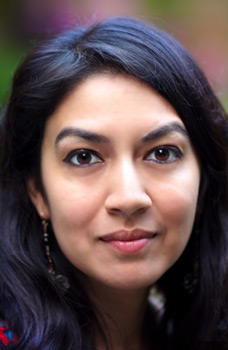
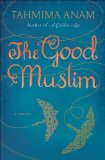
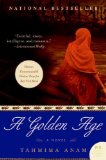
Tahmima Anam discusses her first novel, A Golden Age, set during the 1970s Bangladesh War of Independence.
Did you always want to be a writer? You have a Ph.D. in social anthropology— do you ever consider returning to the academic world?
I wasn't a very devoted academic—I found the idea of writing something that
had to stick to a certain notion of truthfulness very difficult. Anthropology is
certainly the most literary of the social sciences, and yet one still has to
adhere to a loose sense of "what really happened." I wanted a genre that
would allow me to tell my readers something about what it was like to have lived
through the Bangladesh war, something visceral and palpable. In this case, not
having to stick to the facts really enabled that act of the imagination.
Having said all of that, I miss being part of an academic institution. I spent
so many years in grad school that I now fi nd myself feeling a bit lost when
September rolls around and there aren't any classes to attend. And I love to
teach, so perhaps someday I will teach creative writing.
Where do you write? Do you tend to follow a strict work schedule or write in
spurts of activity?
What I'm about to tell you is very odd, I know, but it happens to be true: I
wrote almost all of A Golden Age sitting in classrooms. I would go to
class, and my mind would start to wander, so I would scribble in the margins of
my notebooks. It looked like I was concentrating on what the professor was
saying, but I was actually completely tuned out. It was the perfect setup: I was
forced to sit still for an hour at a time, I had to be completely silent, and I
had to look busy.
What would you be doing if you weren't a writer?
I would be a food critic. I love to cook, and whenever I'm at a restaurant,
I think about what sort of review I would give it. It would be such a thrill to
get to do that for a living!
The first line of A Golden Age—"Dear Husband, I lost our children
today"—is an exceptional opener. Do you remember how or when it came to you? How
did Rehana's story of self-doubt and redemption emerge from its war-ravaged
backdrop?
A Golden Age is a much more intimate novel than the one I had planned
to write. I had originally thought of writing a war epic, but Rehana's story
took over, and I ended up with a novel about one family's experience of war. The
opening line works like a coda because throughout the war, and throughout the
novel, Rehana returns to her husband's grave to tell him the story of what is
happening around her. It is an opportunity for Rehana to share her inner world,
and also a chance for the reader to get closer to her.
You were born in Bangladesh; were raised in Paris, New York, and Bangkok;
spent many years in Cambridge, Massachusetts (while completing your Ph.D. at
Harvard); and currently live in London. Where is home?
When you grow up in so many different places, the idea of home becomes a
complicated one. A part of me is always in Bangladesh; my entire family is
there, so of course I miss them very much, and I regularly follow the news from
Bangladesh—the political news, especially. I feel caught up in its rhythms, even
when I'm far away. But I think that being far away has a lot to do with the
longing; part of why I can feel nostalgic for Bangladesh is because I always
look at it from a distance, and this sense of loss and nostalgia informs my
writing. I suppose, having had such an itinerant childhood, I have become
habituated to the feeling of always longing for something more, something that
is elsewhere.
Do you feel an obligation to educate readers about your "beautiful and
bruised country," as you call it, or are you simply a writer telling a story?
Yes, absolutely, I want people to learn about Bangladesh through the novel. I
wanted the place to become real, not just a country to read about in the news
when some disaster or other strikes. But I also feel very strongly that the
characters should do that work for me; in other words, I never wanted the
historical or political story to take precedence over the human story. Rehana
and her family are at the heart of the novel, and while it is important for the
reader to understand and get a sense of the political context in which the novel
takes place, it is far more important that the relationships remain center
stage.
Which authors' books most commonly appear on your nightstand?
Toni Morrison, Jane Austen, and Salman Rushdie. I have a dog-eared copy of
Midnight's Children that I borrowed from my parents' bookshelf fifteen
years ago and never returned. It goes with me everywhere.
Unless otherwise stated, this interview was conducted at the time the book was first published, and is reproduced with permission of the publisher. This interview may not be reproduced or reprinted without permission in writing from the copyright holder.
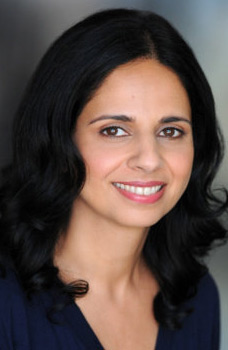
Aamina Ahmad, a graduate of the Iowa Writer's Workshop, has received a Stegner Fellowship from Stanford University, a Pushcart Prize, and a Rona Jaffe Writer's Award. Her short fiction has appeared in One Story, The Southern ... (more)
If you enjoyed:
A Golden Age
Try:
The Return of Faraz Ali
by Aamina Ahmad
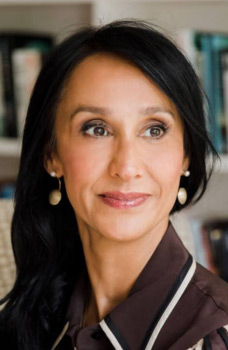
Monica Ali is the daughter of English and Bangladeshi parents.
She came to England at the age of three, and her first home was Bolton in Greater Manchester. Ali later studied at Oxford University.
Her first novel, Brick ...
(more)
If you enjoyed:
A Golden Age
Try:
Brick Lane
by Monica Ali
We recommend 15 similar authors

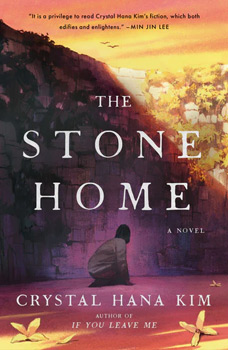
The Stone Home
by Crystal Hana Kim
A moving family drama and coming-of-age story revealing a dark corner of South Korean history.
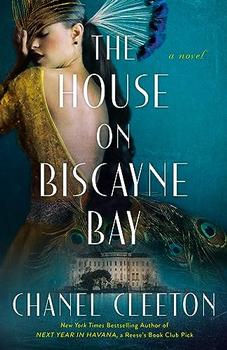
The House on Biscayne Bay
by Chanel Cleeton
As death stalks a gothic mansion in Miami, the lives of two women intertwine as the past and present collide.

The Funeral Cryer by Wenyan Lu
Debut novelist Wenyan Lu brings us this witty yet profound story about one woman's midlife reawakening in contemporary rural China.
Your guide toexceptional books
BookBrowse seeks out and recommends the best in contemporary fiction and nonfiction—books that not only engage and entertain but also deepen our understanding of ourselves and the world around us.