
-
Your next favorite book
is waiting.

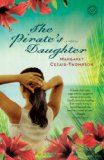
Margaret Cezair-Thompson talks about The Pirate's Daughter, and how she came to write about Errol Flynn in Jamaica.
Why did you want to write about Errol Flynn?
It wasn't so much that I wanted to write about Errol Flynn but rather that once I came upon the setting and early images, he presented himself as a person who had been there at that time. Then a number of things fell into place in my mind: stories I'd heard about him when I was growing up in Jamaica, all that he symbolized, and the challenge of recreating him, not only as Hollywood icon but as a human with human weaknesses and hopes.
How did you research Flynn’s life? What sources did you use?
I read one or two books about him and also his own autobiography. I spoke to people who had known him and/or who remembered the time he lived in Jamaica. I watched his films countless times including the film he made that was set partly in Jamaica (Cruise of the Zaca).
What do you make of Errol Flynn? In your opinion, what sort of person do you imagine he was?
It will sound strange but I feel like I’ve gotten to know him, that I’ve lived close to him these past few years. My son has, in a sense, grown up with Errol Flynn in our home – his pictures, his movies – pirates, sea captains, Robin Hood. What I’ve come to know is a man who made mistakes, who was not easy to live with or to love, and who had an enormous thirst for life.
Was he really up on statutory rape charges?
Yes, that’s a matter of public record.
If so, did that help fuel your imagination?
Not really. I personally do not know what to make of those charges of which he was acquitted. I mean, he’s not the first movie idol or prominent man to get himself in trouble this way or to be accused of this sort of thing. Flynn’s seductive side, his sex appeal is of course undeniable. But there’s a vulnerable side to almost everyone: he had the power to seduce but I wanted to explore the ways in which he was open or vulnerable to seduction – not only by a young woman, by all her youth represented to him, but most of all by a beautiful country. I see his relation to the island as part of a historical attraction white Western males have had for the so called unspoiled Tropics – Gauguin, Hemingway, Kipling, the Buccaneers, European explorers, the list goes on. The history of colonization and imperialism has a complex and I think dynamic sexual aspect: rape is certainly part of it and must be acknowledged but it is not the whole story. Let me put it this way: my intention was not to write about a powerful white man who takes advantage of a vulnerable island girl; that story has been told again and again and typically undermines the voice and identity of the native woman and her nation. I wanted the woman and her country to be center stage.
Yet you do refer to rape in another scenario. How did you decide to handle it the way you did?
It isn’t easy to write about sexual violence. I try to give a truthful and realistic sense of what occurs or might occur without violating the reader’s sensibilities.
It seems that there are political undercurrents in the story. If so, how did you come to be interested in the part of history and foreign policy?
There’s the whole colonial history of exploration and conquest that I touched on earlier. And yes, the political undercurrents are an important concern for me. Having grown up in Jamaica and having a first-hand view of our postcolonial difficulties, the recent political history of the Caribbean is an integral part of the setting. I came of age so to speak as Jamaica emerged from colony to independent nation, so part of my deep interest comes from that. I also care deeply for Jamaica and its future.
When people read a fascinating book like The Pirate’s Daughter, often, they want to know where the author fits in. Are any character’s based on your own personality or experiences? If so, please tell us about that.
This is always a hard question to answer. My characters are often composites of various people I’ve known. And sometimes I have a bit of myself in them. Of all the characters I probably have most in common with May especially in terms of her literary nature and her feelings for Jamaica. I empathize with the struggle to find her own voice, her sense of belonging and not belonging, loving a country and not being sure where she quite fits in.
How much of your cultural background is tied to Jamaica as opposed to the United States?
My heritage is primarily Jamaican. I was born there and grew up there and still have ties there. As May discovers when she leaves Jamaica for Europe, that early Jamaican background is the wide part of the funnel.
What sort of high school did you go to in Jamaica--private, public, religious?
I went to one of the larger well-known high schools for girls—St. Andrews High School for Girls. It's one of the long-established schools, government-subsidized (semi-public); many of our prominent female doctors, lawyers, artists, musicians, etc. have gone there. I also spent one year at a Roman Catholic boarding school in the countryside called Servite Convent of the Assumption School for Girls—this was a private and quite exclusive Catholic school (with a few local day students) and was a bit like the school I describe Ida as attending in the novel. I got expelled from this school after one year and returned (to my delight) to my former school St. Andrews in Kingston. However, I did meet some wonderful girls at Servite (the catholic boarding school) and enjoyed being in the country. So I don't regret having been sent there. It closed down very soon after I left.
What other elements of your background appear in the novel?
Probably the multi-racial aspect—and that is true of many Jamaicans.
What are some of your favorite books and authors?
My favorite writers and books are of the 19th and early twentieth century: Thackeray’s Vanity Fair, Virginia Woolf, To the Lighthouse, and all Thomas Hardy’s and Edith Wharton’s novels. Les Miserables is probably one of the greatest novels I ever read, also I like a terrific novel by Giuseppe di Lampedusa, translated from the Italian, called The Leopard. Of more contemporary writers, I have the utmost regard and take delight in the writings of Chinua Achebe, Ben Okri (both Nigerian) and the Egyptian novelist who died recently, Naguib Mahfouz (The Cairo Trilogy).
Unless otherwise stated, this interview was conducted at the time the book was first published, and is reproduced with permission of the publisher. This interview may not be reproduced or reprinted without permission in writing from the copyright holder.
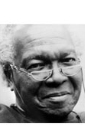
Austin Clarke was a professor of literature and taught at Yale, Brandeis, Williams, Duke, and the Universities of Texas and Indiana. He assisted in setting up a Black Studies program at Yale in 1968, after which he became the... (more)
If you enjoyed:
The Pirate's Daughter
Try:
The Polished Hoe
by Austin Clarke
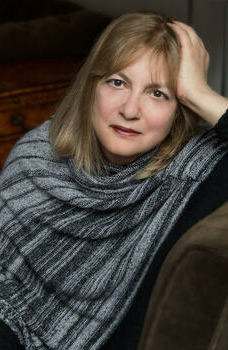
Alice Hoffman was born in New York City on March 16, 1952 and grew up on Long Island. After graduating from high school in 1969, she attended Adelphi University, from which she received a BA, and then received a Mirrellees ... (more)
If you enjoyed:
The Pirate's Daughter
Try:
The Marriage of Opposites
by Alice Hoffman
We recommend 6 similar authors



Great political questions stir the deepest nature of one-half the nation, but they pass far above and over the ...
Click Here to find out who said this, as well as discovering other famous literary quotes!

Can you name the title?
Test your book knowledge with our daily trivia challenge!
Your guide toexceptional books
BookBrowse seeks out and recommends the best in contemporary fiction and nonfiction—books that not only engage and entertain but also deepen our understanding of ourselves and the world around us.
