In two interviews, Margalit Fox discusses her book Talking Hands: What Sign Language Reveals About the Mind which offers a fascinating introduction to the signed languages of the world with a particular focus on a small Bedouin village where everyone "speaks" a form of sign language that no outsider has been able to decode until now; and The Riddle of the Labyrinth in which she chronicles three key figures in the decipherment of Linear B, an ancient Mycenaean script.
In two interviews, Margalit Fox discusses her book Talking Hands: What Sign Language Reveals About the Mind which offers a fascinating introduction to the signed languages of the world with a particular focus on a small Bedouin village where everyone "speaks" a form of sign language that no outsider has been able to decode until now; and The Riddle of the Labyrinth in which she chronicles three key figures in the decipherment of Linear B, an ancient Mycenaean script.
In The Riddle of the Labyrinth, linguist and obituary writer Margalit Fox chronicles three key figures in the decipherment of Linear B, an ancient Mycenaean script.
Did the obsessive work ethic of the Linear B decipherers influence you as you wrote about them?
There does seem to be something about decipherment that if your life isn't messed up going into it, it kind of messes you up. It attracts obsessional types and there is something about it that just takes over your life and you have to solve it. And sadly, very often you can't, or even if it does, as you've seen from the Linear B story, it kind of destroys you. I have the advantage of 50 years of hindsight. So for me the obsessive work ethic came just in making sure I could finish the book in at least a timely way. It was an intense experience, but I certainly wasn't laboring under the same onus that the decipherers were, thank goodness.
What initially compelled you to write this book?
I was procrastinating while trying to finish the manuscript of my first book. Sitting at home to kill time I picked up one of my all-time favorite reference books, The Blackwell Encyclopedia of Writing Systems, edited by Florian Coulmas. It's this very thick book of every kind of alphabet, syllabary, ideographic writing system from around the world, thousands of years of history with gorgeous illustrations of all kinds of weird scripts. Prophetically, that day, the book fell open to the entry on Linear B, and I was reminded of the story, which was at that time the only story anyone knew, that Linear B was this mysterious script dug up on clay tablets on Crete in 1900, and deciphered in 1952 by an amateur, the English architect Michael Ventris, and that was pretty much end of story. That's a cool enough story.
From that beginning, how did Alice Kober, whose groundbreaking work on Linear B has been previously unknown, become so central to the narrative?
I cold-called a guy named Tom Palaima. He runs the archive of the program in Aegean Scripts and Prehistory at the University of Texas, which is the premiere archive in this country for documents related to the Linear B decipherment. I called him to ask can I come look through the archive and write about Michael Ventris, because that was the only story anyone knew. And Tom, to my astonishment said, "You're welcome to come, but the real story here is, we've just finished cataloging the papers of Alice Kober." And I said, "Who?" And that was how the story became so much richer than I, or almost anyone in the world, knew at that time.
Did you go to Texas and access all of this archive personally?
I did, at Tom's invitation, once I realized the treasure trove he was sitting on. The timing of my call was serendipitous, and this was down to nothing more than dumb luck. When I called Palaima, they had just finished cataloging Kober's papers: thousands of pages of correspondence; her homemade, hand-cut index cards; her decipherment notebooks. I had the great advantage of being the first researcher of any kind to have full access to her papers.
So I went to Texas, made PDFs of every single document that could be copied, and unfortunately for me, the PDFs were not labeled, so I spent a miserable six months doing, in effect, the work of a decipherer, putting together unlabeled broken tablets.
Do you wonder what legacy Kober's work will leave for future generations?
I hope that part of the legacy will be in this book, and that it's something worthy of her, because she was brilliant and more than deserves a good place in history, and a good historical treatment. I hope that the book can at least begin to give her that, because that's the other piece of the puzzle. It's an important piece of women's history, because here's this extraordinary woman who has been all but lost, and I hope that my book will bring her back to life again.
In using this massive amount of research material to write the life stories of the decipherers, did this project feel more like your work in linguistics or your work as an obituary writer?
It's both, and that's what I love about my book writing life. At times I have a dream job where, as a senior writer in the obituary news department, I am paid to write life stories, to write personal narratives of people who have done really interesting things. But of course, you're only allowed to have a little bite of it. You're writing 800-1000 words, in rare cases, 2000 words a day. Here, I'm able to combine my real love for writing personal stories with my academic training in linguistics, and do the same kind of thing but at marathon length.
First published in Publishers Weekly. Reproduced with permission of the publisher.
A discussion with Margalit Fox about Talking Hands: What Sign Language Reveals About the Mind
How did you come to write Talking Hands?
As a journalist with two degrees in linguistics, I enjoy combining my two
fields whenever possible and writing about language for the general reader. For
years, I've dreamed of writing a popular book about language that would be
universally accessible yet contain the scientific insights—and the narrative
elegance—of a book by Oliver Sacks or John McPhee. But for years, no compelling
enough topic presented itself.
In the summer of 2001, I was having lunch with Mark Aronoff, an
internationally renowned linguist and my former academic adviser. I was telling
him about my desire to write such a book, and bemoaning the lack of a suitable
topic. Let's face it: I was whining.
"Come with us," Mark said.
That was when he told me about the research project that is the centerpiece
of Talking Hands. With three colleagues, Mark had been working secretly in Al-Sayyid,
a remote Bedouin village where, as the result of an abnormally high incidence of
hereditary deafness, an indigenous sign language had sprung up, "spoken" by deaf
and hearing people alike. It was a language few outsiders had ever seen. By
decoding this mysterious language, Mark and his colleagues hoped to isolate the
most basic ingredients from which all human languages, signed and spoken, are
made.
But tagging along with the scientists turned out to be no simple matter.
After nearly a year of trans-Atlantic negotiations with the research team's
leader, Professor Wendy Sandler of the University of Haifa (I literally flew to
Europe, where she was then working, for a single day, just to take her to lunch
and plead my case), I was finally granted permission to accompany the team on a
visit to the signing village in the summer of 2003. The story of that trip — a
journey to a village where everyone speaks sign language — is the narrative
heart of Talking Hands.
What are sign languages, anyway? Did someone sit down and invent them?
The sign languages that Deaf people speak every day are real, natural
languages, as grammatical complex and fully human as any spoken language. No one
sat down and invented them. Instead, they arose spontaneously in places where
Deaf people had the opportunity to congregate, and have evolved historically
over time, just as spoken languages do. (Sign languages even have regional and
ethnic dialects!)
Is there one universal sign language, used by Deaf people around the world?
No. Nearly every country has its own national sign language, each one
different from the next. Today, there are scores of sign languages in use around
the globe, possibly hundreds, from American Sign Language to British Sign
Language, Irish Sign Language, German Sign Language, Danish Sign Language,
Swedish Sign Language, Turkish Sign Language, Israeli Sign Language, Saudi
Arabian Sign Language, Chinese Sign Language, Hong Kong Sign Language, Japanese
Sign Language, Mozambiquan Sign Language, Zimbabwean Sign Language, and more.
Is American Sign Language simply a manual version of English?
No. ASL, the language of a quarter- to a half-million North Americans, is an
autonomous language that evolved independently of English, with its own
grammatical structure. (Linguists have compared aspects of ASL grammar to
Japanese and Navajo.) Strikingly, ASL and British Sign Language, though both
used in English-speaking countries, are mutually unintelligible. A Deaf American
will actually have an easier time understanding a Deaf Frenchman: ASL is
historically descended from French Sign Language.
Why do signers seem to grimace while they're signing?
Those facial expressions are actually a crucial part of sign-language
grammar. In the sign languages of the world, the face, head and eyes play a
vital role, conveying extra grammatical information—turning a declarative
sentence into a question, for example—while the signer's hands are "busy
talking."
Which side of the brain controls sign language — the right, where our visual
and spatial faculties lie, or the left, where spoken-language ability resides?
That was the fundamental question confronting the first sign-language
researchers in the 1970's and 80's. It was an open question whether sign
language was controlled by the right half of the brain or the left, and
persuasive arguments could be made on both sides. Then, one brilliant scientist
was inspired to study Deaf signers who had suffered strokes. The findings were
astonishing — and they answered the question once and for all. I explore these
studies of the signing brain in detail in Chapter 16 of Talking Hands.
What was it like going to the village of Al-Sayyid? Exactly where is it,
anyway?
Al-Sayyid (pronounced es-SAYY-id) is hot, dusty and like nowhere else on
earth. You reach it from a series of ever-narrower, unmarked dirt roads, miles
from the nearest town. There are olive groves, and grazing sheep and goats, all
around. A typical village home might consist of two simple rooms in a
whitewashed, tin-roofed building. The head of the household might have three
wives (the community is polygamous) and twenty children, six of whom are deaf.
Inside, you sit on the floor on hand-loomed rugs, drinking sweet tea and eating
a meal of fragrant kebabs and homemade pita bread, and watch, amazed, as a dozen
lively conversations—all in sign language, used by deaf and hearing members of
the family alike—erupt in the air around you. Then you look up to see a camel
shambling by the front door. Definitely a not-in-Kansas-anymore feeling!
As for the location of the village, all I can say is this: Al-Sayyid is
somewhere in Israel. The four scientists working there are, understandably,
quite adamant that the villagers' privacy be protected. As a result, I have
disguised the precise location of Al-Sayyid in my book. Consider the village a
kind of signing Brigadoon, impossible for any outsider to find. But Al-Sayyid is
very real, and Talking Hands will take you there.
Why is the language of a "signing village" like Al-Sayyid so crucially
important to science?
A brand-new, indigenous sign language like that of Al-Sayyid, offers
scientists an unprecedented opportunity to see the human "language instinct" in
action—to watch what happens when the mind has to make a language from scratch.
As Wendy Sandler, one of the four scientists profiled in Talking Hands says:
"A linguist never has the opportunity to see how language is born. All spoken
languages are either thousands of years old or came about as a result of contact
between languages that are thousands of years old. So in spoken language there
is no such thing—there can be no such thing—as a new language born of nothing.
Only in a sign-language situation can that happen. If you get a deaf community,
then a language will be born, and there are no other languages in the
environment that are accessible."
Are there other "signing villages"?
Yes — about a dozen at last count, all in remote corners of the world.
Scientific work in these villages is just barely beginning. At the end of
Talking Hands, I take readers to an international meeting of researchers
who are studying these "signing villages," the first time in history that all of
them had convened in one place. And, as scientists are now learning, there may
be even more of these "signing villages" out there than anyone ever realized,
waiting to be discovered.
Why is the study of sign language in general such a hot topic in cognitive
science?
For decades, everything that scientists knew about the structure of human
language (and, by extension, everything they knew about how language works in
the human mind), came from the study of spoken language. Sign languages, to the
extent that anyone thought about them at all, weren't considered languages: ASL
was only discovered to be a "real" language in 1960! And only in the 70's did
scientists fully realize that this language in another modality—a language
transmitted by hand and received by eye—held deep, surprising clues to the kinds
of mental systems that all human languages belong to.
Today, the study of signed languages is revealing dramatic new evidence of
how all language, signed and spoken, is processed, stored and remembered in the
mind.
What did the mysterious sign language of Al-Sayyid turn out to reveal about
the structure of human language?
That is the $64,000 question. For the answer, you'll have to read the book!
Unless otherwise stated, this interview was conducted at the time the book was first published, and is reproduced with permission of the publisher. This interview may not be reproduced or reprinted without permission in writing from the copyright holder.

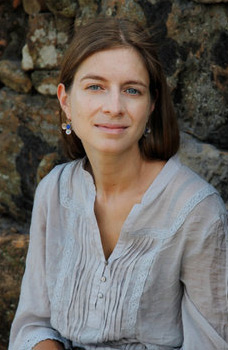
Anna Badkhen has spent much of her life in the Global South. Her immersive investigations of the world's iniquities have yielded six books of nonfiction, most recently The World Is a Carpet: Four Seasons in an Afghan Village ... (more)
If you enjoyed:
Talking Hands
Try:
Fisherman's Blues
by Anna Badkhen
David Bellos is the director of the Program in Translation and Intercultural Communication at Princeton University, where he is also a professor of French and comparative literature. He has won many awards for his ... (more)
If you enjoyed:
The Riddle of the Labyrinth
Try:
Is That a Fish in Your Ear?
by David Bellos
We recommend 24 similar authors



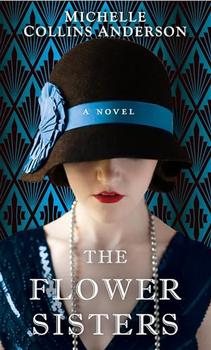
The Flower Sisters
by Michelle Collins Anderson
From the new Fannie Flagg of the Ozarks, a richly-woven story of family, forgiveness, and reinvention.
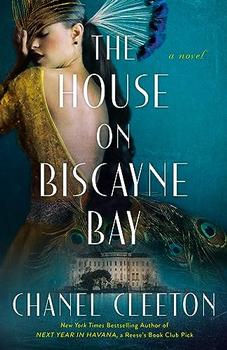
The House on Biscayne Bay
by Chanel Cleeton
As death stalks a gothic mansion in Miami, the lives of two women intertwine as the past and present collide.

The Funeral Cryer by Wenyan Lu
Debut novelist Wenyan Lu brings us this witty yet profound story about one woman's midlife reawakening in contemporary rural China.
Your guide toexceptional books
BookBrowse seeks out and recommends the best in contemporary fiction and nonfiction—books that not only engage and entertain but also deepen our understanding of ourselves and the world around us.