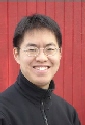
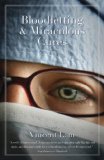
Vincent Lam talks about how people become a slightly different version of themselves in the process of becoming a doctor, and about his first book, Bloodletting & Miraculous Cures, which won the 2006 Giller Prize.
A Conversation with Dr. Vincent Lam author of Bloodletting & Miraculous Cures
Which came first: your interest in medicine, or your interest in writing?
My first desire was to write. Since many of the writers whom I admired
participated vigorously in the world, I thought that I should do likewise.
Naively, I thought to pursue medicine because it seemed like an ideal forum for
character study.
Very soon I realized that medicine is far too involved to undertake simply for
the purpose of observing humanity. I saw that because it was so demanding, the
only sensible way to learn and practice medicine is to be fully committed to it
for its own sake. By this point, I had become drawn to it and wished very much
to train and work as a doctor.
The training was so consuming that I wasn't able to write for years, not until I
had finished my residency and had begun my practice as an emergency physician.
By that point, it had also provided me with a few things to write about.
You’ve said in that you wanted to write about how people "become a
slightly different version of themselves in the process of becoming a doctor."
What do you mean by that, and why do you think it happens?
When I decided to dedicate a big piece of my life to medicine, it was
because I wanted to help people, which is to say that I wanted to be involved in
their lives. Many people are drawn to doctoring by this instinct to connect with
people in need, and to do some good for them. This is a very tender and
well-meaning sentiment.
As it turns out, however, one of the very fundamental lessons of medical
training is that although one must be empathic and compassionate, a good doctor
is also able to observe with detachment, and to keep a cool head even when
emotional stakes are high. In a certain quiet place within their heart, a doctor
must sometimes withdraw from their natural instinct to connect with people. This
changes a young doctor, as a person.
In order to help patients, a doctor must be able to observe them the way a
writer considers characters—from the omniscient point of view. Then, there is
the reality that doctors are not omniscient (even though we sometimes must make
decisions which only an all-seeing being should make).
Though we make what we suppose to be the best possible decisions for our
patients, sometimes things don't go as well as we had hoped. Sometimes,
unfortunate things happen to good people, even though we try our best. This also
changes a young doctor's outlook upon the whole enterprise. I could say more...
but I've said it better in my fiction.
Of the four main characters in the book—Fitz, Ming, Chen and Sri—who do
you identify with the most?
All of these characters are a little bit of myself, drawn to extremes. Which
one I identify the most with depends entirely on what kind of a day I'm having.
How do you balance your dual professions as both doctor and writer? When
do you find the time to write?
In terms of my working energy, doctoring and writing are very different, and
therefore very compatible. Medicine is driven by the external, by the problem
placed in front of me. Writing is very internal, and contemplative. It is driven
by my mental journey. I can be tired from one, and still have energy for the
other. Emergency medicine is shift work, and is very scheduled. Perhaps because
of this, I schedule my writing time as well. It's the only way to make it
happen.
What have you learned about yourself as a doctor and professional through
your storytelling?
Every time I meet a patient in the Emergency Room, I'm trying to understand
a story. The patient tells me what they have been experiencing, with the
symptoms as the characters in this narrative. This is the opening chapter. My
job is to make sense of the plot, the arc of it. Only once I've caught the
thread, I can begin to fit the story into a proposed diagnosis, and a suggested
course of testing and treatment.
If the first part of my job is to understand the story I've been given, the next
thing I'm supposed to do is tell the ending of that story. I've got to give my
patient some sense of where the arc is going, and what some of the next chapters
might be. If I make a diagnosis, I need to explain this diagnosis in a way that
it makes sense in my patient's life.
A big part of my job as a doctor is to help people see where their personal
story might be headed. The other thing I do is to offer appropriate medical
treatment. Or, in other words, I try to make the ending of the story better than
it would have been.
Are there any writing physicians you admire?
In no particular order... Anton Chekhov, Jerome Groopman, Khaled Hosseini,
Oliver Sacks, Atul Gawande, Williams Carlos Williams and Sir Arthur Conan Doyle.
Unless otherwise stated, this interview was conducted at the time the book was first published, and is reproduced with permission of the publisher. This interview may not be reproduced or reprinted without permission in writing from the copyright holder.

Chris Adrian was born in Washington, D.C. A graduate of the Iowa Writers' Workshop, he received his MD from East Virginia Medical School. "Every Night for a Thousand Years", the New Yorker story from which this ... (more)
If you enjoyed:
Bloodletting & Miraculous Cures
Try:
A Better Angel
by Chris Adrian
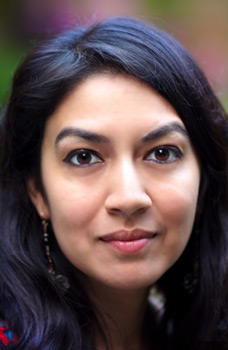
Tahmima Anam is the recipient of a Commonwealth Writers Prize, an O. Henry Prize, and has been named one of Granta's Best Young British Novelists. She is a contributing opinion writer for the New York Times and was recently ... (more)
If you enjoyed:
The Headmaster's Wager
Try:
A Golden Age
by Tahmima Anam
We recommend 13 similar authors

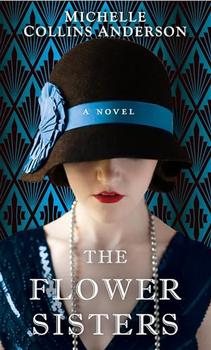
The Flower Sisters
by Michelle Collins Anderson
From the new Fannie Flagg of the Ozarks, a richly-woven story of family, forgiveness, and reinvention.
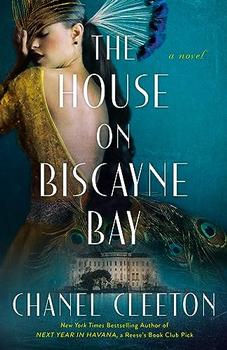
The House on Biscayne Bay
by Chanel Cleeton
As death stalks a gothic mansion in Miami, the lives of two women intertwine as the past and present collide.
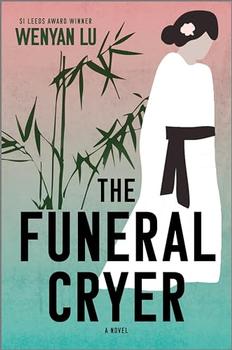
The Funeral Cryer by Wenyan Lu
Debut novelist Wenyan Lu brings us this witty yet profound story about one woman's midlife reawakening in contemporary rural China.
Your guide toexceptional books
BookBrowse seeks out and recommends the best in contemporary fiction and nonfiction—books that not only engage and entertain but also deepen our understanding of ourselves and the world around us.