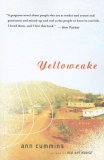
Ann Cummins discusses her first novel, Yellowcake, a multi-generational and multicultural story set in a former uranium milling community.
Why is your novel titled Yellowcake?
My novel is set in the uranium-rich lands of the American Southwest, the
Four Corners area, including the San Juan Mountains of Colorado and the Navajo
Indian reservation in northern New Mexico and Arizona. My subject is the lives
of Navajos and Anglos for whom the mining and milling of uranium was a way of
life from the fifties through the early seventies. Yellowcake, a
controversial energy source used to power both nuclear bombs and power plants,
comes from processed uranium ore. I titled my novel Yellowcake in part
because the making of yellowcake was such an important element of my characters'
lives, but also because it's a long-lived energy source emitting radiation for
years after the ore is mined. My novel is set in 1991, twenty years after the
closing of many uranium mines and mills on the Colorado Plateau, but my
characters continue to feel the industry's effects in many ways — physically,
emotionally, and spiritually. History and the present converge in the
characters. Yellowcake, or rather the "half-life" of the processed ore,
represents the echoes and consequences of historical events and how they play
out in the present.
So is it like the Karen Silkwood story about environmental hazards associated
with uranium?
Only a small part of the story explores environmental hazards. I'm more
interested in creating complex characters driven by a range of interests in the
land and in each other. I tell the story from five points of view. One
character, an ailing man in his sixties, a former uranium mill foreman, comes
from generations of miners and has always seen mining as his legacy, his right.
Even though he's sick, he is not quick to blame, and environmentalists irritate
him. Another, a twenty-five-year-old Navajo woman whose father worked in the
mill and was diagnosed with cancer at an early age, is angry at the industry,
and yet she feels conflicted, too. She turns to Western medicine to help her
father and thereby alienates her Navajo grandmother, who is as suspicious of
Western medicine as of the uranium industry that she believes made her son sick.
My other characters play out different conflicts. An Anglo mill worker who had
an affair with a Navajo woman who was a rodeo pro obsesses about his lover
twenty years later, though he rarely sees her. His mixed-blood son, virtually
fatherless and raised by a mother who was always on the road, has grown up to be
a solo flyer. For this young man family is tenuous; he has come to believe he
has only himself to rely on, but still his big passions get him into trouble.
There is also the story of a uranium mill divorcée who lives in the half-life of
a marriage gone bad, still haunted by memories of her ex-husband.
Why did you choose this subject?
I grew up in the Colorado Plateau area and, like some of my characters, I'm
from generations of Colorado miners. So the history and landscape are personal
to me. My father was a uranium mill worker in Durango, Colorado, and his company
began operating a mill in Shiprock, New Mexico, on the Navajo reservation when I
was nine. So the reservation, too, is personal to me. I lived there for nine
years and went to public school there.
To what degree does autobiography play into your fiction?
It's interesting to answer that question at the end of a project rather than
at the beginning. When I started this novel, my intent was to write a story
based on my parents' marriage, using the uranium industry for plot. My parents
had a long marriage; my father was sick for the last nine years of it, and my
mother took care of him until he died. It was hard work and literally broke her
back. To be honest, such a burden frightens me, so I wanted to create characters
that would allow me to explore that sort of commitment. I had Tilly Olsen's
Tell Me a Riddle at the back of my mind. That book, so brutal and beautiful,
is such a moving portrayal of a marriage that has atrophied under the burden of
historical events — in Olsen's case, the Holocaust — that continue to play out
for decades in the characters' minds. I wrote a couple of hundred pages about
this testy old guy bucking against his growing dependence on others, who all
blame his work in uranium for his illness. As usually happens with my
characters, this guy quickly developed into somebody very different from my
father. As the story develops, the characters encounter problems, and they have
to improvise to solve them.
Improvisation is the life source for my characters, who, through the drafts of
the book, matured into wholly unique people. I was pretty happy with how my
couple wrestled with each other, but the book was turning into bitter medicine
because the subject was illness. My editor suggested I try some other points of
view to broaden the story. It was a great suggestion. It got me out of the sick
room and into New Mexico's high northern desert, a landscape I love, and it
allowed me to do something that frightens me, writing from the perspective of
characters who are racially and culturally different from me. Risky business, I
think, but a challenge worth taking, especially when trying to tell how these
events affected a diverse community. I find character-driven fiction liberating.
Ultimately, I'm interested in creating individuals, not races or cultures,
though I guess individuality, race, and culture are intertwined. It helps to
know something about the people one auditions for fiction, which brings me back
to autobiography. This is a novel about the kinds of people I grew up among, set
in a place I know well, but while the characters and story germinated — in fact,
they matured — in the imagination.
Unless otherwise stated, this interview was conducted at the time the book was first published, and is reproduced with permission of the publisher. This interview may not be reproduced or reprinted without permission in writing from the copyright holder.
Jennifer Haigh is the author of the short-story collection News from Heaven and six bestselling and critically acclaimed novels, including Mrs. Kimble, Faith and Heat and Light, which was named a Best Book of 2016 by the ... (more)
If you enjoyed:
Yellowcake
Try:
Baker Towers
by Jennifer Haigh
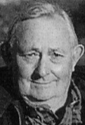
Tony Hillerman, author of many novels including the Leaphorn/Chee mystery
series, died in October 2008 at the age of 83.
A past president of the Mystery Writers of America and recipient of their Edgar and Grand Master ...
(more)
If you enjoyed:
Yellowcake
Try:
Skeleton Man
by Tony Hillerman
We recommend 8 similar authors

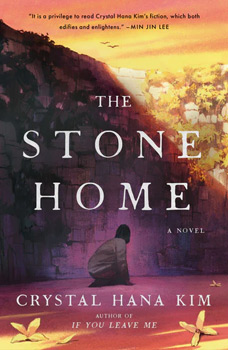
The Stone Home
by Crystal Hana Kim
A moving family drama and coming-of-age story revealing a dark corner of South Korean history.
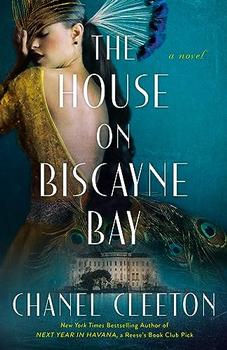
The House on Biscayne Bay
by Chanel Cleeton
As death stalks a gothic mansion in Miami, the lives of two women intertwine as the past and present collide.

The Funeral Cryer by Wenyan Lu
Debut novelist Wenyan Lu brings us this witty yet profound story about one woman's midlife reawakening in contemporary rural China.
Your guide toexceptional books
BookBrowse seeks out and recommends the best in contemporary fiction and nonfiction—books that not only engage and entertain but also deepen our understanding of ourselves and the world around us.