
-
Your next favorite book
is waiting.
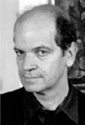
How to pronounce Jean-Jacques Greif: jon-jak greff (the j is pronounced in the French style, like the j in déjà vu. The author says that in France his name is usually pronounced greff, in Germany they tend to rhyme it with life, and in English with grief - anyway is fine with him!
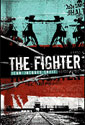
Jean-Jacques Greif talks about The Fighter, his first book published in the USA, and how his father's experience in Auschwitz provided the inspiration, and many of the facts, behind this remarkable book.
Jean-Jacques Greif’s father, Lonek, was a prisoner in Auschwitz, a concentration
camp in Poland, when Greif was born in the fall of 1944. Arrested just two weeks
after his son was conceived, Lonek survived the horrors of the camp, and
returned home six months after his son’s birth.
Since first hearing about Auschwitz as a young boy, Jean-Jacques Greif has
been captivated by stories of the Holocaust and how survivors’ experiences
shaped their lives and history and considers it to be a defining moment in his
life. After writing several books in which the Holocaust played a minor role, he
felt the need to write one in which it provides the main setting—and is itself a
character. That book is The Fighter, based on the story of Maurice Gabarz, a
friend of his father.
What follows is a conversation between Mr. Greif and his editor, Jill Davis,
about the writing and the translation of The Fighter.
When you were a child, did your father talk about his experiences in
Auschwitz?
It is said that Auschwitz survivors didn’t talk about the camp because other
people couldn’t understand. If this is true, then they could talk to other
survivors. When I was two or three, I hid under the kitchen table while my
father and his friend Pierrot, who had been a prisoner in the camp of
Buchenwald, compared their experiences. The last time I saw both of them
together—Pierrot in his eighties and my father past ninety—they still compared
Auschwitz and Buchenwald. Before I had heard about Snow White and Cinderella, I
knew that mothers promised their babies a good shower after three days in the
cattle car and that poisoned gas rained down instead of water. I grew up in
Paris. I heard a lot about the war. French people talked about it all the time.
Why did you want to tell the story of Maurice, more than any other survivor
you knew?
My father’s story would have been an easy choice. I did write it a few years
later. While he was extremely lucky (like all the survivors), his story was
untypical: because he was a doctor, he found a safe job in the hospital. I
wanted to tell a shocking story. So I chose Maurice’s, which I had always found
the most hair-raising one. He worked in the early gas chambers. He was my
father’s friend, but not a doctor. He was a leather worker, born a very poor
orphan in Warsaw, who learned to fight for his bread in the streets. Later, in
Paris, he was an amateur boxer. In the camp, the German Army, called the
Schutzstaffel (SS) tried to set up a fight between him, a tiny flyweight fellow,
and a tall dying guy, whom they hoped he’d kill with one blow.
Based on what you heard under the table as a young boy, and from what you’ve
relayed in The Fighter, the stories you heard were disturbingly graphic and
emotionally wrought. What made you decide to turn these stories of adult
survivors into books for young adults?
There was a time when my wife and I founded a school, and I wrote things for my
pupils. This was the start of my career as a writer of "young adult" novels. My
first published books were about talking chimpanzees, Japanese warriors, Marilyn
Monroe. But then I thought I’d try to do something with these war stories my
parents’ friends had confided in me. So I wrote Children, We’re at War, about a
Jewish boy who spends the war in a summer camp in Mimizan-Plage, south of
Bordeaux; then Kama, about a girl who lives in Warsaw and flees to Central Asia
with her parents. But I felt my books about the war were much too sweet. They
remained at the edge of things. I needed to explore the core of the horror,
which had resided deep inside my mind as far as I remembered. I must write a
book about Auschwitz, I thought.
What about the claim that there are too many books about the Holocaust?
There are certainly a large enough number of books "about the Holocaust". I
never intended to write one more such book. I write books about people who try
to follow the hard paths of life the best way they can. When you have a strong
hero following a hard path, you have a good story.
In France, teenagers study this book during the first year of senior high
[ninth grade], as part of World War II and Holocaust studies. I often visit
them. They ask me why I’ve written so many books about the war. I tell them they
are not books about the war, but books about people facing moral dilemmas. These
events may happen in daily life, but things become rougher and clearer during a
war. For example, many people in France had a moral choice between denouncing
Jews—or Resistance fighters, etc.—and helping them.
Moshe has a choice. He can either kill the tall guy, who is dying anyway, and
save his own life, or refuse to kill him and probably be killed himself by the
angry SS. This is one of the central scenes of the book. I thought it might
interest young people.
Given that your motivation to write The Fighter was to tell a story about
everyday human struggle, and not write a Holocaust novel, how do you respond to
those who try and categorize this as another book about life in a Concentration
Camp?
World War II was the best of all recent wars for good stories, I think. I like
this war (as a novelist) because I was raised by people who talked a lot about
it.
When I was a kid, most of the movies took place during the war, with brave
Americans fighting nasty Nazis. The war stories in movies or books sometimes
pitted brave French Résistance fighters against the nasty Nazis, or those
marvelous English guys who deciphered the secret Enigma code. There were not
many good stories about the death camps, however.
While there was Elie Wiesel's Night, Primo Levi's If This Is a Man, in these
stories, the narrator is a witness. I don't recall reading stories with an
actual hero or let's say a "strong hero." So, I decided to write one. I pretend
that, far from being "yet another book on the same topic," it is the very first
book with a Don Quixote-like hero fighting the Nazis in Auschwitz. It is not a
book about the Holocaust of the Jews. It is book about a great Jewish hero.
People have said the Jews went to the slaughter like sheep. Well, this Jewish
hero fought like a lion and won.
The hero of the book is an adult. In what way is this a book for younger
readers?
As a child, I used to read The Three Musketeers by Alexandre Dumas, Jules
Verne’s Around the World in 80 Days, or Gulliver's Travels by Jonathan Swift. I
connected well enough with the heroes of these books, although they were adults.
When someone asks me in what way my books are aimed at young adults, I answer
they are written simply, with lots of dialogue and jokes.
To read more of the conversation Jean-Jacques Greif and his editor, Jill
Davis, visit www.bloomsburyusa.com.
Unless otherwise stated, this interview was conducted at the time the book was first published, and is reproduced with permission of the publisher. This interview may not be reproduced or reprinted without permission in writing from the copyright holder.
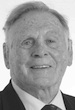
Denis Avey was born in Essex (UK) in 1919. He joined the army in 1939, and fought in the desert during the Second World War.
Avery was captured and held as a prisoner of war for two years near Auschwitz III, a ...
(more)
If you enjoyed:
The Fighter
Try:
The Man Who Broke Into Auschwitz
by Denis Avey
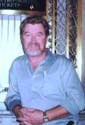
Edward Bloor (born October 12, 1950) is an American author best known for his work in teenage and young adult fiction. Born into a diverse community in Trenton New Jersey, Bloor enjoyed an active lifestyle as a child, often ... (more)
If you enjoyed:
The Fighter
Try:
Taken
by Edward Bloor
We recommend 13 similar authors



It is among the commonplaces of education that we often first cut off the living root and then try to replace its ...
Click Here to find out who said this, as well as discovering other famous literary quotes!

Can you name the title?
Test your book knowledge with our daily trivia challenge!
Your guide toexceptional books
BookBrowse seeks out and recommends the best in contemporary fiction and nonfiction—books that not only engage and entertain but also deepen our understanding of ourselves and the world around us.
