
-
Your next favorite book
is waiting.
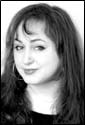
Carolyn Turgeon discusses why the circus had such a strong influence on her first book, Rain Village.
How did you decide to write about circuses?
It really began a bit randomly, the way things do. I had written a short story for a class I took in college with Paul West, about this strange rain-soaked place called Rain Village. That original narrator, Alice, mentions, very briefly, how a carnival goes through the village once a year, how they all go to see the girl on the trapeze, who hangs above them “like a wingless bird” while they wait for her to fall. This was just a random couple of lines; I had been taken with the beauty of trapeze because of the German film Wings of Desire, those gorgeous, melancholy black-and-white scenes of Solveig Dommartin with her white feathered wings, Nick Cave playing in the background. Anyway, years later, as that short story developed into a book, the trapeze girl Tessa became one of the narrators—the first draft was five narrators all talking about Rain Village and their relationships to it—and then, eventually, the sole narrator, when it became clear that her voice was the strongest. Rain Village became the place Tessa’s mentor Mary Finn was from, and the original narrator Alice dropped out completely. And the more I told Tessa’s story, which, naturally, included the story of how she came to be that girl in the air, I learned more and more about circuses, went to more and more, and fell in love with them. The sense of possibility, the dazzle and glitz and sadness of them. The way they astonish and amaze, make you lose your breath, and disappear. And I loved the idea of the old-time circuses, how they traveled through these desolate little American towns and transformed them for a few days, what a big deal they were when there were so few things to transport people out of their lives, how important that was.
When you interviewed circus staff and performers, did anything surprise you? Did you attend any shows? Is modern circus life vastly different from the circus lives you describe in your book?
I interviewed Jonathan Conant, president of the Trapeze School of New York, who was an enormous help. Through talking to him I started to be able to imagine what it is actually be like to be on the trapeze, how you think in the air, what you listen for, how your body feels, how your palms feel against the bar, what the net feels like under you—all those physical details I hadn’t had access to before. Talking to people and reading first-person accounts of circus and carnival life just helped me understand what it might have been like on a very practical, physical level. I don’t recall being surprised, though, except by the dangers that circus performers face, the constant possibility of tragedy. The sideshow is another thing: there are all kinds of horrifying, shocking tales! I remember being especially horrified to read about the things people used to swallow, the ways people would injure themselves with swords and with long light bulbs, how painful it would be if the glass shattered inside you. There are all kinds of awful stories! Of course, most modern circuses don’t have sideshows, the freaks are largely a thing of the past, and modern circus life is much safer and more regimented. At the same time, I don’t think that circuses occupy nearly the same space in our imaginations that they once did. A trapeze star being as famous as a movie star is unthinkable these days. I tried, in Rain Village, to capture what it might have been like once, the excitement those first posters announcing the coming of the circus would have been, especially if you spent your days on a farm, in a small town, and your world barely extended past that.
What so fascinated you about famous circus performer Lillian Leitzel that you modeled Tessa after her?
Tessa is more inspired by Lillian Leitzel than based on her. They are both tiny women who are spectacular and breathtaking in the air—and incredibly powerful. Lillian was famous for her one-armed swing-overs, the trick Tessa invents by the river in her hometown, and married a beautiful Mexican circus star, the way Tessa does. So I based these bits of Tessa on Lillian, and kept a poster of Lillian on the wall as I was writing. She just looks like a tiny little ferocious thing, a real demon, and I always wanted Tessa to have that same fierceness to her. And Lillian was a real bona fide star during the circus’s golden age: much more of a diva than Tessa ever is, she had her own private train car complete with a baby grand piano, and was obsessed with collecting diamonds and fur coats and cars. But I just picture her in the air, this blur of energy and pure will.
The circus in your book is full of magic, and you write in the style of magical realism. Was that a conscious choice, to reflect the wonder of the circus in the larger setting and world of your novel?
Well, I feel like magic realism is more a way of looking at the world than anything else, and the circus reflects that view more than that view reflects the circus. I think it’s just an imaginative, expansive way of seeing things, a way of infusing everything with wonder, and I think that for someone like Tessa, viewing the world as full of possibility and hidden things is incredibly important to her survival. She has to have a sense of there being more to the picture, since what is right in front of her is so brutal and sad. Mary and the circus and the books she reads all sort of drive that home—that sense of possibility, the importance of vision. I always think of those lines in the Wallace Stevens poem “The Idea of Order at Key West”: “Then we,/ As we beheld her striding there alone,/ Knew that there never was a world for her/ Except the one she sang and, singing, made.” That, I think, is part of the gift Mary gives Tessa, that power to transform the world, and the circus is sort of about that, at its base.
Tessa’s journey to wholeness begins, and ends, with her taking risks. What makes Tessa so brave in a world that has given her so little hope or stability?
I think that Tessa has an innate sense of possibility that her family doesn’t have, and this is one of the things that attracts Mary to her in the first place, that Mary recognizes in Tessa and sets out to nurture. That sense of wonder, a sense that the world extends far past—and beneath—what you see in front of you. I think that Tessa’s vision, especially as expanded and cultivated by Mary, gives her a sense that the world is full and that there is a place for her in it. That she can carve out a place for herself in it.
Some mysteries are left open in your novel. Why did you choose to leave a few questions unanswered?
Without giving too much away, I think that ultimately Tessa has to realize that some of the answers she’s looking for won’t help her, won’t change anything. That you can love people without fully understanding the mystery of them, their sorrows, their secret selves. Tessa is haunted by the idea that she failed Mary, somehow, by not seeing her or understanding her well enough, and ultimately I think she just has to understand that you can love someone and not be able to save them. So for that reason it made sense to leave Mary, and Mary’s past, a bit of an open question.
Unless otherwise stated, this interview was conducted at the time the book was first published, and is reproduced with permission of the publisher. This interview may not be reproduced or reprinted without permission in writing from the copyright holder.
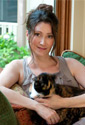
Sara Gruen is the #1 New York Times and USA Today bestselling author of At the Water's Edge, Water for Elephants, Ape House, Riding Lessons, and Flying Changes. Her works have been translated into forty-three languages, ... (more)
If you enjoyed:
Rain Village
Try:
Water for Elephants
by Sara Gruen
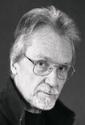
Hellenga grew up in Three Oaks, Michigan, a typical Midwestern small town, but spent summers in Milwaukee, Wisconsin, where his father, a commission merchant with a seasonal business, handled produce that was shipped there ... (more)
If you enjoyed:
Rain Village
Try:
Philosophy Made Simple
by Robert Hellenga
We recommend 5 similar authors



The only completely consistent people are the dead
Click Here to find out who said this, as well as discovering other famous literary quotes!

Can you name the title?
Test your book knowledge with our daily trivia challenge!
Your guide toexceptional books
BookBrowse seeks out and recommends the best in contemporary fiction and nonfiction—books that not only engage and entertain but also deepen our understanding of ourselves and the world around us.
