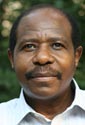
An interview with Paul Rusesabagina about the Rwandan genocide and his memoir, An Ordinary Man
Your book suggests that you did nothing extraordinary: "I was doing the
job I was entrusted to do by the Sabena Corporation—that was my greatest and
only pride in the matter." Do you think you are understating the exceptional
courageousness and intelligence of your work during the genocide?
Not at all. If I was able to save lives, it was only because I had some
useful tools at my disposal. I had a five-story building in which to hide
people. I had a cooler full of beer and wine with which to bribe the killers. I
had some cash to spread around when alcohol wouldn't work. And I had ten years
worth of friendship with some of the perpetrators of the killings. So they knew
who I was and were willing to listen to my line of reasoning. Anybody else with
this kind of advantage could have done what I did.
You describe standing on the hotel's roof at dawn and preparing for your
likely death. What effect did moments like that have on your decisions at the
time, and how have they affected your life since the genocide?
They made me realize just how short life is, and how precious the small
pleasures of life can be. I regretted not spending more time appreciating the
little things in my life that could have brought me such happiness: the smell of
a fresh summer morning, my wife's smile, the taste of good coffee, the laughter
of my children. It also brought me face-to-face with a central truth of life.
Some of the only things that really matter in this world are the sacrifices we
make for other people. Our chance to make a difference in this world is so slim.
We have to take advantage of every opportunity put before us. That is why I have
resolved to enjoy each and every minor pleasure of life, and have resolved to
speak for as long and as well as I can about the importance of staying sane and
compassionate in the face of insanity.
Before the genocide, why were you drawn to radio broadcasts that screamed
nonsense about the evils of Tutsis?
Part of it was my job. As the manager of the best hotel in Rwanda, I had
to stay informed about what the nation was saying to itself. There is also a
strange fascination with rhetoric that grows more and more ludicrous. You almost
expect it to be revealed as a joke. But in this case it was not a joke. I still
had to tune in. We never accomplish anything when we shut out our adversaries.
You have to know what people are saying in order to argue against their points
of view.
Why was the Rwandan genocide the fastest one in history?
More than eight hundred thousand people were killed in less than one
hundred days. It was not done with gas chambers and bullets, but with clubs and
machetes and simple agricultural tools. The monstrous efficiency was due to a
few factors: the power of the media to whip up people's hatred, the carefully
organized structure of Rwandan government and society, and the streak of
obedience that runs through my culture. Often during the 1994 genocide, the
Tutsi and moderate Hutu waited silently at roadblocks for their turn to be
slaughtered. Many accepted their fate without a peep of protest. We have a
deep-seated respect for authority figures in my country. Those who were ordered
to kill their neighbors often asked no questions. This is not something of which
to be proud. But it has happened in every other culture that has fallen prey to
genocidal madness.
How important was your training as a hotel employee in your survival
during the genocide?
It was crucial. Being a hotel manager taught me how to be charming and
courtly. It taught me the art of negotiation and compromise. It taught me how to
be unyielding when I needed to be firm, and how to be gracious in the face of
anger. It also taught me how to keep the physical property secure and how to
make guests feel comfortable in strange situations. These are everyday skills. I
never expected to use them in a killing zone. But they worked there as well.
Do you think the leaders of the world have really learned anything since
the genocide in 1994?
I would like to say yes, but the continuing inaction in Darfur has been
sickening. What is happening there is exactly what happened in Rwanda, only at a
slower pace. The United States has branded it a genocide, but has done nothing
concrete to save lives. The international community has not been aggressive
enough in making Sudan accountable for the slaughter in its own territory.
How do you feel about your newfound celebrity?
I have very mixed feelings. I am certainly not the only one who refused to
accommodate the killers. There are so many people in Rwanda who risked their
lives to save strangers, and many of them died as a result. We will never know
all their names or completely appreciate the sacrifices they made. I wish my
country had never had this stream of hatred flowing through it. If there is any
good in all the attention that has come to the events at the Hotel Des Milles Collines, it is the opportunity I now have to spread a very simple message—that
ordinary people all over the world have the power to defeat evil. All that it
takes is kind words and simple decency.
Your organization supports "children of bad memories," whose mothers were
raped or killed during the genocide. In general, how are these children doing,
more than a decade later?
These children are now emerging into adolescence. Many of them grew up
without that most basic need: a mother's love. This has left a lot of them
resentful and alienated. I worry about these young men and women. It will take
much love and effort to ensure they have a sense of meaning and purpose. They
did nothing to deserve their fate. I fear that they may be susceptible to the
same kind of nihilism and poisonous rhetoric that mesmerized so many Rwandans in
the spring of 1994. But it doesn't have to be this way. As I have kept saying,
the tools of evil can also be converted into tools for good. Machetes can also
chop mangos for hungry people. We can still make a difference in Rwanda.
You have been a hero to many people. But who are your own heroes?
I think the two men I have admired most are my father and Nelson Mandela.
My father, Thomas Rupufre, was a quiet man, but a very strong man. He was a
banana farmer who never learned how to read, but I think he was one of the
wisest men who ever lived. He always spoke with a calm heart and with a sense of
dignity. I never once heard him raise his voice or lose his temper. But we
always listened to him carefully in our family. He taught me the tremendous
power of words. And Mandela showed the world the power of forgiveness and
reconciliation. He had every reason to hate his adversaries. But he chose a
better path. It was because of him that the people of South Africa were able to
sit around a table and talk. We need more of that today in Rwanda. Perhaps we
will not be the best of friends. It may be too early for that. But we might be
able to at least talk to one another.
Unless otherwise stated, this interview was conducted at the time the book was first published, and is reproduced with permission of the publisher. This interview may not be reproduced or reprinted without permission in writing from the copyright holder.
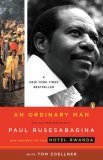

Chimamanda Ngozi Adichie was born in Nigeria in 1977. She is from Abba, in Anambra State, but grew up in the university town of Nsukka where she attended primary and secondary schools and briefly studied Medicine and ... (more)
If you enjoyed:
An Ordinary Man
Try:
Half of a Yellow Sun
by Chimamanda Ngozi Adichie
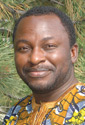
Uwem Akpan was born in Ikot Akpan Eda in southern Nigeria. After studying philosophy and English at Creighton and Gonzaga universities, he studied theology for three years at the Catholic University of Eastern Africa. He was ... (more)
If you enjoyed:
An Ordinary Man
Try:
Say You're One of Them
by Uwem Akpan
We recommend 17 similar authors



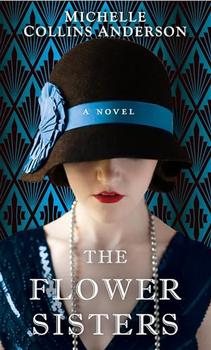
The Flower Sisters
by Michelle Collins Anderson
From the new Fannie Flagg of the Ozarks, a richly-woven story of family, forgiveness, and reinvention.
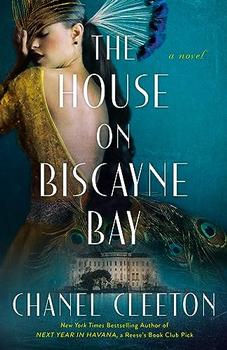
The House on Biscayne Bay
by Chanel Cleeton
As death stalks a gothic mansion in Miami, the lives of two women intertwine as the past and present collide.
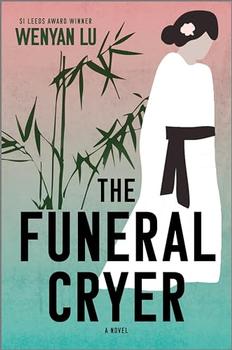
The Funeral Cryer by Wenyan Lu
Debut novelist Wenyan Lu brings us this witty yet profound story about one woman's midlife reawakening in contemporary rural China.
Your guide toexceptional books
BookBrowse seeks out and recommends the best in contemporary fiction and nonfiction—books that not only engage and entertain but also deepen our understanding of ourselves and the world around us.