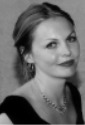
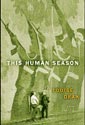
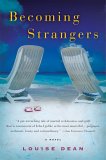
In an exclusive interview with BookBrowse, Louise Dean talks about herself and her three books, Becoming Strangers, This Human Season and the book that she's currently working on; and offers pithy but inspiring advice to aspiring authors.
A lot of first fiction tends to be autobiographical to some extent, but
considering that you wrote Becoming Strangers in your early 30s and the
lead protagonists are two couples in their 50s and 80s, it's reasonably safe to
assume that it's not! Did you have a particular motive for writing it?
After a sadly failed early marriage, I suppose I needed to say "down with love",
and "friendship is good". That"s simplistic though. Away from home, in the US,
and unable, due to the INS, to go home to see my family for some years, my
grandparents died. I loved them dearly and it grieved me to miss their last
years (they had a major hand in raising me, I was their only grandchild). I
brought them back to life in this book. When I started to write seriously, aged
26, a friend said to me "Write what you need". It was good advice.
Reading the dialogue and thoughts of your various characters, it's as if
you've somehow got inside their own skins and are really seeing the world
through their eyes. How do you manage this?
Love. Sorrow. Guilt. A sense of your own stupidity.
You portray the clique of Americans in Becoming Strangers as
particularly shallow and, frankly, not very likeable. Is that your impression of
all Americans?
No. I have quite a relationship with America. I fell in love with the idea of it
on my first visit aged 16. (My first love was an All-American boy from
Westchester). I married a Texan when I was 25 and moved to New York. I left the
US when Bush became king after the Twin Towers fell. His ideas of "good" and
"evil" worried me. I watched the second tower fall in front of me. I had no idea
how much 9/11 affected me until last night, I saw it again and for the first
time since, wept. Back then, my neighbors and I stood on our stoops in silence.
I loved New York and its brave diverse people who handled the tragedy with such
decency.
I felt that George Bush was a disaster for the American people and their place
in the world. I'll admit too I was sore with the bureaucracy of the INS who
having lost my paperwork lost 3 times, obliged me to remain inside the country
for 6 years without leave to see my family or else lose my right to remain. I
had a son, born in the US, and was short on choices. It seemed to me back then
part and parcel of the same posture vis a vis the world that has been
encapsulated in the ghastly shape of Guantanamo. Do I think G't'mo is
representative of the American people? NO! I think Bush's coterie is wiping its ass with the Star Spangled Banner....
The American characters are rather "tinny" in the book, but they could have
easily have been English, were it still colonial times. They are of a set, well
to do, white, not representative of most people I know or of my friends. There
is a defensiveness in their posture, scratch the privileged surface and you get
a troubled person.
Your second book, The Human Season, focuses on the Northern Irish
conflict. As an English woman who grew up largely after the conflict ended what
did you believe you could add to the existing fiction and non-fiction books on
the subject?
I was genuinely impartial. An outsider. Slightly guilty, keen to make
repairs, silly though it sounds. I thought this was a good start. I wanted to
"only connect" as Forster put it. Who knows what I add, but I did justice to
those with whom I talked, from both sides, I think, and have been told. I hope
so. It was an honour to hear their stories.
How did you research The Human Season? Did you meet any resistance?
Over a year, a week a month in Belfast. 500 hours of taped interviews from
all sides. Protestant, catholic, terrorist, mother, priest, child, prisoner,
prison officers, you name it. Some prison officers were terrified of being
tracked down. Most of the former terrorists were keen to tell, even if they
pretended otherwise. You have to stay angry to stay alive when you've killed.
Your biography mentions 3 published novels - these would be Becoming
Strangers and This Human Season (already published in the UK and due
in the USA shortly). What is the third?
The third will come out at the end of 2007 or in 2008.
Can you tell us a little about it?
It is set in France and London and is about a man who loses his mind but
compensates for it with comforting fictions and fantasies. It's a dark comedy
again. It will be published by Penguin UK first.
I have realized that I am a slow impulsive writer, that when I think I have
cracked the problem, I usually haven't, that most of my material gets thrown and
the book is always morphing while I'm writing it. I never conceive it as one,
from "A" through to "Z". I conceive it at about "L" or "M" and keep shaking it,
rolling it, chucking it around until its pretty creased and wrinkled, but will
do well enough to cover the body that lies underneath. I always think of a novel
like a sheet over a body, like trying to describe the life of that person with
your fingers moving over the sheet.
Can you tell us a little about your life?
I live in France and London. 3 kids, 9, 6 and 5. One tolerant husband. It's hard
to find time. I'm writing this with dinner to serve and answering questions on
"Dora". I find saying "Good, darling" a lot is how I get through. I would be a
worse mummy without writing and a worse writer without the kids. I never forget
how incredibly lucky I am. Except when I'm feeling sorry for myself.
How do you manage to juggle your writing with the needs of a young family?
A bad temper visible in the hunched shoulders, the use of the TV, a stern door
shutting technique and a husband.
When did you first think of yourself as a writer?
When I was 26. Before that I wrote bits and pieces, but did not dare to think of
myself "as a writer". In New York I wrote my first unpublished novel and got
encouragement from an editor as Farrar Strauss and Giroux. American
writing was a massive inspiration to me, as was being in New York and later Park
Slope.
You first job was as a brand manager in a multinational, followed by
a stint in advertising. How long was it before you realized that that life
wasn't for you?
It never was, but I wanted to please my father, all girls do, by convincing
him I was steady and predictable, two things which I am not. It took, perhaps,
becoming a mother to work out who I was and that only I could create a way of
living that made me happy. I was 26 when I had Jules, my first son. In New York,
on 14th Street.
Which writers have inspired you.
That's easy. Raymond Carver is required reading for all would be writers, he
makes it easy to understand and sometimes you could just swoon in the reading of
it. The art of the period, as he says. Then Chekhov who Carver loved; John
McGahern; Graham Greene; Camus; Forster; Philip Larkin; Tolstoy; Kafka;
Steinbeck; Hemingway; John Coetzee. The Twentieth Century American canon is
glorious (to me). Roth's latest book Everyman is wonderfully wrought.
Modern British fiction is pretentious and trivial in comparison.
What advice would you give an aspiring writer?
Unless otherwise stated, this interview was conducted at the time the book was first published, and is reproduced with permission of the publisher. This interview may not be reproduced or reprinted without permission in writing from the copyright holder.
Ishmael Beah was born in Sierra Leone in 1980. He moved to the United States in 1998 and finished his last two years of high school at the United Nations International School in New York. In 2004 he graduated from Oberlin ... (more)
If you enjoyed:
This Human Season
Try:
A Long Way Gone
by Ishmael Beah
William Boyd has received world-wide acclaim for his novels. They are: A Good Man in Africa (1981, winner of the Whitbread Award and the Somerset Maugham Prize) An Ice Cream War (1982, shortlisted for the 1982 Booker Prize ... (more)
If you enjoyed:
Becoming Strangers
Try:
Any Human Heart
by William Boyd
We recommend 11 similar authors

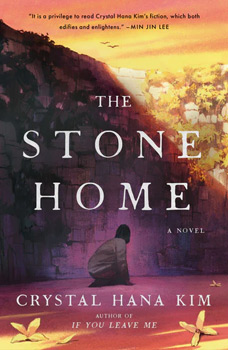
The Stone Home
by Crystal Hana Kim
A moving family drama and coming-of-age story revealing a dark corner of South Korean history.
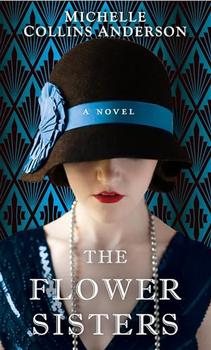
The Flower Sisters
by Michelle Collins Anderson
From the new Fannie Flagg of the Ozarks, a richly-woven story of family, forgiveness, and reinvention.
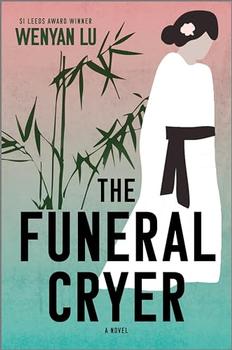
The Funeral Cryer by Wenyan Lu
Debut novelist Wenyan Lu brings us this witty yet profound story about one woman's midlife reawakening in contemporary rural China.
Your guide toexceptional books
BookBrowse seeks out and recommends the best in contemporary fiction and nonfiction—books that not only engage and entertain but also deepen our understanding of ourselves and the world around us.