Norah Vincent discusses her first novel Adeline in which she explores the life of Virginia Woolf. Among the many topics discussed Vincent explains how in many ways this novel is a work of immersion journalism, like her two previous nonfiction works.
What was it about Virginia Woolf that compelled you to start writing Adeline?
I thought about writing this book about three years ago. At that time, I bought Hermione Lee's biography and read it. I bought and reread VW's major novels and her diaries. I had bought and read all five volumes of Leonard Woolf's autobiography ten years before, so I already had that in my mind and on the bookshelf.
But after doing all of this I found that the specter of VW was just too much for me. I thought what any normal person would think: Are you nuts? You can't write about VW, much less as her. Forget it.
So I did forget it, sort of, and I shelved the idea. But then, after going through a pretty awful depression in 2013, I came back to VW, for obvious reasons, I think. I really identified with her struggle with mental illness and creative self-confidence. Also, I had just gotten married, so I realized that I wanted to write a book about marriage.
I've always felt that Leonard Woolf has been poorly represented/poorly remembered by history, and that VW has in a sense been too revered. He was a much kinder person I think than most people know, and she could be quite nasty personally, and often was. In writing about them I wanted to present a clearer picture both of who people are—their wholeness, their complexity—as well as how that complexity is reflected in their relationship. With VW I had to learn to hate my heroine, as well as to connect with her vulnerability. With Leonard, I got to delve into his lifelong misanthropy and its seeming contradiction of and conflict with his deep humanitarianism, as well as his deeply held belief in VW's genius and his commitment to seeing her through the roughest times of her life. I told myself that in writing this I could do it only if I put it in the proverbial drawer and assumed that it would never see the light of day. That helped me to overcome my trepidations.
Did your writing process for this book differ from that of your previous ones?
Yes. Quite a lot. Another reason why I was able to overcome my trepidations about writing a book about VW was that I simply didn't write it. It wrote itself. I have been practicing meditation on and off for the better part of a decade, using it to more easily access and fertilize my subconscious. This became central to the process of creating Adeline. When I say that I didn't write this book, I really mean it. I received it in meditation, and I simply wrote down what I received—the words I heard, the things I felt, even the trajectory of the book itself, how it proceeded from VW's conception of To The Lighthouse in 1925, through her relationships with other suicidal/mentally ill women like Dora Carrington and Vivien Eliot, and ended with her stepping into the river Ouse. I tell people that this book happened to me. I simply watched it spread and take shape, like a stain on a tablecloth.
Who is Adeline, and what is her relationship to Virginia Woolf in the novel?
Adeline is Virginia Woolf, or Virginia Stephen as she was then known, when she was 13 years old. VW was named after her maternal aunt Adeline Vaughn, who died just before VW was conceived. Because the name was so associated with death and grieving, it was never used, but Adeline was VW's first name. So Adeline Stephen is VW's alter-ego. She is her child self stopped in time in the year 1895 when her mother died. VW idolized her mother and loved her dearly.
VW also first came to her love of the sea when she was a child vacationing with her family in St. Ives in the years prior to her mother's death. They stopped going to the house in St. Ives when VW's mother died, and thereafter, the family began to disintegrate. Part of VW cracked open then, too, and it was the part of her that suffered repeated breakdowns throughout her life.
I conceived of Adeline as a creative source for VW. It's well known that VW heard voices when she was most ill, and had hallucinations, so I made Adeline into one of her hallucinations. They talk to each other often throughout the book, and Adeline serves as the source of a great deal of VW's inspiration. She is also there with VW right to the end, walking with her into death.
It was certainly a bold move to write about Virginia and her peers in the style of Virginia herself. What freedoms did this approach allow you? Was it in any way restricting? In what way is a novelist like a ventriloquist?
As I mentioned above, the difficulty of the task of writing as VW—well, really, the downright hubris it entailed—didn't escape me. I was able to overcome it by setting my mind aside and becoming a conduit in meditation, or as you suggest, a ventriloquist, and by convincing myself that whatever resulted from these seances would never be published. This approach did allow me much more freedom creatively, because it enabled me to disappear. This book was not about me—it is in fact the first book I have written in the third person, and also the first that is not explicitly or implicitly a memoir. Oddly, whenever I used to get down in the mouth about the process, though this happened while I was writing ADELINE far less often than it had happened while writing other books, a supremely confident voice in my head would say: Don't worry. It's already written. All you have to do is uncover it. This helped me to feel entirely free and not restricted in the least, and I simply let it all come through however it would.
How would you describe the Woolfs' marriage? On balance, was it a help or a hindrance to Virginia in her life and work?
I think the Woolfs had an incredible marriage, a model, in many ways, for what a relationship can be. Contrary to what some have maintained, I don't think Leonard in any way kept VW under wraps creatively or personally, or drove her mad. In fact I think that he's the reason she lived as long as she did without ending up (like so many other similarly afflicted women of her time) in the madhouse. He nurtured her genius and believed in it wholeheartedly. He helped her navigate the difficult terrain of her mind, and shared her intellectual life fully and fruitfully. He also allowed her to express her sexuality extramaritally (primarily with Vita Sackville West) and though he and VW did not have a sexual relationship for most of their married life, I get the sense that they were quite physically intimate and fond nonetheless.
There is an incredibly poignant scene in Adeline where Leonard and Virginia are discussing her latest literary effort, and Leonard realizes with shocking clarity that to encourage his wife as an artist is to endanger her as a person. What does this tell us about the relationship between creativity and madness? And also the scope of our obligations to our loved ones, and also the limitations thereof?
I think Leonard was always treading that precarious line between feeding VW's visionary genius and keeping her from falling into the abyss. Creativity and madness are closely linked. This was especially true for VW precisely because to write what she wrote, she had to indulge her psychedelic experience of the world, to flirt in a sense with her madness, but stay out of its clutches at the same time. She never fully succeeded, but Leonard knew that this process was necessary to her life—i.e. her life would not be worth living if she could not get inside it and describe what she knew—so he helped her to walk the tightrope, and he caught her when she fell.
It was a lot to ask. It is a lot to ask of any relative or partner. In the end, I think VW wanted to let Leonard go, to let him get on with his life without the burden of taking so much care of her. He could nurture her, and he did, allowing her to produce the beautiful and unforgettable novels that she gave us, but he could not save her life. No one can do that, nor should they be expected to.
There are cameo appearance in Adeline of many well-known artists, poets, and writers—James Joyce, WB Yeats, T.S. and Vivian Eliot, and of course the Bloomsbury crew. One of the most surprising and interesting figures you introduce is Woolf's physician, Dr. Octavia Wilberforce. What role does she play in Virginia's story?
Dr. Wilberforce was a fascinating person. She came from the Wilberforce clan who were so famous for abolishing slavery in England in the early 19th century. She was the youngest of eight children, and so named, and she became a physician at a time when women simply didn't pursue professions, and often couldn't. She was also a lesbian who lived with her longtime companion, the American actress, Elizabeth Robins.
At Leonard's insistence, she had a long conversation and consultation with VW on the day before VW took her life in March, 1941. It is not known what they said to each other, which is where I got to exercise the novelist's privilege of invention. Years before, in 1932, VW had had a long conversation about suicide with Dora Carrington on the day before Carrington killed herself. Again, little is known of what was said, so these two scenes—the one with Carrington occurs midway through the book, and the one with Octavia occurs in the penultimate chapter—functioned like bookends for VW's ideas about suicide and the role that her alter-ego Adeline played in the way that she thought about it. Her conversation with Octavia, somewhat like her conversation with Carrington, though this time it happens from the opposite side of the question, is about wanting to die, about asking a friend and physician to let you die. It offers the argument for why VW took her life and why she wanted to, and presents the challenge again of what a loved one might be confronted with under such circumstances.
You've written two controversial and well-received non-fiction books—Self-Made Man, an account of the 18 months you spent living as a man, and Voluntary Madness, an expose of depression and mental illness in America; your life and work seem to inform each other in very intimate ways. Where does Adeline fit in this continuum?
Though I did not know it while I was writing it, Adeline was another strange foray into immersion journalism. I immersed myself in VW and wrote as her, just as I had immersed myself in the experiences of being treated as a man and of being treated as a patient in various mental hospitals. I was also struggling to express my own thoughts about mental illness and suicide as well as lesbianism and issues of gender identity as they appear in VW's work. I suppose in that sense my earlier work was the ideal preparation for writing as VW. The parallels are many and obvious.
What are you working on now?
Through writing Adeline I discovered a new genre for myself, which I'm calling bio-fic or bio-lit. It blends biography, literary criticism and fiction and attempts to present a portrait of the lives and work of writers I admire. The novel I'm working on now is another in this genre. It's called Shadowbox and it's about the life and work of Samuel Beckett.
Amongst many other topics, Nora Vincent discusses how her concept of being a woman has changed since living as 'Ned' for 18 months, an experience she describes in Self-Made Man
Can you describe the process of your readjustment to life as a woman? How
long did it take? Were there any surprises involved? What, if anything, do you
miss about living as a man?
Living as a man taught me a lot about the things I most enjoyed about being a
woman in the world, things I consider to be the privileges of womanhood—the
emotional freedom, the range of expression, the sexual and social power we can
exercise over men. Returning to my life as a woman was about reclaiming those
privileges and taking greater satisfaction in them. Here's one small example,
which may sound hopelessly old-fashioned and silly, but it made me smile so
warmly: The other day a clerk in a store turned to me and apologized for having
to refer to pornography in front of me during a discussion he was having with a
male customer. I found it very thoughtful and sweet. When a man does something
like this now, I connect again with all the vulnerability that I felt as a man
in front of women, and I remember all the conversations I had with the men in my
men's group about their need to take care of and protect women. Not all men
behave the way this clerk did, of course, but nonetheless I feel a deep sense of
the respect that men like him have for women and I feel grateful for it. It's
nice to feel that someone is looking out for you, or trying to, and worries
about offending or debasing you even in speech, and this is something I never
felt as a man.
It took me months. Probably a good six months to really get back into being a
woman. And this is partly because I had some unpacking to do. It wasn't just a
matter of returning to myself, because I am a different person now than I was
before I embarked on this project. I feel more womanly now, more in touch with
my femininity, than I ever did before I lived as Ned, and that has taken some
getting used to, though it has been very pleasant.
I don't miss anything about being Ned. The few social advantages I discovered
in manhood—the swagger, the self-confidence, the entitlement—I've learned to
incorporate into my life as a woman. Everything else I was happy to discard.
How has your concept of being a woman changed since your experience as
Ned, in both general and personal terms?
Being able to incorporate the lessons of manhood into womanhood is, I
suppose, one of the best examples of how my concept of womanhood changed because
of Ned. In my view, this is the greatest liberation of feminism, a liberation
that men haven't yet experienced in their own roles. They haven't really been
allowed to express traditionally feminine qualities, and they are limited as a
result. Having lived as both a man and a woman, it seems to me now that the
definition of womanhood, at least as I live it and as I believe our culture
defines it, is so much larger, can happily encompass so much more, than the
definition of manhood. I can borrow from the boys—wardrobe, mien,
temperament—and still be all woman. The reverse is not really true, or at
least it wasn't for Ned. He had to shed all my female qualities and, as a
result, became much smaller. I like to say that in that respect Ned can fit in
Norah's pocket.
What influence do you think the media have on sexual roles? Do you see any
trends that alarm or encourage you?
I think that the media reflect more than they influence. They show us images
of ourselves, often idealized images to be sure, but I don't think they invent
out of whole cloth. They're not that creative. Sexual roles are a very intimate
business, I think. They change at the microcosmic level first. Individuals,
often obscure individuals, are the creative ones, and they're the ones who end
up changing the way we think and behave, and the media in turn digest those
changes and spit them back at us as trends. If there's a trend that disturbs me
it's probably that tendency on the media's part to homogenize originality, to
dumb it down and sell it back to us as the norm.
Are there any public figures whom you admire for expanding social
definitions of gender? Do you have any heroes—personal, political, or
literary?
Though I disagreed with her often, I admire my friend the late Andrea Dworkin.
Some heroes/heroines, in no particular order, are: Hamlet, George Orwell, Joan
Didion, Graham Greene, W. H. Auden, Elizabeth Bishop, and Elizabeth I.
In Self-Made Man, you discuss the relationship between childhood
experience and understanding gender roles—for example, fathers withholding
affection in order to create tough young men. What advice would you give to a
parent today to help him or her avoid imprinting gender expectations on
children?
Having no children myself, I'm hardly in a position to judge, but if I had to
say, I suppose I would suggest leniency when it comes to children's
self-discovery. Too often parenting is a kind of narcissism. Parents see their
children as little more than extensions of themselves, or potential re-enactors
of their lost youths and missed chances. This is toxic to any child's
self-actualization, especially when it comes to matters as intimate as sexuality
and gender identity. If a child shows a proclivity for a particular style of
dress or hobby or pursuit that the parent may not deem gender appropriate, or
does not himself like, I think it is the parent's duty to resist showing
disapproval, or, worse, distaste, and to encourage the child to be most
authentically himself or herself in every way possible. God knows, the child
will find enough disapproval in the outside world. Our parents are the first and
foremost people whose job it is to love us entirely for who and what we are, and
that means, when it comes to the expression of our individuality, letting us be.
Short of dressing up as a member of the opposite sex for a year and a
half, how can a person begin to break free of gender clichés? Is there such a
thing as a beneficial stereotype?
As has often been said, stereotypes are born of truth. I found this in my
research. They are useful shorthands that help us to make sense of our world.
The danger lies in being slavishly devoted to them, or allowing them to cloud
our judgment when it comes to seeing and treating another human being as a
person and not a set of categories. Similarly, gender roles are born at least in
part—perhaps in large part—of natural inclination. Women may always be the
primary nurturers on this planet, perhaps because something in our hormonal
drives directs us toward intimate and interpersonal life or because we give
birth. Maybe instinct conditions us far more than we know or may want to
believe. The same is true, I think, for men. Perhaps their hormonal drives will
always make them more physically competitive and better suited to high-pressure,
teleological pursuits. This may mean that no matter how we jigger it, by virtue
of who we are as creatures, women will always tend to predominate in the nursery
and men the boardroom. This doesn't mean, however, that either sex should be
mindlessly shackled to a prescribed or straitjacketed role, even if the vast
majority of each sex tends to make a traditional choice. The key word here is
choice, the cornerstone of feminism. Women should be able to choose whether to
work or stay home, and so should men. Breaking free of stereotypes means being
true to yourself and being flexible within your choices. You can, after all, be
a stay-at-home mother and not be a shrinking violet, and you can be a type-A
breadwinning dad and still join a knitting group if that's what turns your
crank, or vice versa and a thousand other permutations as well.
Self-Made Man not only exposes the truth about contemporary manhood
but is quite intimate in its discussion of your personal history, sexual
identity, and emotions. How do you feel having so much of yourself in the book?
How did you decide what to reveal and what to keep private?
I tried to write about everything that I thought was relevant, even if it
didn't reflect particularly well on me. I had to overcome a lot of shame, for
example, about mental illness in order to write honestly about my breakdown. A
number of people who read the manuscript early on told me to take certain things
out because they made me sound nuts. But it's precisely the things that
embarrass or discomfort you the most that are most important for you to write
about. That's the good stuff. I don't mean that endless navel gazing is
desirable or makes for good writing. Tempering the urge to overwrite the
especially mucky parts is important, but I didn't want to edit out the weird
bits altogether simply because I didn't want people to know that I'd been in the
bin, or that I'm not always the most attractive person on the planet. Of course,
the downside of this is that if you're extremely sensitive, as I am, it means
you need to protect yourself from people who take a malicious pleasure in
sharpening their blades on your misfortunes and brandishing their cleverness at
your expense.
The psychological toll of your experiences as Ned is both frightening and
completely understandable. If you did the experiment again, knowing what you
know today, what—if anything—would you do differently? Do you feel that the
knowledge was worth the pain?
Ignorance is courage. If I'd known then what I know now, I could never have
embarked on the project. Yet, all the same, I wouldn't trade the experience for
anything. The knowledge was absolutely worth the pain; especially because part
of what I learned was how to better take care of myself psychologically in my
everyday life. I listen to my emotions much more carefully now. I take care of
myself. I take responsibility for my own psychic health, and that's a daily
practice. The lesson I can apply to my next project is that I can never again
try to be someone else, someone that I'm not. I can and will immerse myself in
situations and environments in order to write about them, but I will never again
do so as another person.
Among the people you met as Ned, what range of reactions do you expect the
book will receive? Do you think they will recognize themselves?
As a writer friend of mine told me when I embarked on this project, "When
you write this intimately about real people, you are an assassin." And he's
right. Almost invariably people object to something you've written about them.
Either they say you got them wrong, or it didn't happen that way, or that's not
how they remember it. I expect some of the Rashomon effect: The story of the
same event will be told ten different ways by ten different observers. All the
versions will be true and none of them will. The people in the book will
recognize themselves. They'll agree with the compliments and they'll object to
the disparagements, and that is to be expected.
This was a difficult, even dangerous experiment that consumed a year and a
half of your life. What's next?
Ned is going to be an extremely hard act to follow. I've spent a lot of time
thinking about what to do next, and I haven't hit on anything definitive yet. I'm
trying very hard to resist the Hollywood temptation to find a formula that works
and work it to death. I'd like to follow my imagination and have an adventure
and that's all I know right now.
Unless otherwise stated, this interview was conducted at the time the book was first published, and is reproduced with permission of the publisher. This interview may not be reproduced or reprinted without permission in writing from the copyright holder.

Cris Beam is the author of Transparent and has written for public radio's This American Life, as well as for several national magazines. She has an MFA in writing from Columbia and teaches creative writing at Columbia, NYU, ... (more)
If you enjoyed:
Self-Made Man
Try:
I Am J
by Cris Beam
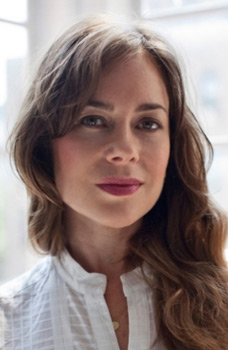
Kate Bolick is a contributing editor for The Atlantic, freelance writer for ELLE, The New York Times, and The Wall Street Journal, and host of "Touchstones at The Mount," an annual literary interview series. Previously, she ... (more)
If you enjoyed:
Self-Made Man
Try:
Spinster
by Kate Bolick
We recommend 8 similar authors

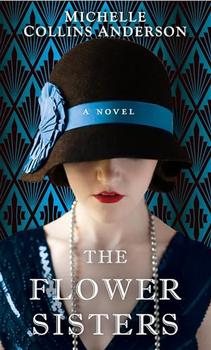
The Flower Sisters
by Michelle Collins Anderson
From the new Fannie Flagg of the Ozarks, a richly-woven story of family, forgiveness, and reinvention.
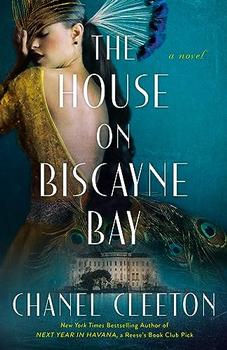
The House on Biscayne Bay
by Chanel Cleeton
As death stalks a gothic mansion in Miami, the lives of two women intertwine as the past and present collide.
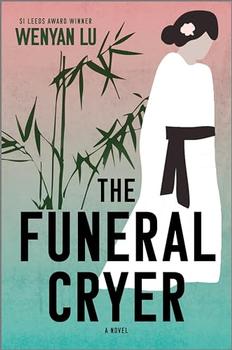
The Funeral Cryer by Wenyan Lu
Debut novelist Wenyan Lu brings us this witty yet profound story about one woman's midlife reawakening in contemporary rural China.
Your guide toexceptional books
BookBrowse seeks out and recommends the best in contemporary fiction and nonfiction—books that not only engage and entertain but also deepen our understanding of ourselves and the world around us.