A short essay by Peter Ackroyd about his 2009 novel The Casebook of Victor Frankenstein
It is of course obviously true that Frankenstein is a wonderful story, and I was
eager to see if I could extend it in other directions. It is a myth and a
history, an allegory and a nightmare. I wanted to see if it was possible to
maintain all those elements in a re-interpretation of the original text.
I had been greatly impressed by Mary Shelley’s original, but I was eager to
tease out some of her assumptions and themes.
I had always been interested in the Romantic movement of English poetry, in the
early nineteenth century, and the story of Victor Frankenstein allowed me to
explore all the possible meanings of “romantic” in that context. This also meant
that I could discuss the worship of electricity and new science in the period.
But it also allowed me to introduce the ‘real’ characters of Byron and others
into the plot. I wanted to set the story in London, as a way of re-imagining and
re-creating the nineteenth -century city. I also wanted to see if I could
recreate the language and texture of the period so that the reader would feel
connected in an intimate way with a culture and civilization that have now
disappeared.
In that I was greatly assisted by the fact that I wrote and presented a series
on BBC Television, entitled ‘The Romantics’, which allowed me to suggest the
lines of continuity between Coleridge, Wordsworth, Byron, Shelley, Keats, and of
course Mary Shelley herself. All of these people appear in the novel itself. I
was also helped by the fact that in the course of filming I went to all of the
sites that appear in the novel itself, particularly the Villa Diodati on the
shores of Lake Geneva where Mary Shelley had the original inspiration for her
novel. We spent one night filming there, and on the balcony of the house I had
an intimation of the novel I was about to write.
-- Peter Ackroyd
Unless otherwise stated, this interview was conducted at the time the book was first published, and is reproduced with permission of the publisher. This interview may not be reproduced or reprinted without permission in writing from the copyright holder.

Marie Benedict is a lawyer with more than ten years' experience as a litigator at two of the country's premier law firms and for Fortune 500 companies. She is a magna cum laude graduate of Boston College with a focus in ... (more)
If you enjoyed:
The Casebook of Victor Frankenstein
Try:
The Mystery of Mrs. Christie
by Marie Benedict
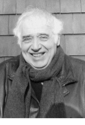
Harold Bloom is a Sterling Professor of Humanities at Yale University and a former Charles Eliot Norton Professor at Harvard. His more than forty books include The Anxiety of Influence, Shakespeare: The Invention ... (more)
If you enjoyed:
Shakespeare
Try:
How To Read And Why
by Harold Bloom
We recommend 28 similar authors
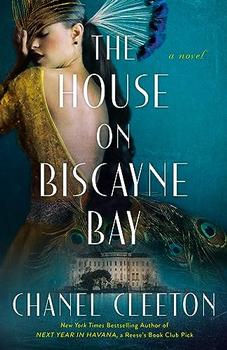
The House on Biscayne Bay
by Chanel Cleeton
As death stalks a gothic mansion in Miami, the lives of two women intertwine as the past and present collide.
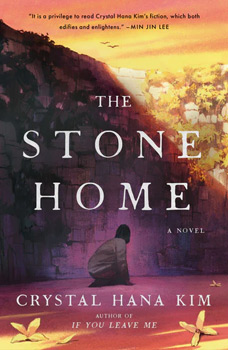
The Stone Home
by Crystal Hana Kim
A moving family drama and coming-of-age story revealing a dark corner of South Korean history.
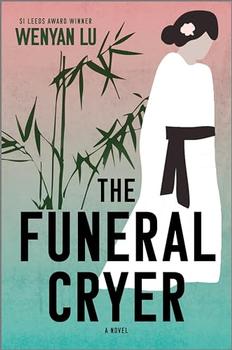
The Funeral Cryer by Wenyan Lu
Debut novelist Wenyan Lu brings us this witty yet profound story about one woman's midlife reawakening in contemporary rural China.
Your guide toexceptional books
BookBrowse seeks out and recommends the best in contemporary fiction and nonfiction—books that not only engage and entertain but also deepen our understanding of ourselves and the world around us.