Jeff Abbott answers questions about his writing habits, the music he listens to while writing, and offers advice for budding authors.
Q: What influences have there been in your writing?
A: First my grandparents, who were great Southern-style
storytellers. My grandmother was a 2nd-grade teacher for 37 years; she
introduced me to books and taught me to read at an early age. (I wasn't
extra bright - she was just a fantastic teacher.) In terms of other
authors, you can't raise yourself up to your idols, but I think I've
been influenced most by the short stories of Eudora Welty and the novels
of John D. MacDonald, who are decidedly a mismatched pair. But both
brilliant in their own ways.
Q: How long have you been writing?
A: I wrote a "novel" (I use the term loosely) in high
school. Handwritten, about five hundred pages. Truly horrible. But I had
always written, usually stories revolving television shows I'd like to
have seen. I never formally studied writing but I got serious about it
in 1992, and my first novel was published in 1994.
Q: You've moved from writing more traditional mysteries to more
mainstream suspense. Why?
A: It was a creative decision. The ideas I was getting for books
weren't appropriate for the traditional series I'd written. So I had to
make a change, and I think I've made the right one for me.
Q: What's your writing schedule like?
A: I write in the mornings, generally from about 8-12. Also late
at night, after my kids are asleep, if I'm close to deadline or on a
roll.
Q: Where do you get your ideas?
A: Like everyone else, at that secret aisle at Target. Kidding. A
lot of writers hate this question, not because it's a bad question, but
because 1) the idea is only the tip of the iceberg of what the book is
and 2) most writers don't know where their ideas come from. An idea is
meaningless until the book is written around it. Anyone can come up with
an idea, and I have far more ideas than I could ever write books about.
Some of my ideas are quite bad, and I sure wouldn't want to spend a year
with them. But to try and answer the question, ideas tend to be related
to something you see or hear or read about and it sticks in your mind,
dormant but present, a seedling, maybe waiting for the fertilizer of
another idea or stimulus to take the appropriate shape. It's not that
you go somewhere to get ideas; it's that you make your mind receptive to
all the ideas that are confronting you each day.
Q: Do you play music while you write?
A: Sometimes. I love listening to suspense soundtracks, like for
"The Silence of the Lambs" and "Jackie Brown". Or
big, sweeping soundtracks, like "Henry V". (I'm a Kenneth
Branagh fan.) I like Southern music, bluegrass, blues, old country, or
Seventies funk. Often, after a book is done, it feels to me like it has
a soundtrack to it, or certain songs become suggestive of certain
scenes. I think, for instance, in A Kiss Gone Bad, the soundtrack
could include "In the Middle of the Night" by Louann Barton
and Jimmie Vaughn, "Essence" by Lucinda Williams, "Simple
Song" by Lyle Lovett, "It Comes to Me Naturally," by
Charlie Robison, "Better Be Home Soon" by Crowded House,
"That's Real" by Mary-Chapin Carpenter, and "You Owe Me
Some Kind of Love" by Chris Isaak.
The older I've gotten and the more I've written, the more interested I
am in singers who are also songwriters, like Lucinda Williams, Lyle
Lovett, Dolly Parton, Robert Earl Keen, and Chris Isaak.
Q: What's your advice for aspiring writers?
A: Read heavily in the area where you want to write. Be aware of
what's selling and what's doing well but don't try to write to market
trends; they are fleeting. Set a schedule for yourself; novels are big
and you should try to break the work down in manageable chunks. So write
for an hour each day or write 2 or 5 or 10 pages a day and stick to that
schedule. If you do, you'll have a book eventually. It may not be
publishable, but you'll have a book. Also—don't worry about getting an
agent until the book is finished. I wish I had a dollar for every time
an aspiring writer asked me how to get an agent and they don't even have
a first chapter written. First things first—finish your book.
Unless otherwise stated, this interview was conducted at the time the book was first published, and is reproduced with permission of the publisher. This interview may not be reproduced or reprinted without permission in writing from the copyright holder.
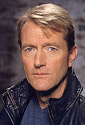
Lee Child was born in the exact geographic center of England, in the heart of the industrial badlands. Never saw a tree until he was twelve. It was the sort of place where if you fell in the river, you had to go to the ... (more)
If you enjoyed:
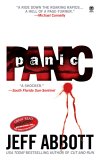
Panic
Try:
Echo Burning
by Lee Child
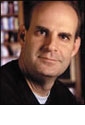
Harlan Coben was born and raised in New Jersey. After graduating from Amherst College as political science major, he worked in the travel industry. He now lives in New Jersey with his wife, Anne Armstrong-Coben MD, a... (more)
If you enjoyed:
Panic
Try:
The Innocent
by Harlan Coben
We recommend 5 similar authors

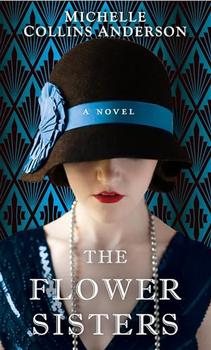
The Flower Sisters
by Michelle Collins Anderson
From the new Fannie Flagg of the Ozarks, a richly-woven story of family, forgiveness, and reinvention.

The House on Biscayne Bay
by Chanel Cleeton
As death stalks a gothic mansion in Miami, the lives of two women intertwine as the past and present collide.

The Funeral Cryer by Wenyan Lu
Debut novelist Wenyan Lu brings us this witty yet profound story about one woman's midlife reawakening in contemporary rural China.
Your guide toexceptional books
BookBrowse seeks out and recommends the best in contemporary fiction and nonfiction—books that not only engage and entertain but also deepen our understanding of ourselves and the world around us.