
-
Your next favorite book
is waiting.
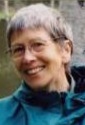
Are there similarities between today's societies and Nazi Germany, and could a leader such as Hitler come to power in modern day USA? Irmgard Hunt believes the answer to both these questions is yes; find out why in this thought provoking interview.
Patriotism generally has positive connotations of love and loyalty
to one’s country. What does patriotism mean to you now?
Patriotism is one of the most misused terms in our political
vocabulary and thanks to my childhood experience I am always suspicious of its
use. Hitler and the swastika flag aroused fervent "Vaterlandsliebe"
(love of the fatherland) in Germans, including myself at times during my
childhood. These symbols are used to motivate citizens to sacrifice their lives
or even kill others in the name of patriotism. Feeling pride in one’s culture
and roots is obviously acceptable, but, unfortunately, leaders of all ilks
easily exploit these feelings in order to obtain blind support for highly
questionable objectives. Citizens in a democracy have a duty to object if, in
the name of patriotism, their government tries to dismantle laws that assure
freedom.
In addition to documenting the German people’s way of life during WWII,
what can people today take away from your memoir?
Most pertinent to today’s situation, in reflecting on my Nazi
childhood on Hitler’s mountain, I learned that–even in the United States–freedom
and democracy must not be taken for granted. Threats that brought about the
Third Reich are alive and well today here in the US. Among them are misguided
patriotism; intolerance; racism; rigidly held ideologies; our engagement in an
unjust, unprovoked, and aggressive war; and the bending of laws for political
purpose. As I unearthed my family's experiences, it became clear that the
greatest danger to democracy comes when people, out of uncertainty and
ill-defined fear, blindly follow a leader who convinces them that he is destined
to make them safe. Believing that their hero needs appropriate tools to
guarantee their welfare, they remain silent as democratic principles are
violated and dismantled and principles of freedom are annulled.
After you came to the US, how did you describe your childhood
and growing up in Berchtesgaden?
I was silent about my background because it inevitably caused
people discomfort or prompted them to vent their resentment on me. I felt put in
a position of defending the indefensible; yet, I still loved my native home.
Now, sixty years after the war, most people don’t even recognize the
name Berchtesgaden or have, at best, a tourist perspective of the Eagle’s
nest, Obersalzberg, and the town. But more importantly, I think the war in
Vietnam was a watershed the way people viewed this topic. Before Vietnam there
was a conviction of America’s righteousness and the total evil of Germany.
Then Americans saw that even democratically elected leaders could lead a country
into a war with which not everyone agreed. This humbling experience caused
people to reflect on the courage it takes to stand up against one’s government
and how long – even in an open society –it can take to change foreign
policies.
The words: "I felt thoroughly sick of these conflicts
forced upon me by adults" leapt off the page. How do you think adults use
children to enhance their own sense of power? Should adults take more care to
expose children to conflicting ideas and points of view to help them form sound,
personal opinions?
Politicians, including Hitler, thrive on being portrayed with
smiling, happy children providing evidence that the future of the country is in
caring, fatherly hands. I think that the worst misuse of children is to turn
them into spies, informers, and even soldiers. In free societies, teachers and
especially parents have the obligation to prevent politicians from establishing
policies that endanger their children’s future freedoms and well-being. Most
of all, they have the responsibility to expose children to diverging views, to
expect tolerance, and to encourage them to question things and to stand up for
their views. Parents should never cede this responsibility to ideologues who may
use propaganda machines as good as those of Goebbels.
Do you see similarities between present day societies that
indoctrinate children with hatred and intolerance and those in your childhood in
the Third Reich?
Most political regimes look to the nation’s youth to assure their
own future and the next generation of devoted followers. Putting children in
uniforms and making them feel part of a larger cause are well-tested tricks of
authoritarian regimes. One-sided pressure and the teaching of superiority and
intolerance¯often paired with intimidation¯are almost impossible for
a child to fight off. Poverty and hopelessness provide particularly fertile
ground for hatred to take root as we have seen in Germany in the twenties. But
even in democratic countries improving children’s lives should be a priority
on a nation’s agenda.
How did you regain confidence in leadership and the political
process as you moved into adulthood? What do you now consider the ideal
government? What do you consider the responsibilities and characteristics of an
ideal citizen?
The total collapse and defeat of Germany provided a tabula rasa* on
which to build almost anything in terms of a new political regime. In East
Germany, youth was immediately indoctrinated and captured by a Stalinist regime.
We in the west were immediately educated towards a U.S. guided democracy, both
filling a complete void. As our new political system in the west evolved my
parents were at first allowed to vote only in local elections. The first
national elections in a united West Germany were held in 1949, four years after
the war ended. I was still too young to vote but was excited by the process and
knew what each party and their leaders stood for. I had no doubt that a western
style democracy with a legal framework that guaranteed the rights of all
citizens was the only desirable form of government for West Germany. Being a
good citizen, to me, meant staying informed—presumably by a free, independent
media—and becoming part of the political process beyond voting.
(*BookBrowse note: tabula rasa literally translated = clean slate)
What, if anything, could an average German who disagreed with the
Nazis or became disenchanted with them have done about Hitler once he was in
power?
Very little. With Hitler’s control of executive, police, and
judicial functions it would literally cost your life to even mention your
disaffection. At a minimum, negativism, like that of my grandfather, was a crime
that could cost you your job, contracts, pensions, or send you off to the
concentration camps.
Could a Hitler happen here in the US? If so, under what
circumstances?
I have thought about that a lot, and yes, an American Hitler is
possible. But it would arrive largely unnoticed and insidiously, with the
pretense of a free democracy intact. The first prerequisite is having the
executive, legislative, and judicial functions in the hands of one very strong
party with media either largely controlled by that party or under sympathetic
ownership. The trigger that would tip the scale might be a monstrous disaster
such as a long-term depression or another more fear-inspiring terrorist attack.
There might be a group or groups that would be demonized and become an excuse
for extreme measures. In Germany it was the Jews. Here it might be terrorists or
extreme Muslims. If there were a great enough fear or strife here in the US, a
group that monopolized power, and a scapegoat to apply blame to, these
ingredients could surely create reason for suspending or ignoring the
Constitution and breed an American Hitler.
How did the writing of On Hitler's Mountain change your perception
of your mother?
My mother died at 75, again widowed, bitter, and crippled by
arthritis. Writing about her young years gave me a new sense of her vitality,
her willingness to start over, her courage, and her true devotion to those she
loved. My mother’s extreme grief when I left for America had left me feeling
guilty for years. While writing the book I began to understand that her losses
and her loneliness were at the root of her mourning over my departure.
What do you consider to be the most important sacrifice Mutti made
for your family?
Every mother’s life is a series of devotional acts. There is no one
particularly dramatic event that I can point to, and it is, in fact, the small
ways that my mother sacrificed her sleep, time, and energy that come to mind.
For example, when she sat up through the night to finish the hem on a birthday
dress or when she traded her best china to send me to a farm in the fertile
low-lands for a week to fatten me up when I had tuberculosis.
You write about
your personal anguish and eventual healing from the impact of being born and
raised during the Third Reich. How did you decide to confront the perilous
events of your past through writing?
I began writing about my father’s death just a few years after the
war when I attended the Gymnasium (high school). In class, one day, I
read my essay out loud and was stunned to realize that it had moved my classmates
to tears. I rewrote that story many times. The decision to put the memories of
those mean years into a book was prompted by my grown-up children’s questions,
and my conviction that the lessons of my Nazi childhood must not be lost,
especially in this time of fear and of peril for the American Democracy.
How does writing about the events of your childhood sixty years later
change them? How easy or difficult was it for you to remember the sorrow and
fear you felt as a child, and the voice and mindset of the girl you once were?
I am sure that hindsight colored my memoir, especially after living
in the U.S. for so many years and reading many historical accounts of the time.
Telling some of the stories was difficult. Old wounds were re-opened and anger
at the adults whom I loved and who allowed Hitler his power surged again and, of
course, sadness at all the carnage. Remaining honest to who I was and what I
knew as a child required constant, conscious effort to reexamine my memories. I
gained confidence by talking with many people in my hometown and Selb,
researching town and family records, studying photographs and, of course,
relying on my mother’s diary and other documents.
If you, had kept a diary of these terrifying and tumultuous times as
Anne Frank did, what comparisons do you think would be made?
I don’t think a comparison is possible, fair, or fruitful. Anne and
I were by sheer fate born into completely different circumstances that became
our destinies. Thanks to the Nazis we both lived through early suffering and
have a right to claim those particular experiences. Through my country she and
her family lost their lives and I feel deep sorrow about that. There is no
competition.
Unless otherwise stated, this interview was conducted at the time the book was first published, and is reproduced with permission of the publisher. This interview may not be reproduced or reprinted without permission in writing from the copyright holder.
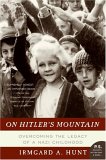

Anonymous was a young woman at the time of the fall of Berlin. She was a journalist and editor during and after the war. (more)
If you enjoyed:
On Hitler's Mountain
Try:
A Woman In Berlin
by Anonymous
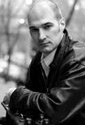
Peter Duffy was born and raised in Syracuse, N.Y., the son of a television newscaster and a martial arts instructor. After attending Niagara University and the University of Pittsburgh, he was a journalist in New York City. ... (more)
If you enjoyed:
On Hitler's Mountain
Try:
The Bielski Brothers
by Peter Duffy
We recommend 10 similar authors



To be ignorant of what occurred before you were born is to remain always a child
Click Here to find out who said this, as well as discovering other famous literary quotes!

Can you name the title?
Test your book knowledge with our daily trivia challenge!
Your guide toexceptional books
BookBrowse seeks out and recommends the best in contemporary fiction and nonfiction—books that not only engage and entertain but also deepen our understanding of ourselves and the world around us.
