Cynthia Ozick explains why the son of A.A. Milne, creator of Winnie-the-Pooh, became the inspiration for one of the key characters in her latest novel.
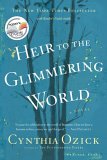
In Heir to the Glimmering World there are several actual
heirs, including the profligate James A’Bair — a character inspired by the
son of A. A. Milne, creator of Winnie-the-Pooh. What was the source of this
inspiration?
Some time ago I happened on the obituary of Christopher Milne,
A. A. Milne’s grown son, whom we know mainly through Ernest Shepard’s
indelible illustrations of a small boy in short pants. At his death he was the
owner of a bookshop hidden away in the north of England, having attempted all
his life to slough off his identification with Pooh and Eeyore and all the rest.
He wanted to flee from the artifice of his father’s creation: he longed to
become an autonomous adult, to be a man, not the object of nostalgic
pilgrimages to a living shrine not of his making. Or so I thought, reading that
obituary notice. In my novel the character inspired by Christopher Robin is
named James A’Bair, eventually to be dubbed the Bear Boy. The Bear Boy
struggles to climb out of what Thomas Mann called "the well of the
past," the past that has immured him in an imaginary childhood. His
single-minded aim is to escape being costumed forever in lace collar and rouged
knees, forever five years old.
Professor Rudolf Mitwisser, beneficiary of the Bear Boy’s
profligate ways, studies an ancient Jewish sect of scriptural literalists —
they rejected all interpretation. How does Mitwisser’s obsession relate to the
Bear Boy?
It would be grandiose to call my novel a novel of ideas, but
I hope I may venture that it is a novel of at least an idea: the idea of
the necessity of interpretation, but also the danger of interpretation. What
makes a human being? Language first, and then imaginative interpretation — the
human mind cannot live without it. Like all literalists, the Karaites stood
against imagination and interpretation, and they vanished out of history’s
mainstream. The author of the Bear Boy books weighed down his son with so much
ineradicable embellishment that the man could never free himself from the
invented boy. Whether interpretation is too little or too much, a withering will
follow.
Aside from the underpinning of ideas, your novel is a delight
to read with a delightful narrator, Rose Meadows. Does she see these thematic
notions you’ve just described?
Hardly. She is only an untried motherless eighteen-year-old,
carelessly abandoned by a feckless father. And anyhow, for the characters in any
fiction, and above all for readers, theme is subterranean, implicit,
unobtrusive, the invisible underside of the story. Rose, though, feels
intelligently, and she is an acute observer: she takes things in while mostly
standing apart. I compare her to the traditional Young Man from the Provinces,
who enters, unprepared, into unsuspected complexities. She starts out as a
witnessing eye, yet some of the complexities she encounters occur beyond
her consciousness or view: the Spanish civil war, for instance, or incidents in
Barcelona, Berlin, Cairo, Switzerland.
Have you yourself visited the far-flung places the novel
touches on?
I’ve never been to any of them, nor to those little central
Pennsylvania or upstate New York towns the Bear Boy wanders through: Bellefonte,
Pleasant Gap, Port Matilda, Tyrone (though I did once pass through Altoona); or
Troy, Endicott, Oneonta, Batavia, Medusa. The only locality in the novel I can
claim intimacy with is the untamed neighborhood in the northeast corner of the
Bronx, the last stop on the Pelham Bay line, where the Mitwisser family finally
lands. I grew up there, long ago, close to meadow, bay, swamp, cattails, lilacs,
a World War I victory column. Except for this one setting, nothing in the novel
is even faintly autobiographical.
Is Heir to the Glimmering World a comedy or a tragedy?
The story ends with a wedding ring and a baby — the
conventional requisites for comedy — so I suppose it can count as a comedy.
Yet since world upheaval is pervasive, and there are three deaths — the first
in a car crash, the second in war, the third by suicide — some may regard it
as an anatomy of melancholy. But novels are only chronicles of human lives (even
if those lives are invented) and merely retell our confusions of light and dark,
of loss and promise. What matters, I think, is the conviction that something
significant is at stake.
You’ve published four collections of essays and eight books
of fiction. Which kind of writing are you more attracted to?
Definitely fiction. Fiction is all risk, all discovery, all
confidentiality — even secrecy. Essay writing verges on being a public act and
is driven more by the intellectual faculty than by the imaginative. But
fiction...when I say secrecy, I mean not only the long, long immersion in
privacy and isolation, and the wooing of phantoms out of the air, but those
bodiless concealments and disclosures of language that lurk in certain turns of
dialogue, or the turn of an eye, or a hand, or a shaft of sky. A watchfulness,
an almost perilous vigilance. A novel can be written, so to speak, out of
"sociology," and it will still be a novel. But when a novel’s sinews
are bound up in the most fearful intimations of language, when setting down a
phrase feels tantamount to ingesting the blood of demons . . . just there
is the difference between the safety of prose and the lusts of art: think of the
haying scene in Anna Karenina, or the Marabar caves in A Passage to
India. Call it language, call it intuition, call it seduction, call it
idea-as-emotion. It is a voluptuousness only the novel knows, and the elusive
grail we poor scribblers helplessly chase.
Unless otherwise stated, this interview was conducted at the time the book was first published, and is reproduced with permission of the publisher. This interview may not be reproduced or reprinted without permission in writing from the copyright holder.

Author of three New York Times best-sellers and three collections of short stories, a children's book (another coming in 2022) and a ground-breaking collection of essays. Bloom has been a nominee for both the National Book ... (more)
If you enjoyed:
Heir To The Glimmering World
Try:
Away
by Amy Bloom

Pete Hamill was born in Brooklyn, N. Y. in 1935, the oldest of seven children of immigrants from Belfast, Northern Ireland. He attended Catholic schools, leaving school at 16 to work in the Brooklyn Navy Yard as a sheet ... (more)
If you enjoyed:
Heir To The Glimmering World
Try:
North River
by Pete Hamill
We recommend 10 similar authors

The Flower Sisters
by Michelle Collins Anderson
From the new Fannie Flagg of the Ozarks, a richly-woven story of family, forgiveness, and reinvention.

The House on Biscayne Bay
by Chanel Cleeton
As death stalks a gothic mansion in Miami, the lives of two women intertwine as the past and present collide.

The Funeral Cryer by Wenyan Lu
Debut novelist Wenyan Lu brings us this witty yet profound story about one woman's midlife reawakening in contemporary rural China.
Your guide toexceptional books
BookBrowse seeks out and recommends the best in contemporary fiction and nonfiction—books that not only engage and entertain but also deepen our understanding of ourselves and the world around us.